Reach weapons in D&D 2024: what 10 feet of reach does on a grid
A weapon with the Reach property adds 5 feet to your reach when you attack with it and when working out your reach for opportunity attacks. On a grid that means you hit from two squares away instead of one, and a creature that walks out of that 10-foot circle without Disengaging gives you a free swing. Five weapons have it in the 2024 Player's Handbook: the glaive, halberd, pike, lance and whip. The rules are short; the questions at the table are about diagonals, allies in the way, and what a giant with 10-foot reach actually covers.
· 5 min read · TerrainTale
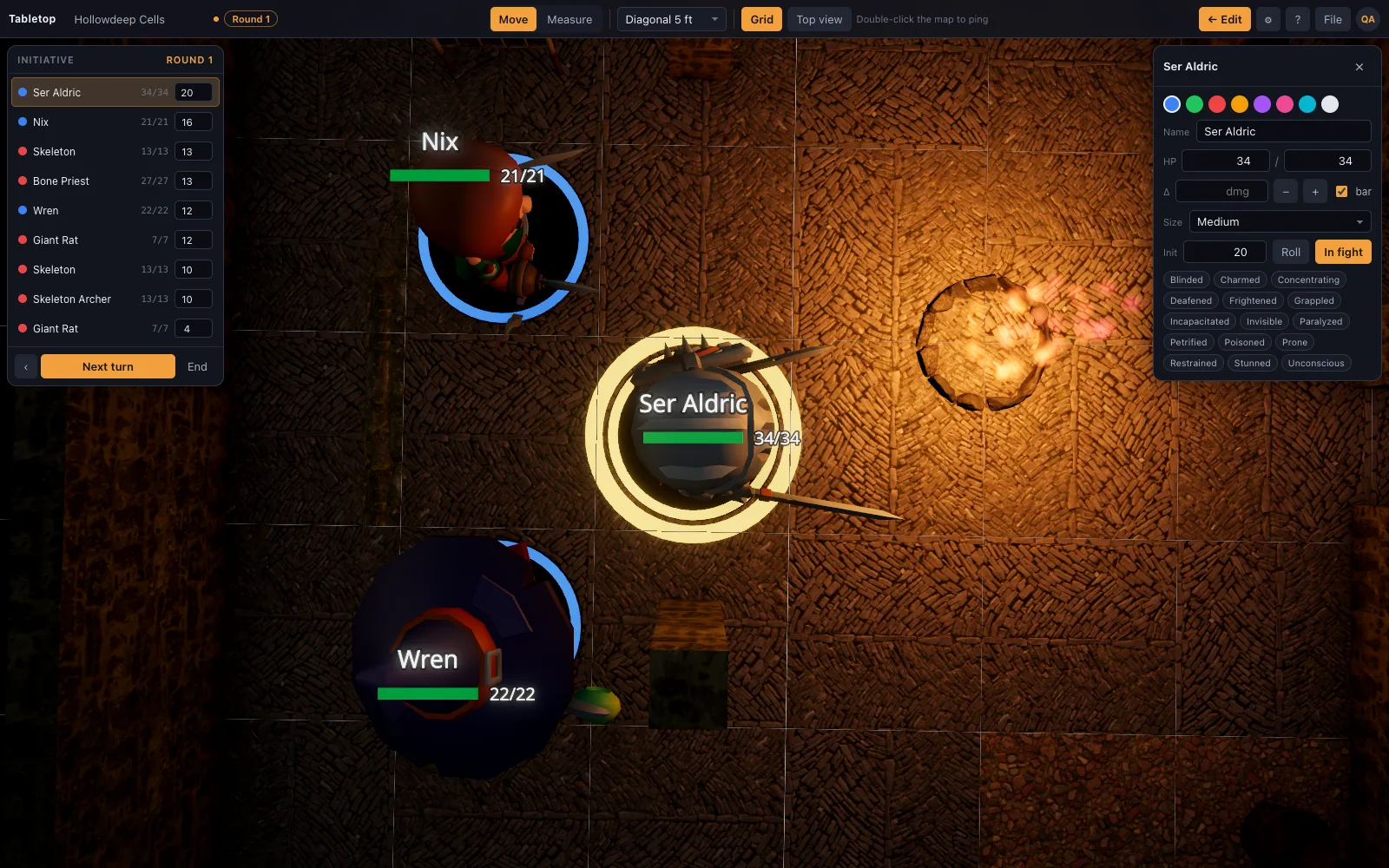
Which weapons have reach, and what each one does
The 2024 rules give every weapon a mastery property, and the five reach weapons got different ones, which is the first time the choice between a glaive and a halberd meant anything. A character only uses a mastery if their class grants it, and only for the weapons they have chosen, so a fighter with a halberd Cleaves while a wizard holding the same halberd just does 1d10.
- Glaive: 1d10 slashing, Heavy, Two-Handed. Mastery Graze: on a miss, deal damage equal to your ability modifier.
- Halberd: 1d10 slashing, Heavy, Two-Handed. Mastery Cleave: on a hit, one attack against a second creature within 5 feet of the first, damage die only.
- Pike: 1d10 piercing, Heavy, Two-Handed. Mastery Push: on a hit, move a Large or smaller target 10 feet away.
- Lance: 1d10 piercing, Heavy, Two-Handed unless mounted. Mastery Topple: on a hit, a Constitution save or the target falls prone.
- Whip: 1d4 slashing, Finesse. Mastery Slow: on a hit, reduce the target's Speed by 10 feet.
Attacking two squares away, and the diagonal question
With 10 feet of reach you can attack any creature whose space is within two squares of yours. Under the standard rule that every square, diagonal or not, is 5 feet, that is the full 5-by-5 block around you: 24 squares, including the four corners. If your table uses the alternating 5-10-5 diagonal option, the corners are 15 feet away and drop out, leaving 20 squares. Settle which your table uses once, because a reach fighter will ask about the corner square every fight.
Reach does not make you harder to approach. 5e has no threatened area and no rule against moving within reach; an enemy can walk from 10 feet to 5 feet, stand next to you and attack, and provoke nothing on the way in. The only free attack you get on an approaching creature comes from the Polearm Master feat. What reach does buy is the swing from the second rank: a fighter behind the party's shield wall can attack over it, and a monster in a corridor can be hit by two characters instead of one.
Do reach weapons get opportunity attacks at 10 feet?
Yes. The Reach property applies when determining your reach for opportunity attacks, so a creature you can see that leaves your 10-foot reach without taking the Disengage action provokes. The common misreading is that reach only counts on your own turn, or that Sentinel is needed to make it work; neither is true, in 2014 or 2024. What does not provoke is movement inside the reach, so a goblin that steps from 10 feet to 5 feet, or from 5 feet to 10, is safe, and only leaving the circle altogether triggers the attack.
Two feats change the picture. Polearm Master in 2024 gives a reaction attack when a creature enters your reach while you hold a quarterstaff, spear, or a weapon with both Heavy and Reach, which covers the glaive, halberd, pike and lance but not the whip; it also adds a bonus action 1d4 bludgeoning strike with the butt end. Sentinel's Halt sets a creature's Speed to 0 for the turn when your opportunity attack hits, which with reach stops it two squares short of the wizard. Under the 2014 rules Polearm Master listed the pike only for the reaction, not the bonus attack; the 2024 wording covers both.
Large creatures with reach
A creature's reach is printed in its stat block, and being Large does not grant it. An ogre is Large with 5-foot reach; a hill giant is Huge with 10; most dragons have 10 feet with the bite and 5 with the claws, so a wing or tail can differ again. Measure reach from the edge of the creature's space, not its centre. A Large creature on a 2-by-2 base with 10-foot reach threatens the 6-by-6 block around it, 32 squares, which is why a giant in a 15-foot corridor covers it wall to wall and why the rogue's plan to run past never works.
The same edge rule works in the party's favour. A Medium fighter with a pike attacks a Huge creature from two squares away from the edge of its 3-by-3 space, which is a square the creature's 10-foot reach also covers; the reach war is a draw. Against a creature with 5-foot reach and a 2-by-2 base, a reach weapon lets the fighter attack from a square the creature cannot answer from without moving, and moving out of the fighter's reach to close on someone else provokes.
Reaching over an ally
Nothing in the rules forbids attacking a creature on the far side of a friend. Read strictly, the cover rule says creatures are obstacles, so the ally between you and the target gives the target half cover and +2 to AC; the rule does not restrict itself to ranged attacks. Most tables waive it for a polearm over a shoulder and apply it to arrows only, which is a fine ruling as long as it is the same for the monsters. Say which you use.
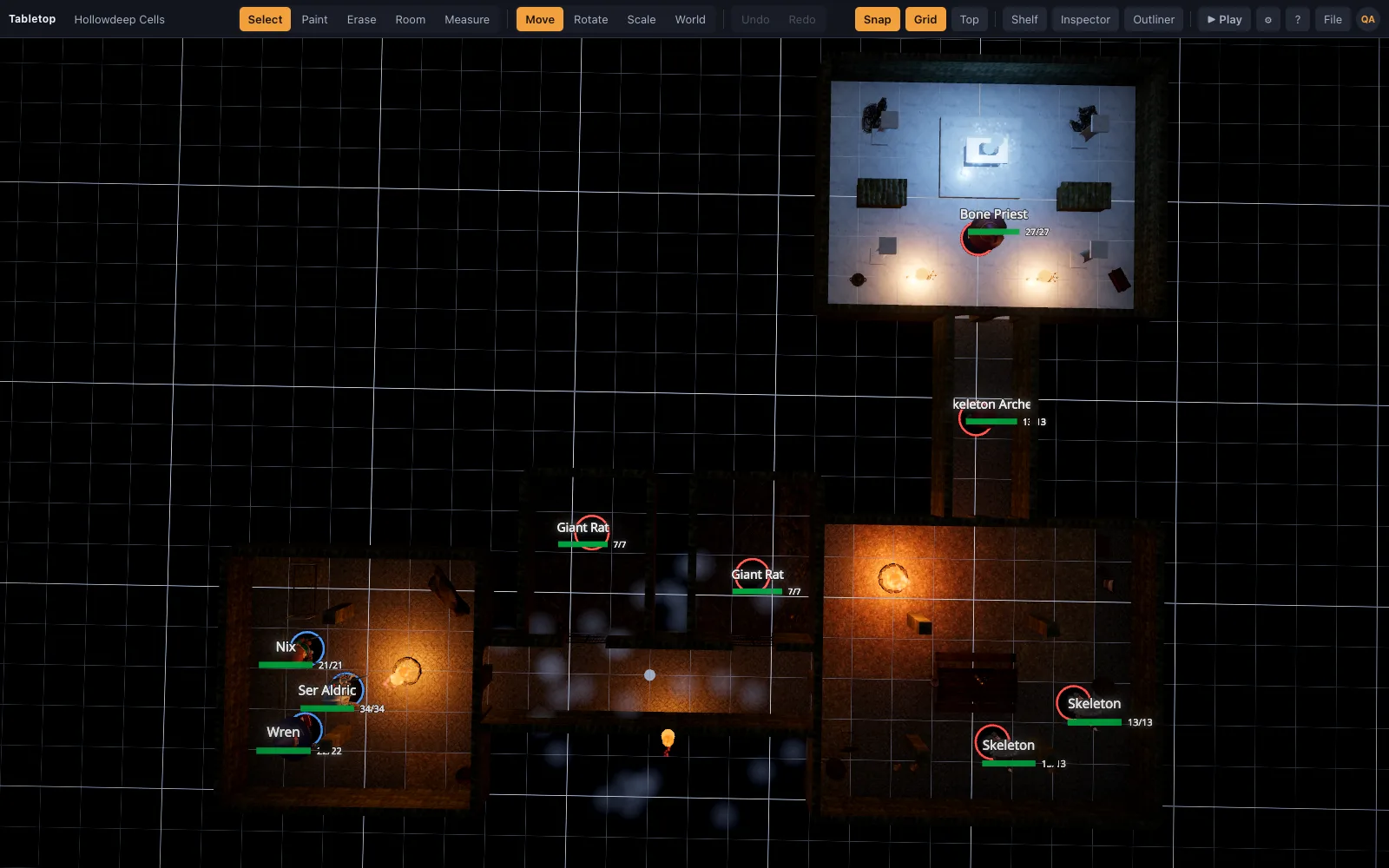
On a map, the second-rank position is the reach weapon's whole reason to exist, so give it somewhere to stand. A 2-square-wide corridor or doorway lets a shield fighter hold the front and a glaive fighter attack from behind; a 1-square door makes the polearm a worse sword. On a 3D table you can see the line over the ally's shoulder rather than argue about it, and the minis on their squares make it obvious who is two squares from whom.