Creature sizes on a grid: how many squares each token takes
A Medium creature takes one square. Everyone knows that. The arguments start with the ogre. Does a Large creature stand on four squares or in the middle of one? Can a Huge dragon fit through a ten-foot corridor? Does an owlbear's reach come from its edge or its centre? The rules answer all of these, and once a table agrees on them, the map does most of the work.
· 6 min read · TerrainTale
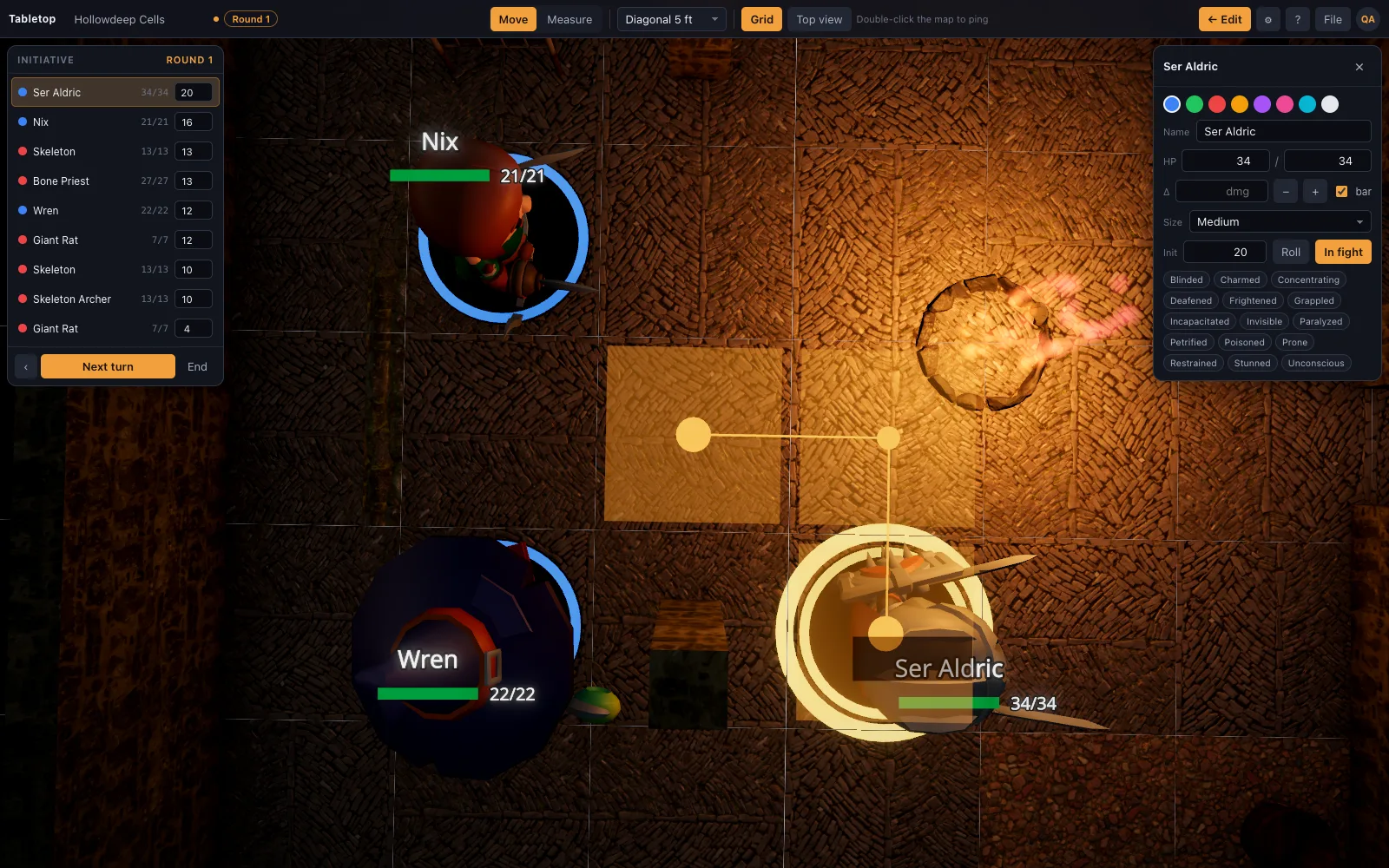
The size table, in squares
D&D's six size categories each control a square area of the battle map. The number that matters is the side of that area in squares, because that is what you count when you drop a token.
- Tiny — half a square (2.5 feet). Four Tiny creatures can share one square.
- Small — one square (5 feet). Same as Medium for movement and space.
- Medium — one square (5 feet). Humans, elves, most player characters.
- Large — 2 by 2 squares (10 feet). Ogres, horses, owlbears, young dragons.
- Huge — 3 by 3 squares (15 feet). Giants, adult dragons, treants.
- Gargantuan — 4 by 4 squares (20 feet) or more. Ancient dragons, the kraken, the tarrasque.
Space is not the body
The rules call the area a creature controls its space, and say plainly that the space is not the creature's physical dimensions. A Large ogre does not fill all four of its squares with flesh; it needs that much room to fight. This is why a creature's space is always centred on the grid, never on a point: a Large token covers a 2 by 2 block of whole squares, and moves by whole squares like everyone else.
The practical rule for placing a token is therefore simple. Snap the token to the block of squares it occupies and never let it straddle a line. On a VTT this is what a size setting on the token is for: set an ogre to Large and the base covers four squares and the grid snap keeps it there.
Reach comes from the edge
A creature with 5-foot reach can attack anything adjacent to any square of its space. A Large creature with 5-foot reach therefore threatens a ring of twelve squares around its 2 by 2 block, not the eight around a single square. A Huge giant with a 10-foot reach threatens two squares out from every edge of its 3 by 3 block, which on a battle map is a 7 by 7 area minus the creature itself.
This is the rule most often applied wrongly by reading the reach from the centre of the token. Measure from the nearest edge of the space. A ruler that snaps to the token base, as TerrainTale's does, gets this right without anyone counting.
Squeezing through narrow spaces
A creature can squeeze through a space one size smaller than its own: a Large ogre can push down a 5-foot corridor. It costs one extra foot of movement for every foot moved, so ten feet of corridor spends twenty feet of speed, and while squeezed the creature has disadvantage on attack rolls and Dexterity saving throws, and attacks against it have advantage. Two sizes smaller is impossible: the Huge dragon does not fit the 5-foot doorway at all.
For map design that gives you a dial. A 10-foot corridor lets the ogre through at full cost; a 5-foot door makes it hesitate; a 5-foot door in a 5-foot corridor makes the party's escape plan work. Marking corridor widths in squares while you build is the whole trick.
Sizing tokens in a VTT
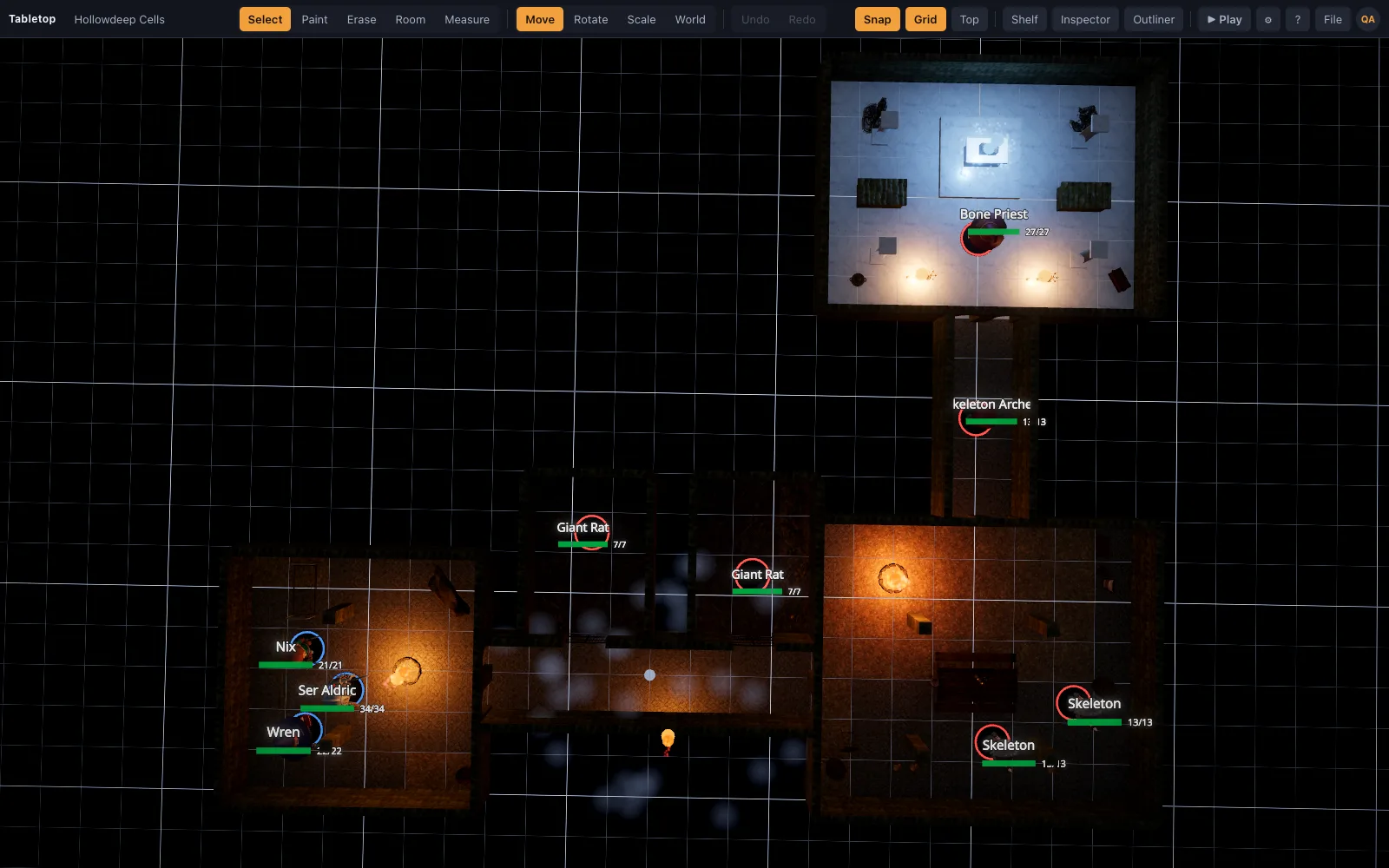
On a 2D map a token is an image and its size is a scale factor. On a 3D table the token is a miniature with a base, and the base is what should match the space. A Medium mini stands on a base one square across; a Large mini's base is two squares across; and if you import your own model, scale the base rather than the figure so a tall but Medium creature still occupies one square.
TerrainTale's miniatures ship at Medium scale on one-square bases, and any .glb or image standee you add can be scaled to the size category it needs. Keep the base honest and the reach and squeezing rules take care of themselves.