Mounted combat rules in 5e: mounts on a grid without the arguments
A mount is a creature at least one size larger than you with a body that can carry a rider. Mounting or dismounting costs half your Speed. Once you are on, you move with the mount, using its Speed, and the two of you occupy the mount's space. A controlled mount acts on your initiative and can only Dash, Disengage or Dodge; an independent mount keeps its own turn and does what it wants. Those five sentences settle most of mounted combat, and the rest is about what happens on the grid when the horse is Large and the rider is not.
· 5 min read · TerrainTale
The shared space on the map
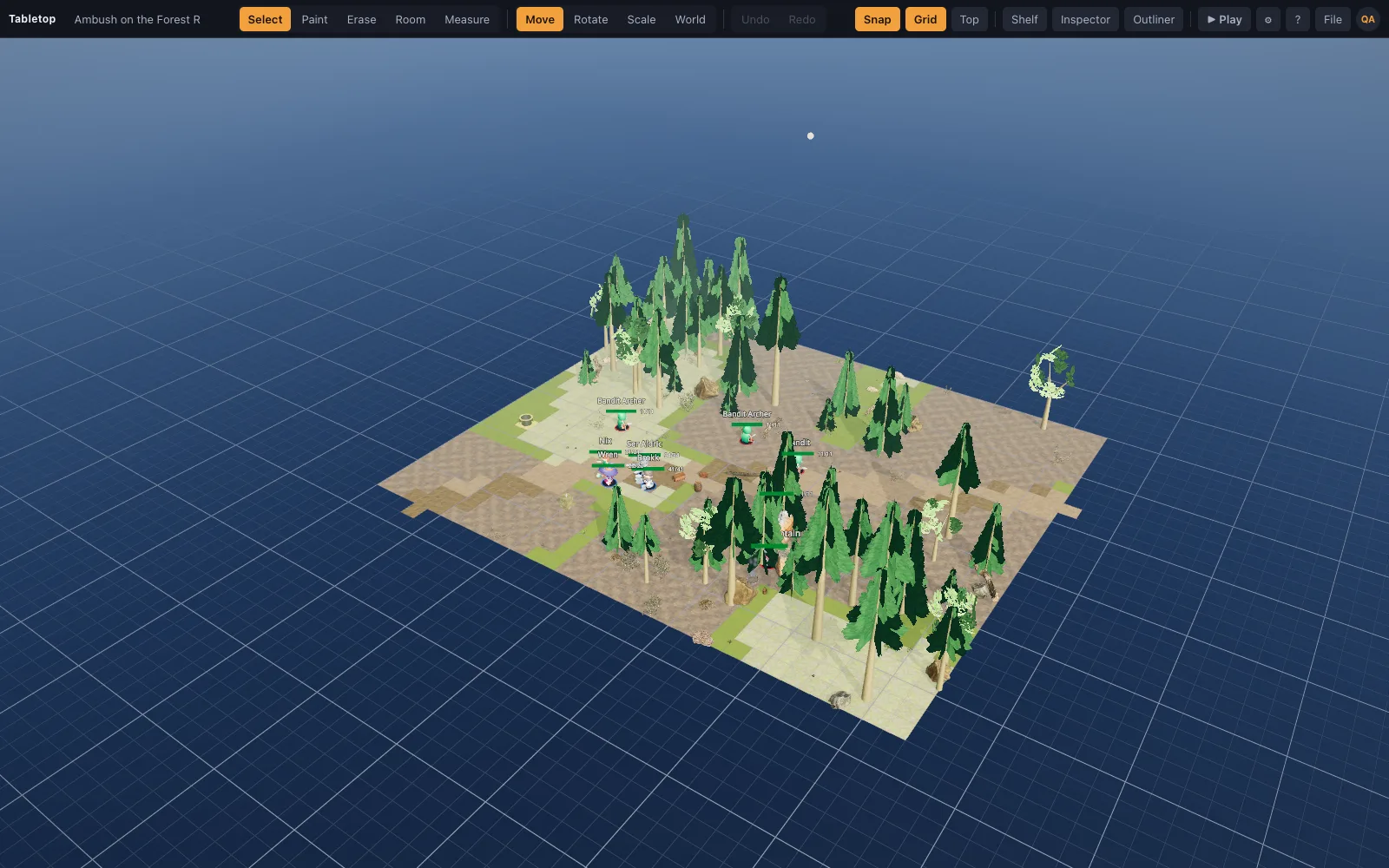
A riding horse or warhorse is Large, so on the grid it occupies a 2 by 2 block, 10 feet a side. The rider does not have a square of their own; they are somewhere in that block. Anything that reaches the block reaches the rider, which is why a Medium fighter on horseback is easier to surround than one on foot: the block has twelve adjacent squares rather than eight.
Set the mount's token to Large on your VTT and put the rider's mini on top of it, or replace both with one Large token for the pair. TerrainTale lets a token's size be set to its creature size, so a warhorse covers 2 by 2 squares and the ruler measures from the edge of that block. Keep the rider as a separate token if they might be knocked off; it saves rebuilding the pair mid-fight.
- Large mount: a 2 by 2 block, twelve adjacent squares.
- The rider is inside the block; anything adjacent to the block can attack either.
- A Huge mount such as an elephant is 3 by 3.
Controlled and independent mounts
A controlled mount is one trained to accept a rider, a horse or a pony, and while you ride it its initiative changes to match yours. It moves as you direct, and it has only three actions: Dash, Disengage and Dodge. It does not attack. That is the price of the rider's freedom: you get the horse's 60 feet of movement and your own full turn of attacks, and the horse contributes legs.
An independent mount is anything else, a griffon, a wolf, an intelligent creature that agreed to carry you. It keeps its own place in initiative and takes its own turn, attacking, moving and choosing as its nature or its stat block dictates. You still move with it, but you do not decide where. Independent mounts are the strong choice mechanically, a second set of attacks in the same space, and the DM should treat them as a second character with opinions.
The 2014 rules read the same way, including the line that a controlled mount's initiative changes to match yours when you mount it. What the 2024 books add around it is elsewhere: the lance's Topple mastery and the rewritten Mounted Combatant feat, neither of which a 2014 table has.
Mounting, dismounting and falling off
Mounting and dismounting each cost movement equal to half your Speed, so a 30-foot character spends 15 feet climbing on and can still ride the horse's remaining movement that turn. You can only mount a creature within 5 feet of you. With a Speed of 0 you cannot mount at all.
Three things throw a rider. If an effect moves your mount against its will while you are on it, you must succeed on a DC 10 Dexterity saving throw or fall off and land prone in an unoccupied space within 5 feet. If you are knocked prone while mounted, the same save. If the mount is knocked prone, you can use your reaction to dismount as it falls and land on your feet; otherwise you are dismounted and fall prone in a space within 5 feet. Thunderwave against a cavalry line is therefore a Dexterity save for the horse, a Dexterity save for the rider, and quite possibly a row of prone knights.
Opportunity attacks against a rider
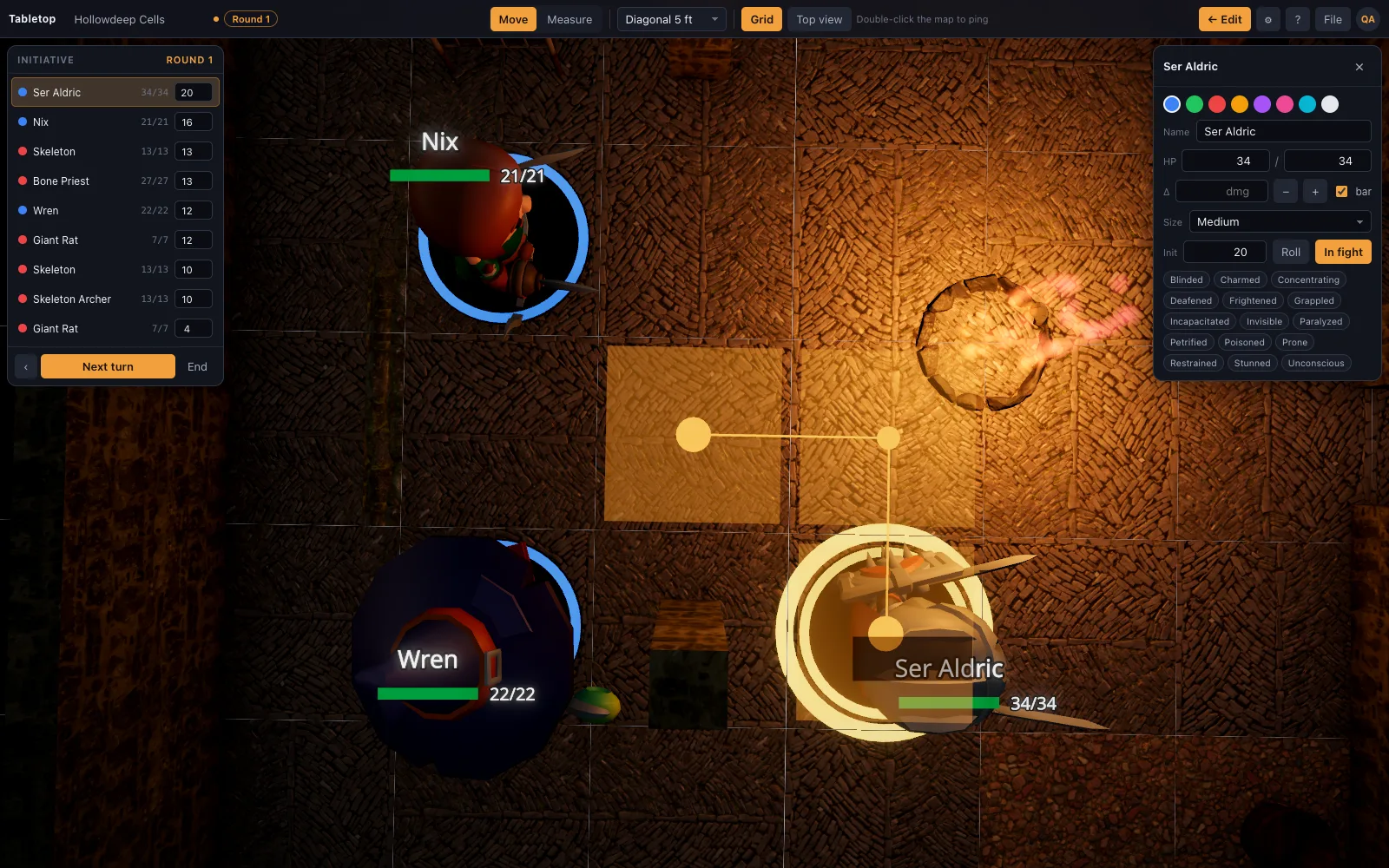
When a mount provokes an Opportunity Attack while you are on it, the attacker can target you or the mount. That is the whole rule and it is the one players forget. A horse that gallops past a line of spearmen provokes from each of them, and each spearman chooses horse or rider. A controlled mount can take the Disengage action to stop its movement provoking, at the cost of its action, which for a controlled mount costs nothing you were using.
The rider's own reach is unchanged. A Medium rider with a longsword threatens the squares adjacent to the mount's block, and a lance, which in 2024 has Reach and the Topple mastery, threatens the ring two squares out. The lance is Two-Handed unless you are mounted, which is the point of it.
Charging: there is no charge, and how to fake one
5e has no charge action. A rider moves up to the mount's Speed and attacks as normal, and the extra damage everyone remembers from older editions is not there. What the 2024 books give instead are pieces you can assemble. A warhorse has a Trampling Charge: if it moves at least 20 feet straight toward a creature and hits it with its hooves, the target must make a Strength saving throw or be knocked prone. A rider with the Mounted Combatant feat has Advantage on attack rolls against unmounted creatures smaller than the mount, and can redirect an attack from the mount to themselves.
On the grid a charge is therefore a straight line of at least 4 squares, a hooves attack, a save, and a prone target that the rider now attacks with Advantage from within 5 feet. Note that a controlled warhorse cannot make the hooves attack, because controlled mounts only Dash, Disengage or Dodge; the charge needs the horse to be independent, or the DM to allow a trained warhorse to attack as a table ruling. Say which before the fight.
- No charge action in 5e; move and attack.
- Warhorse Trampling Charge: 20 feet straight, hit, Strength save or prone.
- Mounted Combatant: Advantage against smaller unmounted creatures.
Running it without slowing down
Decide three things before the first mounted turn: whether each mount is controlled or independent, who is tracking the mount's hit points, and what happens to the rider if the mount dies. A horse has 13 hit points in the 2024 Monster Manual and a warhorse 19, which is one good hit from a giant, and a mount dying mid-move drops the rider prone in an adjacent square.
Keep the rider in initiative once, the mount in initiative only if it is independent, and let the ruler do the counting. A horse's 60 feet is 12 squares, a Dash doubles it to 24, and a map that makes room for that, a road, a field, a long hall, is what makes mounts worth bringing to the fight.