Cover in 5e: half, three-quarters and total, and how to judge it fast
Cover is the rule that turns a battle map from decoration into tactics. It is also the rule that generates the most table arguments, because deciding whether the archer behind the pillar has half cover or three-quarters is a judgement, and judgements get litigated. Here is the rule, the fast way to apply it, and how to build maps where cover is obvious.
· 7 min read · TerrainTale
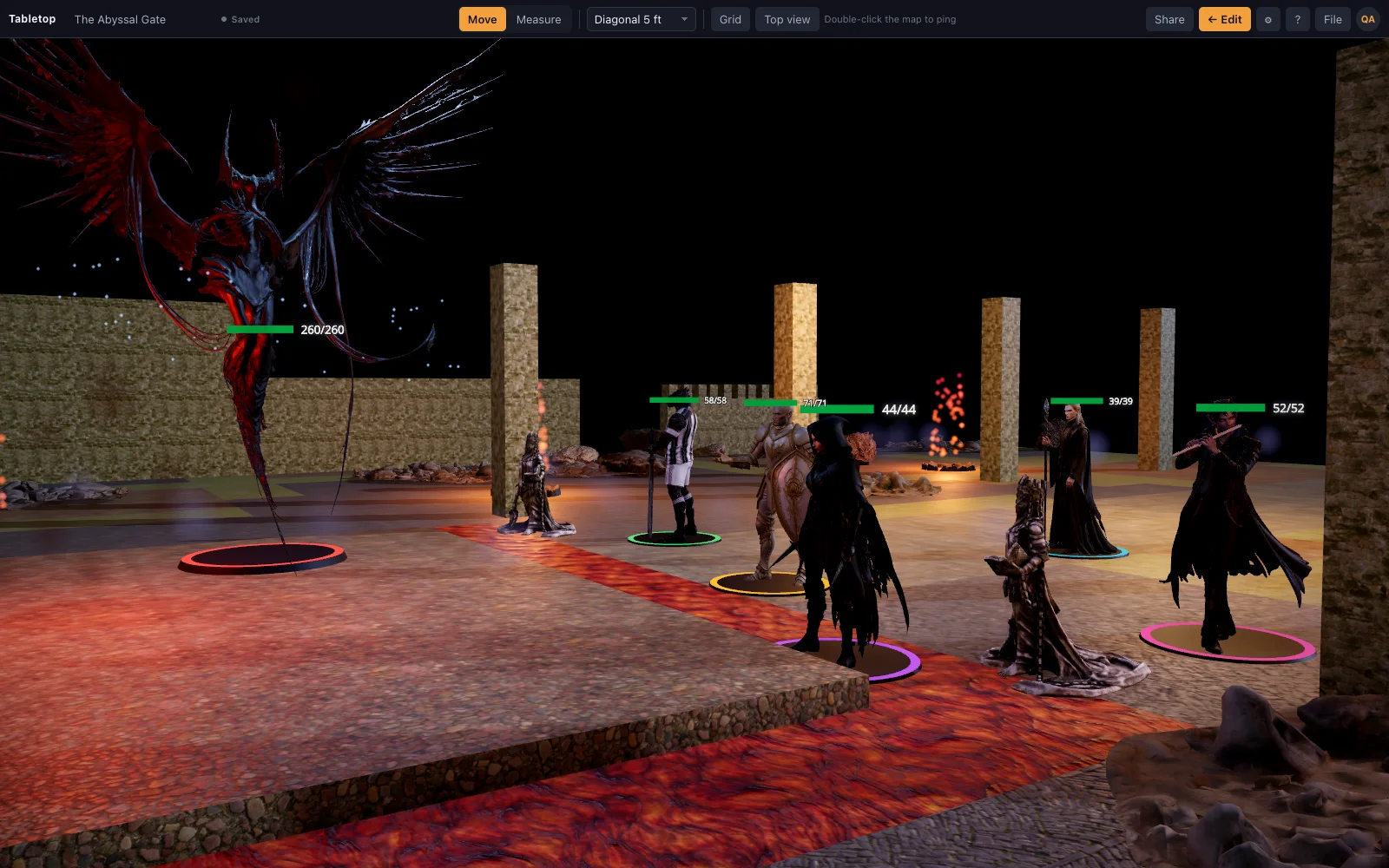
The three degrees of cover
5e has three grades, and only the best one that applies counts; they do not stack.
- Half cover: +2 to AC and to Dexterity saving throws. A low wall, a large piece of furniture, a narrow tree trunk, or another creature between you and the attacker.
- Three-quarters cover: +5 to AC and Dexterity saves. An arrow slit, a portcullis, a thick tree, or a doorway you are peering round.
- Total cover: you cannot be targeted directly by an attack or a spell. Something fully conceals you, though area effects can still reach you if their area does.
Creatures are cover too
The line most tables forget: another creature, friend or enemy, gives half cover. Shooting past your own fighter into the ogre it is fighting gives the ogre +2 AC. This is a real cost to the back line and a real reason for a front line to spread out, and it is why a map with a two-square-wide corridor plays differently from one with a five-square hall. On a VTT where minis stand on their squares, the blocked line is visible; on a hand-drawn map it is easy to miss.
The corner-to-corner method
The Dungeon Master's Guide offers a precise way to decide cover on a grid, and it is quicker than it sounds. Pick one corner of the attacker's square. Draw imaginary lines from that corner to every corner of the target's square. If one or two of those lines are blocked by an obstacle, the target has half cover; if three are blocked, three-quarters; if all four are blocked, total cover. The attacker chooses the corner, so pick the one that gives the best view.
You do not need to do this on every attack. Do it when someone asks, and in practice it settles most cases in a few seconds: a pillar on the diagonal blocks one or two lines, a wall with a gap blocks three, a closed door blocks four.
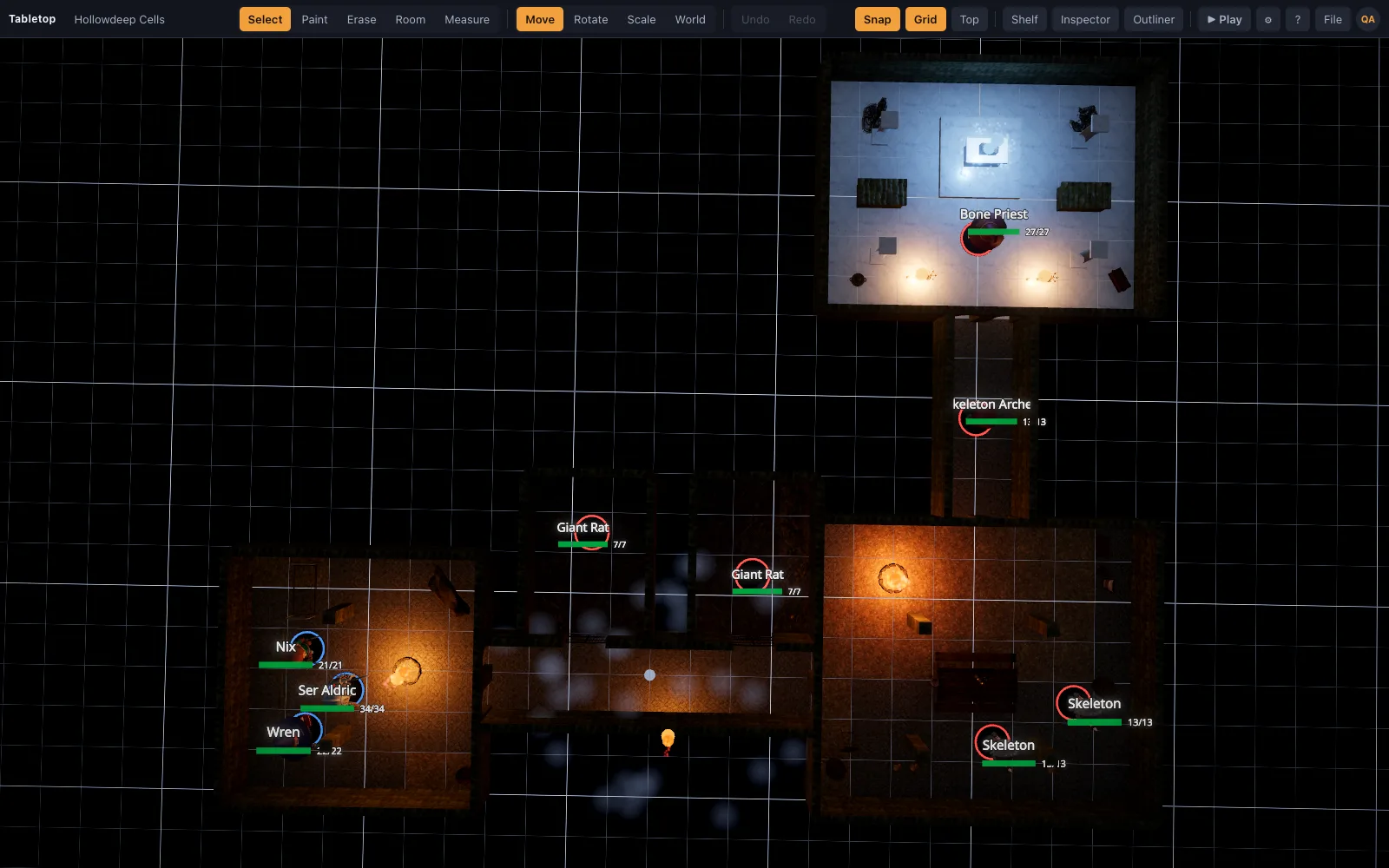
Why height changes the answer
Cover is a line-of-sight question, and line of sight has a vertical component. A crenellated wall gives the archer on the battlements three-quarters cover against the courtyard, but an attacker on a higher tower may see over it and grant nothing. A creature in a pit has total cover from anyone who cannot see down into it. Flat maps make DMs guess at these; a 3D table lets the whole group look along the line.
This is one of the two reasons to run fights in 3D at all (the other is that players are better at judging distance when they can see a wall as a wall). In TerrainTale you can drop the camera to the archer's eye level and the argument ends, because everyone is looking at the same view.
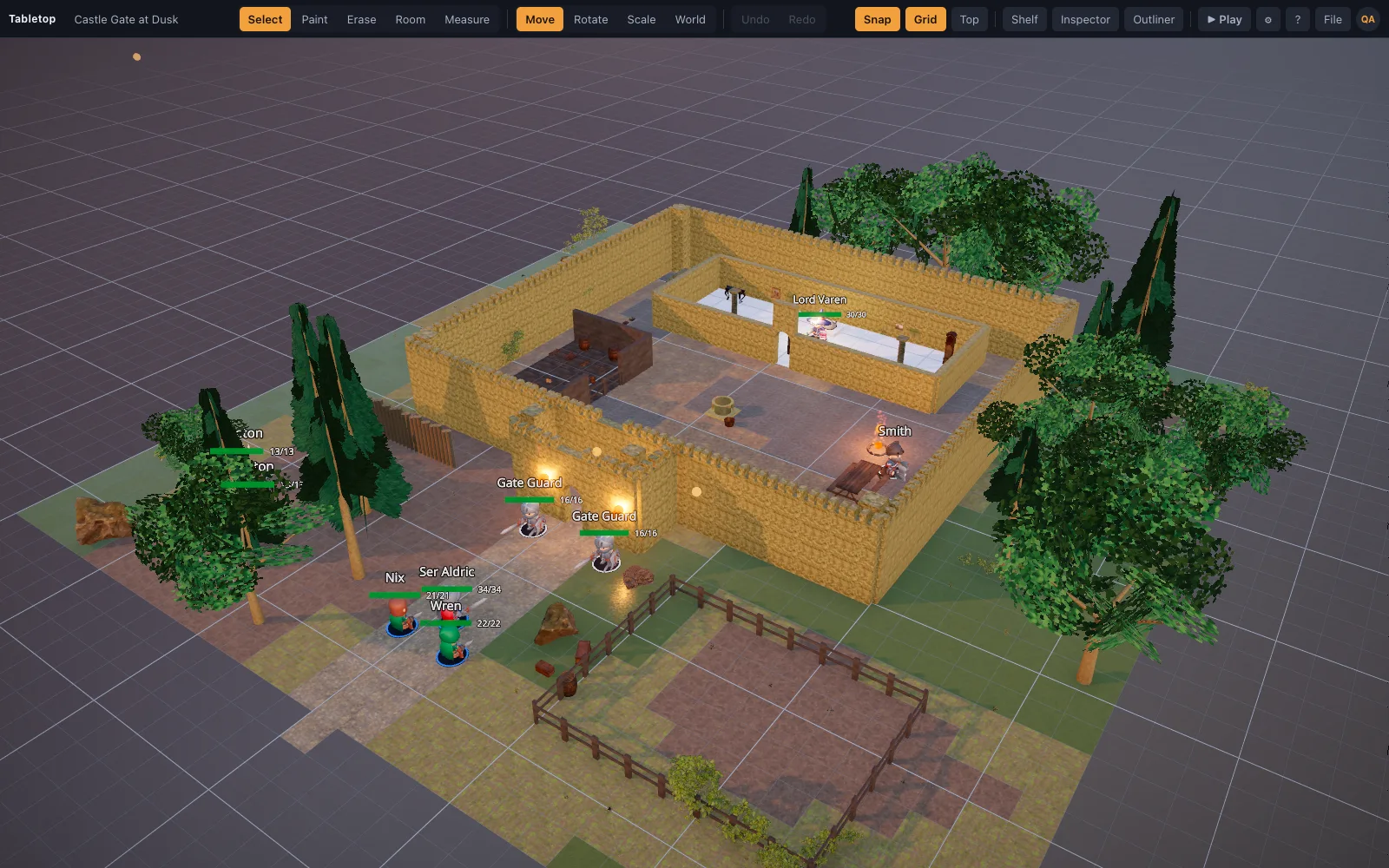
Building maps where cover is obvious
Good cover on a map comes in three sizes. Low: crates, barrels, benches, a fallen column, giving half cover to anyone crouching behind it. Partial: pillars, doorframes, tree trunks, giving half or three-quarters depending on angle. Full: walls with corners to peek round. Place one of each in any room where you expect a ranged fight, and put the low cover in the open so that crossing the room is a series of dashes between it.
Then leave some open ground. A room that is all cover is a room where nobody moves. The tactical fun is in a 15-foot gap with nothing in it that someone has to cross.