Difficult terrain: what it costs, how to mark it, and when to use it
Difficult terrain is the cheapest tactical tool a DM has. It costs nothing to add, changes every movement decision on the map, and needs one rule to run: every foot of difficult terrain costs two feet of movement. The difficulty is not the rule, it is the communication. Players need to know which squares are difficult before they commit their turn, not after.
· 6 min read · TerrainTale
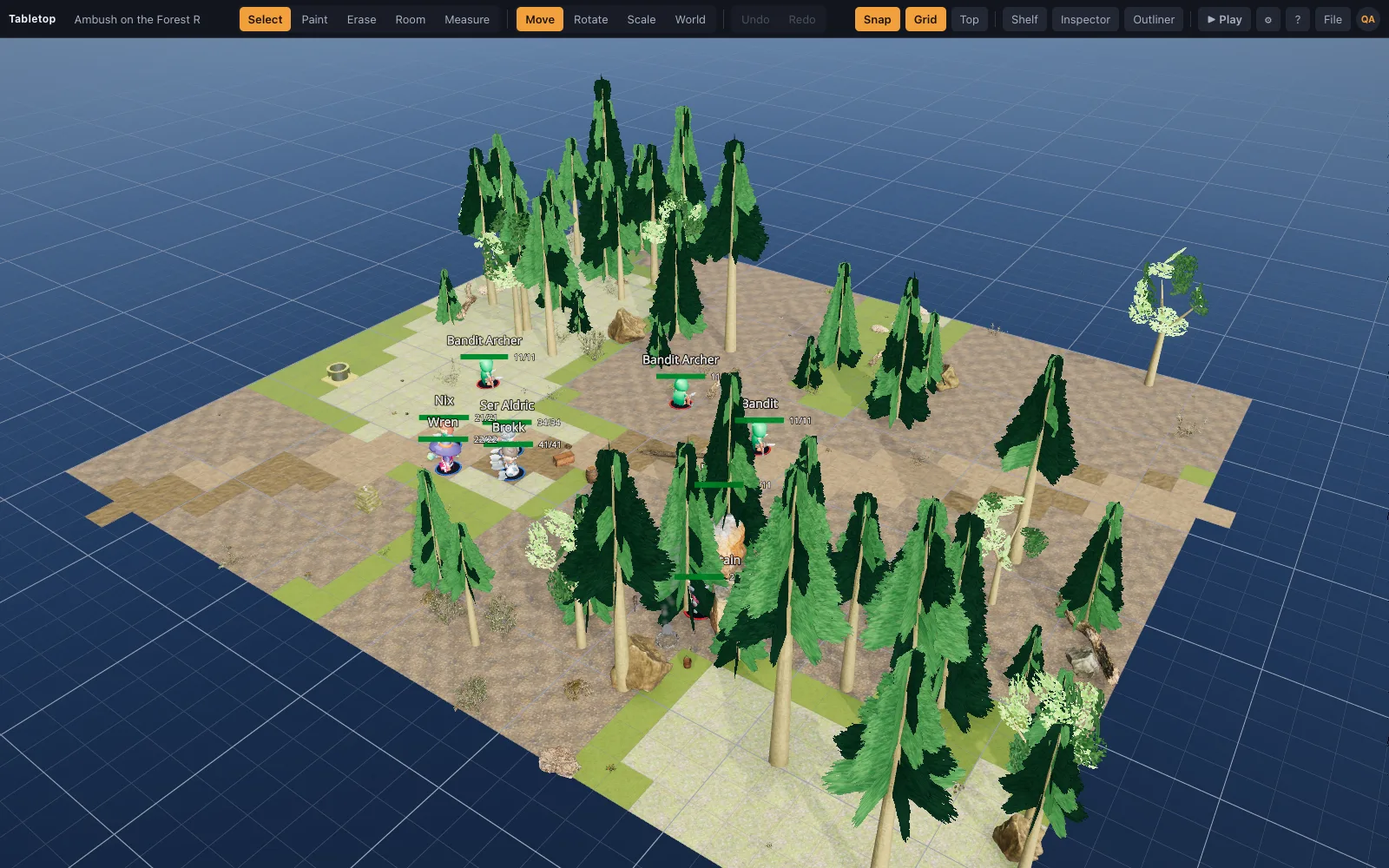
The rule in one sentence
Moving one foot through difficult terrain costs two feet of speed. A character with 30 feet of movement crosses 15 feet of rubble, or 20 feet of clear floor and 5 feet of rubble, and so on. It applies to any kind of movement: walking, flying low through branches, swimming through weeds. It never stacks with itself: rubble in a shallow stream is still just difficult terrain, not quadruple.
What counts as difficult is the DM's call, and the Player's Handbook gives the list: low furniture, rubble, dense undergrowth, steep stairs, snow, shallow bogs, ice, and the space of another creature, hostile or not.
Stacking with other costs
Difficult terrain interacts with the other movement rules, and the combinations come up often enough to know cold.
- Diagonals: with the optional 5/10/5 rule, the second diagonal costs 10 feet; through difficult terrain it costs 20. With the default rule every diagonal is 5, so difficult diagonals are 10.
- Climbing, swimming and crawling: each foot costs 2 unless you have a speed for it. Climbing through difficult terrain costs 3 feet per foot, because the extra costs add, not multiply.
- Standing up from prone costs half your speed, then difficult terrain doubles what is left.
- Squeezing through a smaller space costs 1 extra foot per foot, and it adds to difficult terrain in the same way as climbing.
Marking it so nobody asks
The failure mode is a player declaring a 30-foot move, being told halfway that the ground was difficult, and having to rewind. The fix is that difficult terrain must be visible before the turn starts. On a paper map you draw a hatch. On a VTT the map itself should say it: a floor of scattered rubble, a stream, dense bushes, mud. If a square looks slow, it is slow; if it looks clear, it is clear.
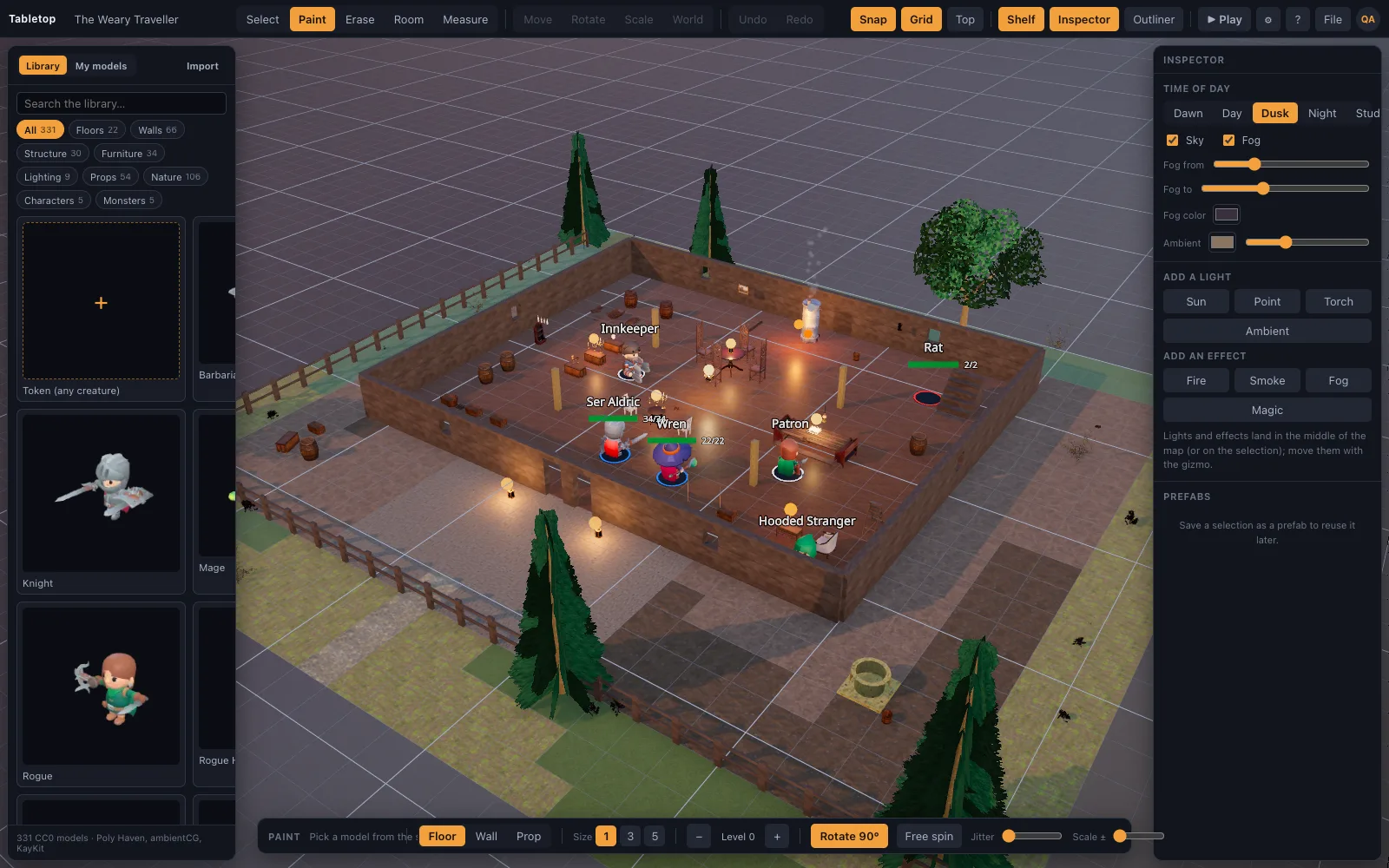
That is easier on a 3D table than on a flat one because the props do the work. A drift of rubble tiles or a run of undergrowth between the trees reads as difficult terrain from across the room. In TerrainTale you paint a second floor material with the tile brush for the slow ground and then say once at the start of the fight that mud is difficult. After that, no one asks.
Using it to shape a fight
Difficult terrain is a way to create distance without walls. A 15-foot band of bog between the party and the archers is a two-turn crossing under fire; the same band with a single clear path is a chokepoint the rogue will find. A tavern fight with an overturned table across the middle plays as two rooms. The trick is to keep it asymmetric: the monsters who live in the bog should have a swim speed, or know the path, and the difference is what makes the encounter feel like their home ground.
Do not overdo it. One band, one patch, one path is plenty. A map where half the squares are difficult is a map where every turn is arithmetic and nobody moves.
Common table rulings
A few questions come up every campaign and are worth deciding in advance. Does a fallen ally's square count as difficult? Yes, another creature's space always does. Does a spell like Spike Growth stack with mud? No, difficult is difficult; Spike Growth's damage still applies. Does a horse care? Yes, mounts obey the same rule, which is why cavalry avoids woods. Does a flying creature above the rubble care? No, if it is high enough not to touch it.