Height and verticality: using the third dimension in combat
Most fights happen on a plane because most maps are a plane. Add fifteen feet of elevation and a fight acquires a second axis of decisions — but only if the height is legible, reachable, and worth something.
· 7 min read · TerrainTale
The rules you actually need
Climbing costs an extra foot of movement per foot climbed, so a 15-foot ladder eats 30 feet of a 30-foot move. Falling deals 1d6 per 10 feet, to a maximum of 20d6, and lands you prone. Flying creatures fall if they are knocked prone or lose their speed. Long jumps cover your Strength score in feet with a run-up; high jumps cover 3 + your Strength modifier.
That is enough to adjudicate almost any vertical moment at speed. Everything else is a ruling.
Height is not automatically advantage
Fifth edition gives no inherent bonus for high ground — the advantage is positional: you have cover, they have to spend movement to reach you, and you can see over obstacles. Some tables add a variant bonus; if you do, say so at session zero, because it substantially changes how archers play.
Make height legible
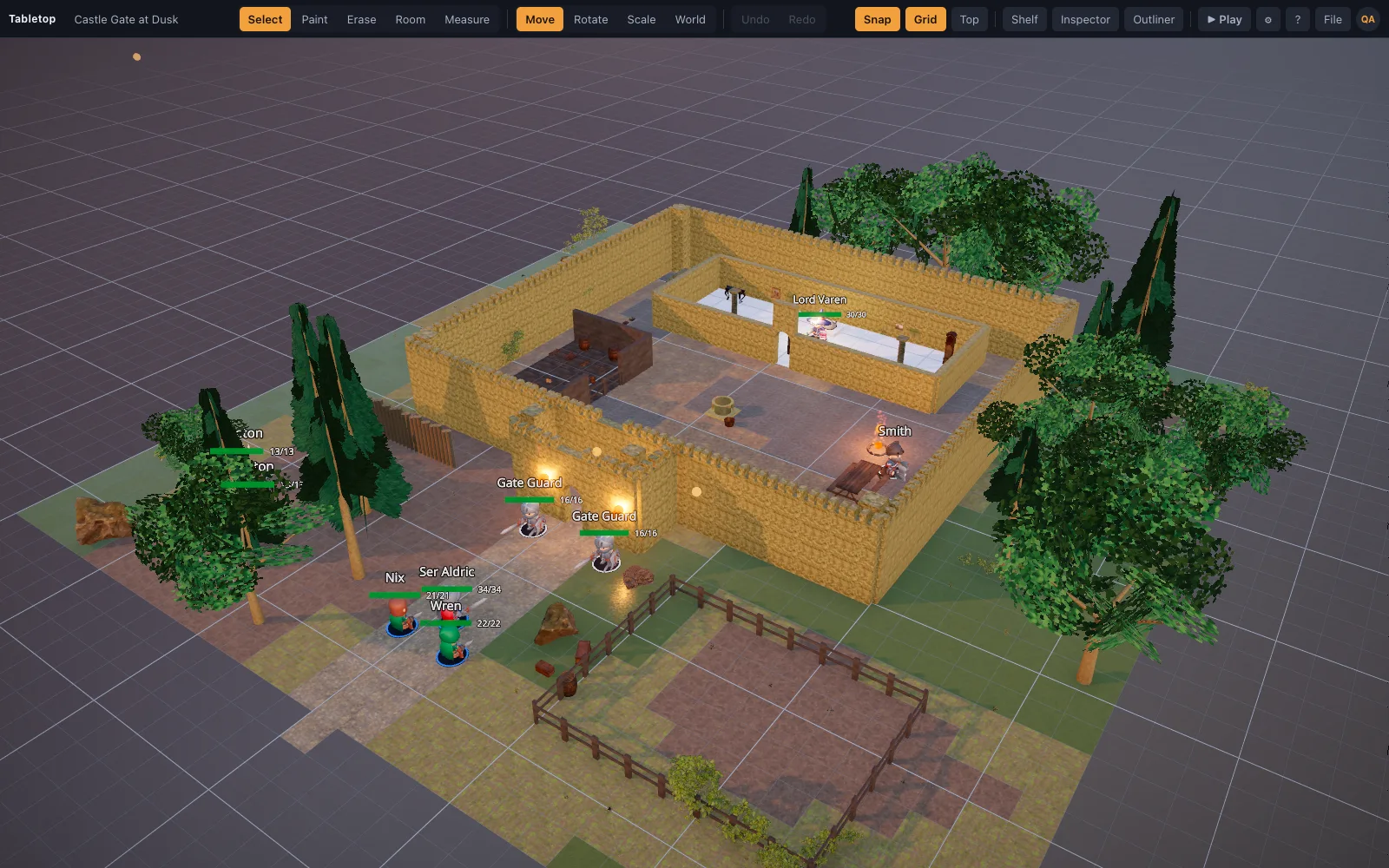
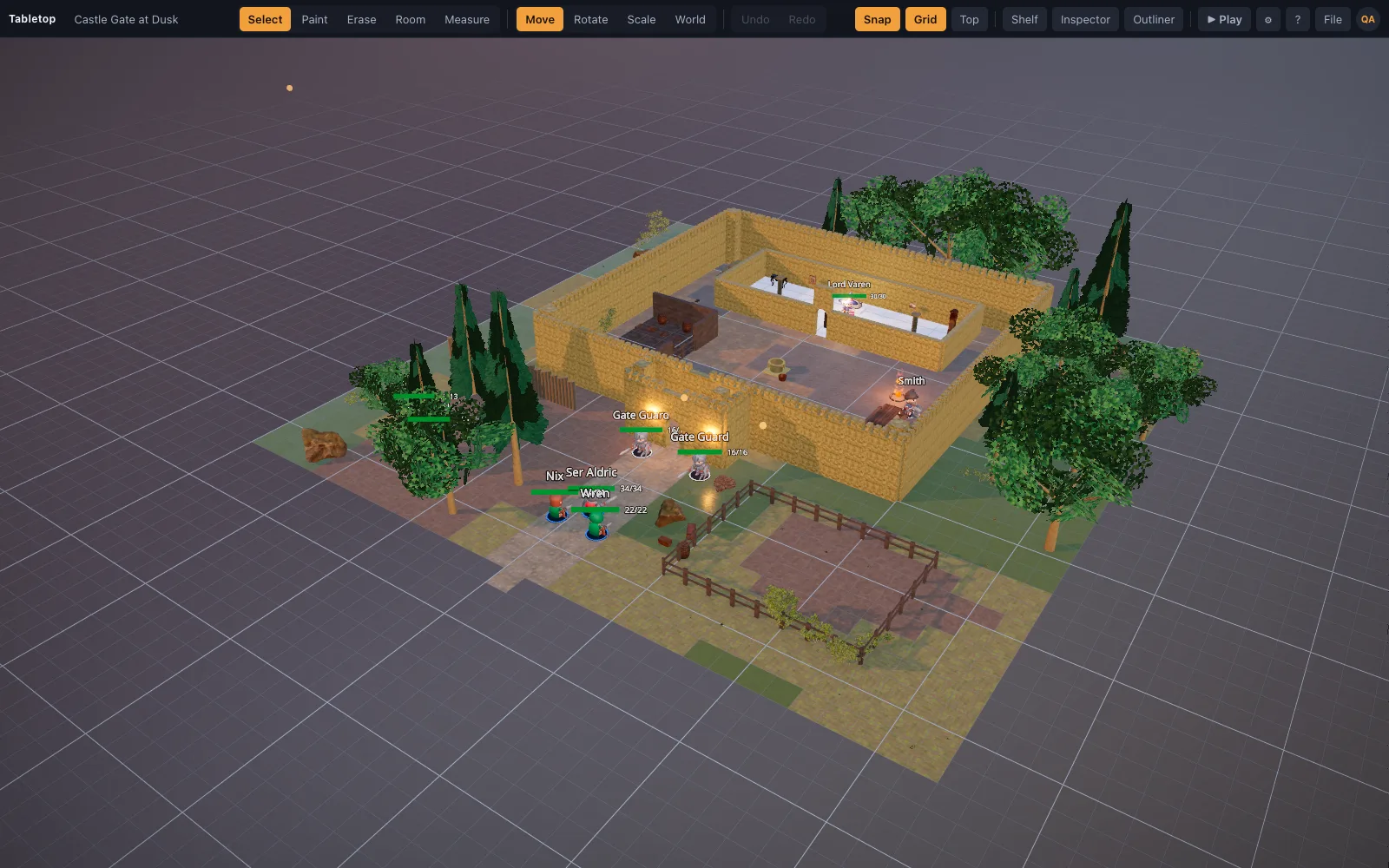
The reason players ignore balconies is that they cannot see them. On a flat map, elevation is a number in a label. In three dimensions the balcony is above the room, and a ruler that reports height as well as distance answers "can I reach it?" without a conversation.
Build heights players will use
One level of elevation, ten to twenty feet, reachable in one turn by a climb, a stair or a jump, with something worth having at the top. Two ways up so it is not a queue. And a reason to come down again — a lever, an objective, an enemy who ignores the archer.
- 10–20 ft: high enough to matter, low enough to jump down from.
- Two routes up, one of them risky.
- Something at the top the fight is about.
Shoving, and why ledges change everything
A shove is an attack replaced by an Athletics contest, and it deals no damage — which is why players ignore it, right up until there is a ledge. Beside a twenty-foot drop the same action deals 2d6 and costs the target their turn getting up and climbing back. Put one ledge in a room and the martial characters find a use for a rule they had never touched.
The same logic covers water, pits, spike traps and the edges of towers. A drop is the cheapest damage source you can put on a map, and unlike a trap it rewards positioning rather than luck.
Running flight without breaking the encounter
Flying characters are only overpowered on maps with an open sky and enemies who cannot answer them. Ceilings solve it structurally; so do ranged attackers, so do objectives that must be touched, and so do enemies who simply go after the people still on the ground. Note that a flier knocked prone falls, which makes any effect that causes prone a genuine threat rather than an inconvenience.
A useful habit: for every encounter, ask what a flying character would do, and make sure the answer is "something interesting" rather than "win". Usually one ceiling or one archer is the entire fix.
- Interiors and ceilings are the simplest counter.
- Prone means falling — and falling means damage and a lost turn.
- Ground objectives keep fliers involved rather than orbiting.