How to push an enemy off a cliff in 5e: Shove, Push mastery, Thunderwave and the fall
To push an enemy off a cliff in 5e you need forced movement and an edge within reach of it. Shove pushes 5 feet on a failed save, the Push weapon mastery pushes up to 10 feet on a hit with no save, and Thunderwave and Repelling Blast push 10 feet. A creature that goes over takes 1d6 bludgeoning per 10 feet fallen and lands Prone. The rules give the target no save to grab the edge; some tables add one. Here is how each push works on the grid and what decides whether it lands.
· 5 min read · TerrainTale
Which pushes work in the 2024 rules?
Four tools cover nearly every ledge fight. They differ in distance, in whether the target gets a save, and in what it costs you. Pushes move the target straight away from you, so where you stand decides where the target goes. Forced movement also never provokes Opportunity Attacks, so a push can carry a creature past its allies without anyone getting a free swing.
Under the 2014 rules shoving was a contested Strength (Athletics) check against the target's Athletics or Acrobatics, the Push mastery did not exist and Repelling Blast worked only with Eldritch Blast. The 2024 versions are more reliable, which makes edges more dangerous in both directions.
- Shove: replaces one attack; Strength or Dexterity save against 8 + your Strength modifier + proficiency bonus; 5 feet or Prone on a failure.
- Push mastery (greatclub, pike, warhammer, heavy crossbow): on a hit, up to 10 feet, Large or smaller, no save.
- Thunderwave: a 15-foot cube from you; Constitution save; 2d8 thunder and 10 feet on a failure.
- Repelling Blast: a warlock cantrip that hits with an attack roll pushes a Large or smaller target up to 10 feet.
Where do you have to stand?
Straight away means along the line from you through the target. If the ledge is east of the goblin, you need to be west of it. On a grid that usually means stepping round to the far side first, which costs movement and may provoke an Opportunity Attack, the price the rules put on a cliff kill. A diagonal push works the same way: from a square diagonal to the target, it goes one square diagonally per 5 feet.
Distance matters. Shove moves 5 feet, so the target must already stand on the edge square. Push and Repelling Blast reach 10 feet, so a target one square back from the edge still goes over. A pushed creature stops early if it meets a wall or another creature; the rules do not deal damage for the collision, though some tables do.
How much damage does the fall do?
A creature that falls takes 1d6 bludgeoning damage for every 10 feet it falls, to a maximum of 20d6, and lands with the Prone condition unless it took no damage. A 10-foot pit is 1d6, an inconvenience. A 30-foot drop from a rampart is 3d6, about 10. The cliffs that end fights are 60 feet and more, where 6d6 or more meets a creature already hurt by the attack that pushed it.
A spiked pit adds its own damage on top, and a pit with a lid is a trap with a save of its own. Water breaks a fall in many tables' rulings, not by rule. Getting out of a pit is a climb, and climbing costs 1 extra foot of movement per foot, which turns a 10-foot pit into a turn spent getting back into the fight.
Does the target get a save to catch the edge?
Not by the rules, in either edition. A Shove already gives a save, and Thunderwave too; Push and Repelling Blast give none. If the movement carries the creature past the edge, it falls. Many tables add a Dexterity saving throw, often DC 10, for a creature that goes over a ledge to grab it and hang on, then pull itself up with its next movement. That is a house rule, and it is a fair one when the players face the same edges.
Whichever way you play it, say so before the fight. A DM who adds the catch save only when a player's character is going over has changed the rule at the worst moment, and the player will notice.
Big creatures, flyers and climbers
Size limits the options. Shove works only on a creature no more than one size larger than you, and Push and Repelling Blast only on Large or smaller targets, so a Huge giant on a bridge is safe from all of them. A flying creature pushed off a ledge does not fall unless its Speed is 0 or it has the Prone condition and cannot hover; a Shove that chooses Prone instead of the push is how you drop a flier.
A creature that is climbing has no defence beyond its save. A climber shoved off a wall falls from wherever it was, so a wall is the easiest ledge on the map.
Building ledges worth pushing from
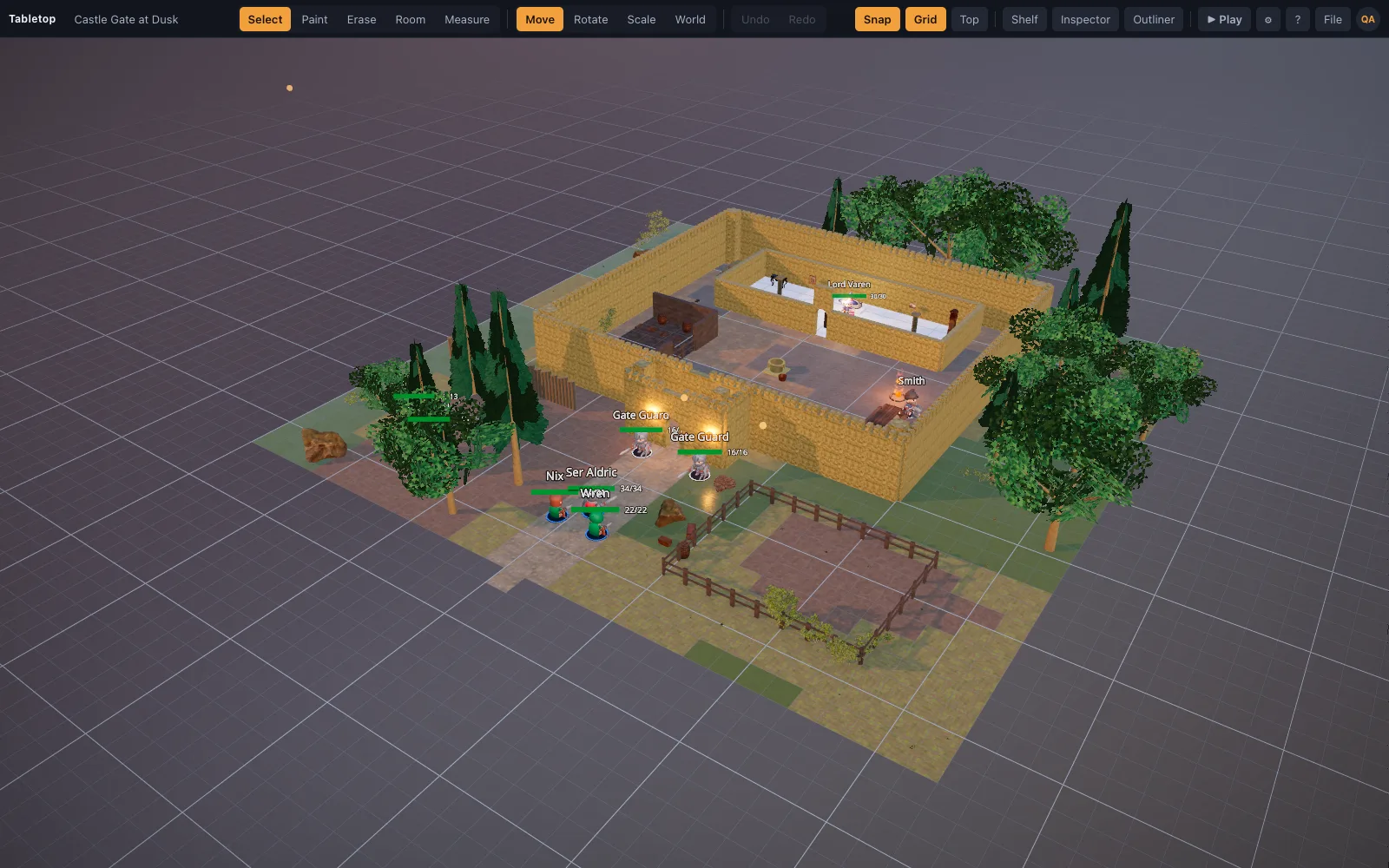
Put the edge where both sides can use it. A rampart with a 30-foot drop in front of the gate, a walkway over a pit and a narrow bridge give players and monsters the same chance. Mark the height on each drop in feet so nobody argues mid-turn. Then give the monsters a reason to stand near it. A ledge nobody has to approach is scenery; a lever, a treasure chest or a ranged attacker on the lip makes everyone take the risk.