Forest ambush encounters that are not a coin flip
The forest ambush is the most-used encounter in fantasy roleplaying and the most often botched. Done badly it is a surprise round, six archers, and a party that spends three turns walking toward trees. Done well it is the fight everyone talks about.
· 6 min read · TerrainTale
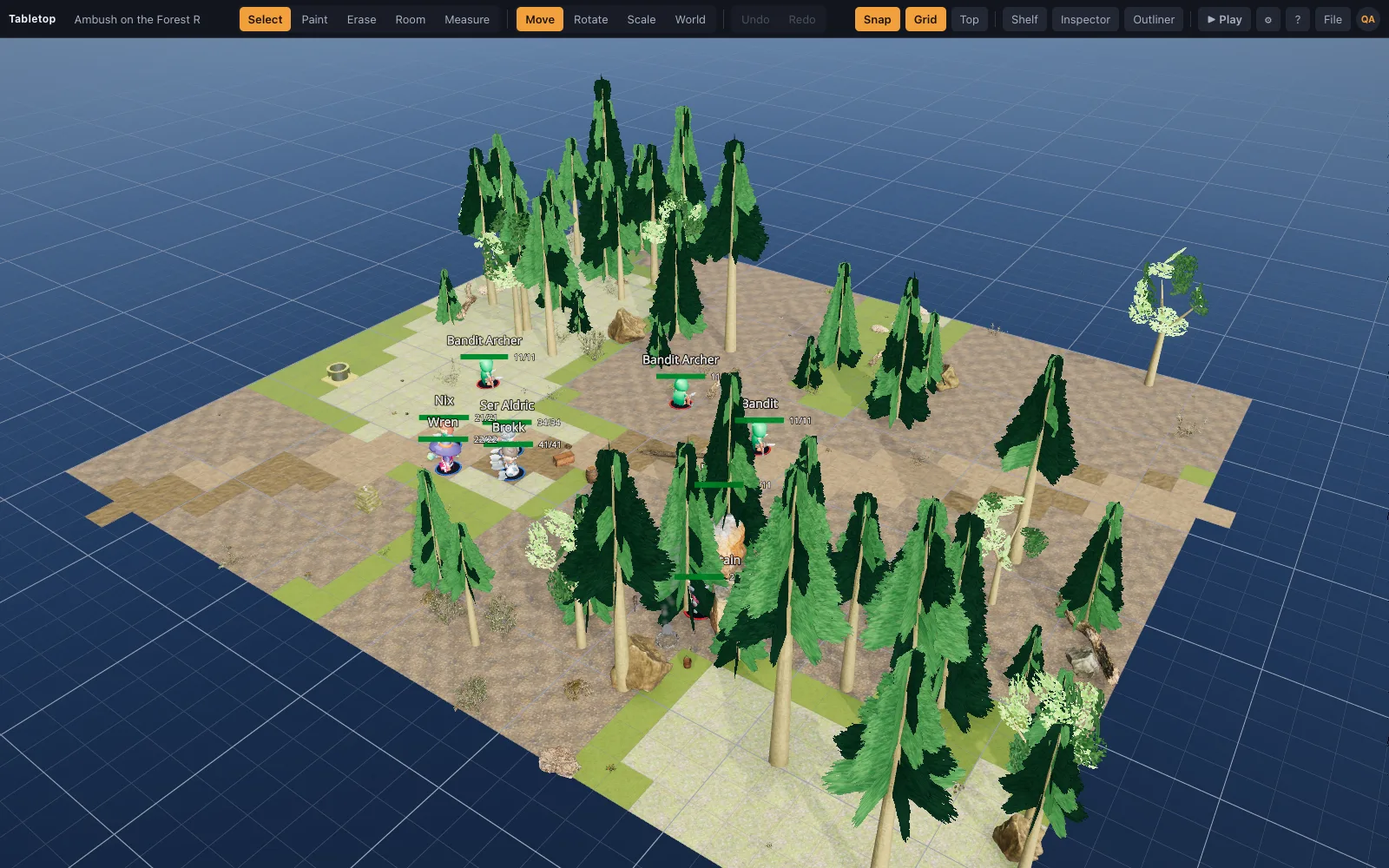
Give the party something to reach
An ambush is only fun if there is an answer to it. Put cover within one move of the road: boulders, a fallen trunk, a cart, a ditch. If the nearest cover is 60 feet away, the first two rounds are arithmetic, not tactics.
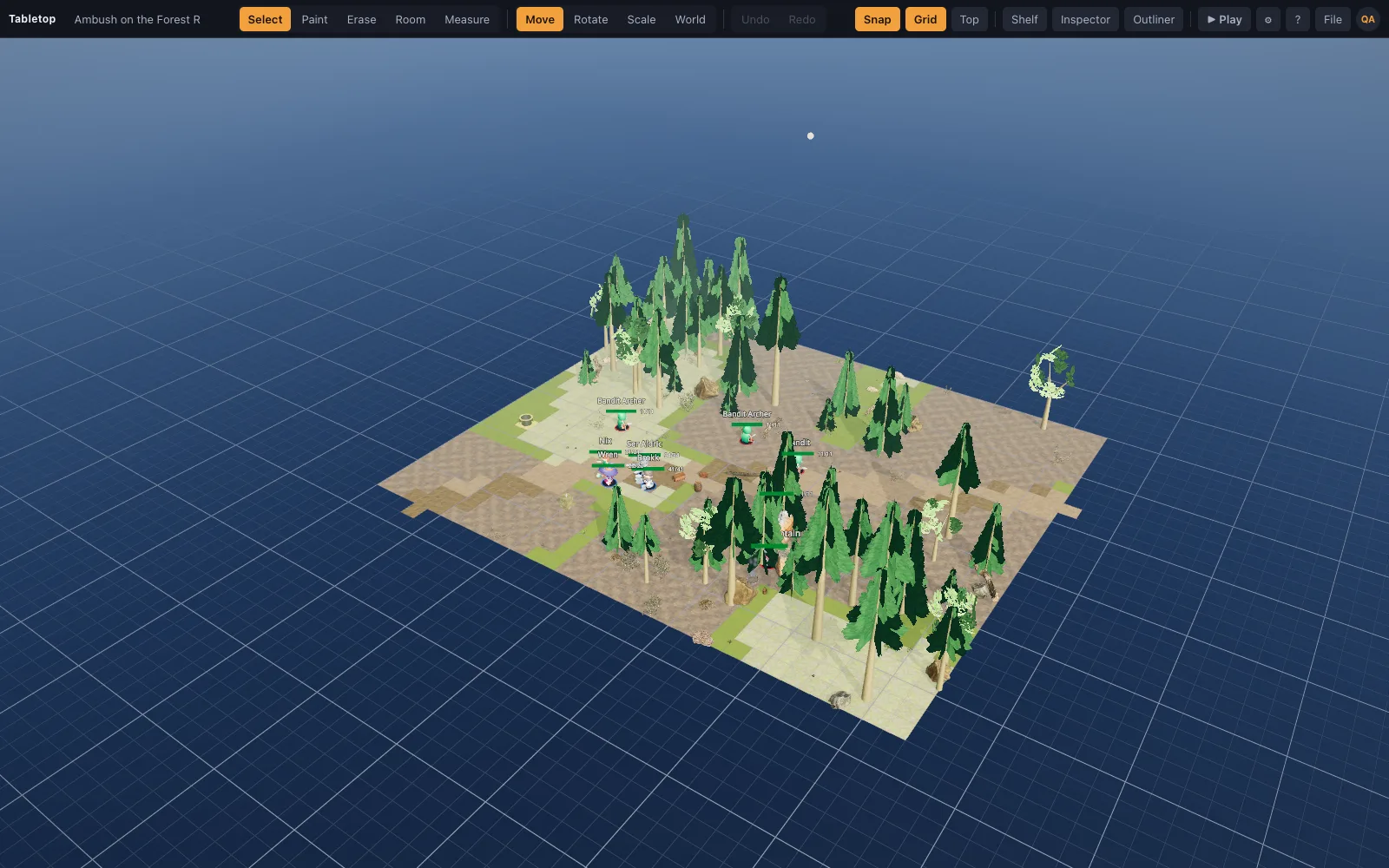
Sightlines both ways
The ambushers need somewhere to be that is plausible and findable — undergrowth, a rise, up a tree. A perception check should reveal something specific ("the crows left that stand of pines a minute ago"), not a binary. Half-seen ambushers are far better than invisible ones, because the party gets to act on a suspicion.
Make the road matter
A cart, mounts or an escort turns the fight from "kill them" into "get through". Once there is something to protect or to move, every player has a decision on round one, and the archers stop being the whole encounter.
- A cart that can be driven, hidden behind, or lost.
- A bend that breaks line of sight in one direction.
- A ditch — difficult terrain and half cover in one prop.
- An escape route the ambushers use when it turns.
Build it in ten minutes
A dirt road two squares wide through scattered pine, boulders on one side, a ditch on the other, and a cart at the bend. That is one brush pass, one scatter and three props. The Ambush on the Forest Road starter scene is exactly that layout if you would rather begin from a finished one.
Surprise, and how not to waste it
Surprise in fifth edition is per-creature, not per-side: anyone who noticed at least one ambusher is not surprised. In practice that means a single high-perception character usually breaks the surprise for themselves alone, which is exactly the outcome you want — the ranger reacts, everyone else scrambles, and the party feels the difference their scout made.
Resist the urge to open with a full volley into surprised characters. Two arrows and a shout is a better first round than four critical hits, because it starts a fight rather than a funeral, and the players still feel ambushed.
Give the ambushers a plan they abandon
Bandits want money, not a battle. Decide up front what makes them run — half their number down, their leader dropped, the wrong spell going off — and let the party discover that the fight has a shape. An ambush the party breaks by being frightening is far more memorable than one they win by attrition.
It also solves the pacing problem: forest fights sprawl, and an enemy with a break point ends the encounter at round four rather than round nine.
- A named leader, so dropping one enemy can end it.
- A stated break point you decide before initiative.
- A direction they flee in, which is a hook for next week.