Ready action rules in 5e: triggers, reactions, and the map habits that make it useful
The Ready action lets you act outside your turn. On your turn you name a perceivable trigger and the one thing you will do when it happens: take an action, or move up to your Speed. When the trigger occurs you may take that action as your Reaction, right after the trigger finishes, or let it pass. It costs your action now and your Reaction later, so it is a trade, and the trade only pays at certain spots on the map: the doorway, the top of the stair, the edge of the light. Everywhere else, attacking now is better than attacking later.
· 5 min read · TerrainTale
What the rule actually says
Ready has three parts. First, decide the trigger, and it must be something you can perceive: a creature coming through the door, an ally saying a word, the ogre stepping within 5 feet. Second, choose the response: an action, or moving up to your Speed. Third, when the trigger happens, you take that response as your Reaction immediately after the trigger finishes, or you ignore it. You get one Reaction per round, so a readied action spends the same Reaction an Opportunity Attack would.
Two limits catch people. A readied Attack action gives you one attack, not the two or three Extra Attack would give on your turn, because Extra Attack applies when you take the Attack action on your turn. And you cannot ready a Bonus Action; Ready is an action and the response is an action or movement, nothing else.
- Trigger: perceivable, decided on your turn.
- Response: one action or a move, taken as your Reaction after the trigger finishes.
- One attack only, even with Extra Attack; no readied Bonus Actions.
- If the trigger never comes, the action is gone.
Readying a spell
A readied spell is cast on your turn: you spend the spell slot then, and hold the magic until the trigger. Holding it requires Concentration, so readying a Fireball drops your Bless. The spell must have a casting time of one action, and if your Concentration breaks before the trigger, the spell is lost and the slot with it. You can hold the spell only until the start of your next turn.
This is why readied spells are for specific moments: Counterspell is not readied, it is already a Reaction; a Shatter readied for when the second goblin comes round the corner is a good use of a slot; a Fireball readied for when the enemies bunch up is a good use only if you are sure they will.
After the trigger finishes, not before
The words that matter are right after the trigger finishes. If your trigger is when the orc comes through the door, the orc is through the door and in the room before you swing. If you want to hit it in the doorway, the trigger is when the orc enters the doorway square, or when it comes within my reach. Players learn this once and then phrase triggers carefully, which is the point: a trigger is a square on the map, and a well-run table asks the player to name it.
The exception is movement. A readied move to step out of the way when the boulder rolls happens after the boulder starts, so the character is hit if the trigger is the boulder rolling and safe if the trigger is the ogre touching the boulder. Phrasing is the rule.
Where readying is worth a turn
Ready is an action delayed, so it is worth it only where waiting gives you something that acting now does not. Three map positions do. The doorway: the fighter stands beside it and readies an attack for the first creature through, taking a swing it would otherwise not get before the creature acts. The top of the stair: whoever climbs it arrives adjacent and alone. The edge of the light: an archer readies a shot for when anything steps into the torchlight, which turns the dark from a threat into a trap.
The fourth use is coordination. A rogue who readies a shot for when the fighter reaches the ogre gets Sneak Attack from the fighter standing next to it, in the same round the fighter arrives rather than the next. Two casters who ready spells for when the cleric's Dispel Magic lands act the moment the enemy's protection drops. A group that readies to move through a door together beats a group that files through one per turn, because nobody stands alone in the room for a round.
The cost you forget
Readying spends your Reaction, so a readied character cannot make an Opportunity Attack that round. The fighter holding the doorway with a readied attack will not get a free swing at the goblin that runs past her; the readied attack is the swing. Choose which you want. Against one enemy the readied attack is better because you choose the moment; against a crowd the Opportunity Attack is free and the Ready is a waste.
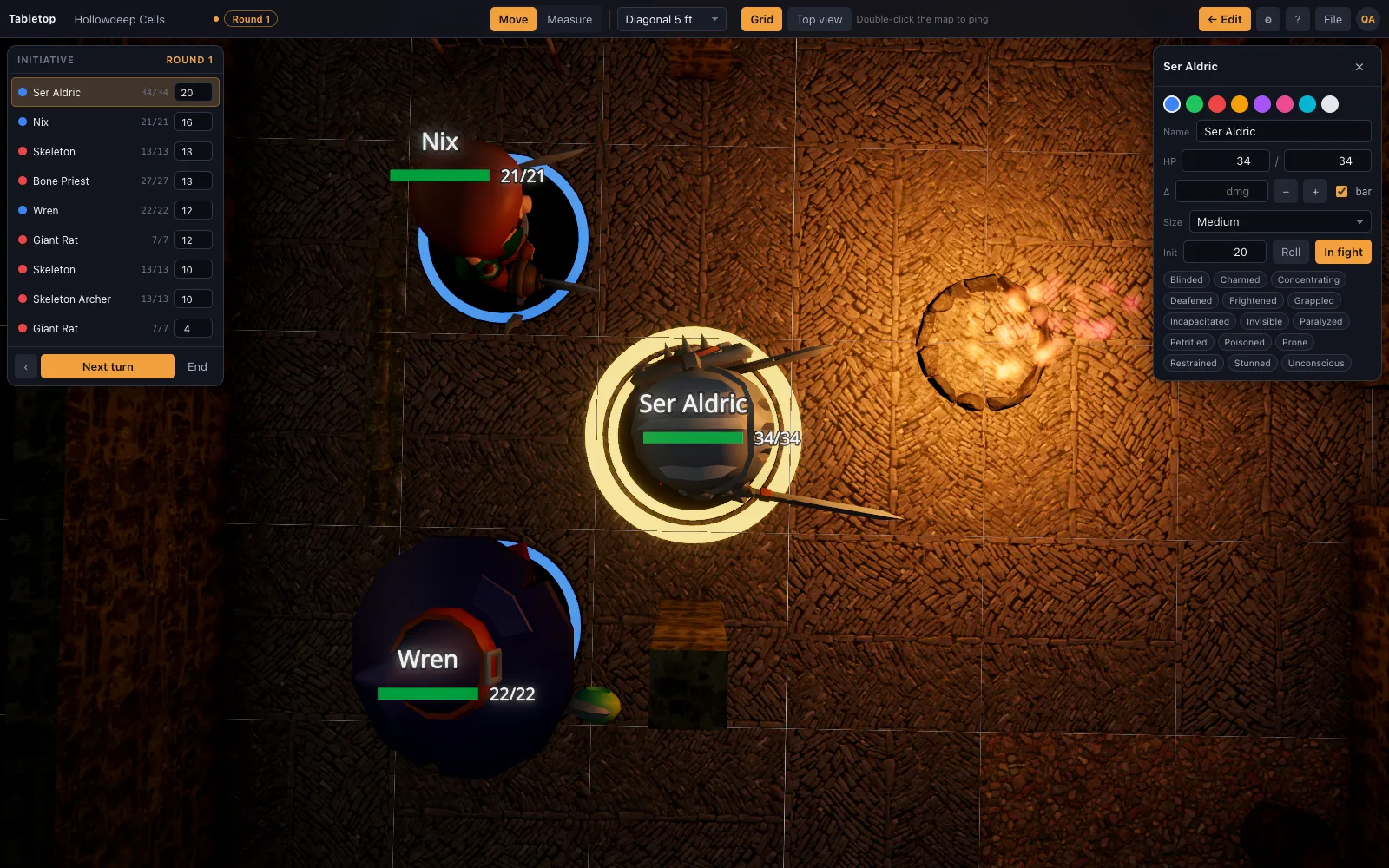
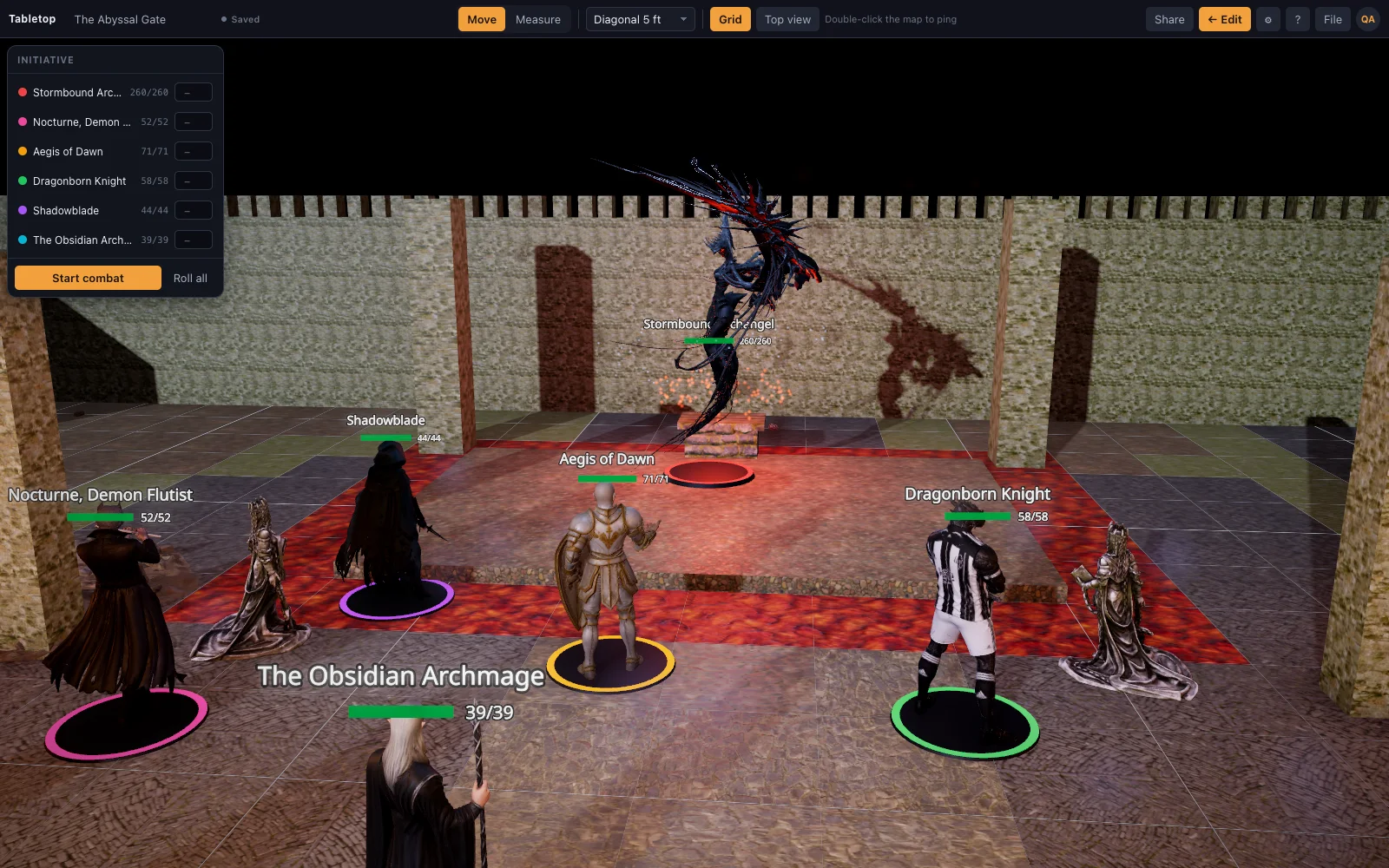
A readied action also ends at the start of your next turn if unused. On the initiative tracker, a readied character is a character whose turn is not really over, and the DM has to remember it. TerrainTale's initiative tracker keeps the order on screen in play mode; the readied trigger itself is a note the DM writes on paper, because no tracker knows what the player is waiting for.
2014 or 2024, what changed
Almost nothing. The 2024 rules restate Ready in the same shape: perceivable trigger, one action or a move, Reaction after the trigger, spells held with Concentration. The one practical change is around it: the 2024 rules define the Reaction and the Bonus Action more tightly in the glossary, so the old table argument about readying a Bonus Action is settled in the text. If your table plays the 2014 books, run it the same way.