Area of effect templates on a square grid, counted in squares
A fireball is a 20-foot radius sphere, so it is 40 feet across: an 8 by 8 block of squares on a 5-foot grid, of which the circle covers about 52. That number is the whole problem with spell areas on a grid, because the rules describe circles and cones in feet while the map is made of squares. Here is how each shape lands on the grid, counted in squares, with the fast rulings that stop a spell from eating five minutes of a fight.
· 6 min read · TerrainTale
The rule, and the shortcut every table invents
As written, an area is geometry. A sphere has a radius in feet from a point of origin you choose, and a creature is caught if any part of its space falls inside that distance. Nothing in the spell text mentions squares. On a grid that leaves a ring of edge squares where the circle clips a corner, and those are the squares people argue about.
So every group invents a shortcut. The usual one is to catch a square when its centre is inside the radius, which is quick, consistent and a shade stingier than the written rule. That is a table ruling rather than the rule, and it is worth saying so out loud, because the important thing is not which reading you use but that the dragon's breath and the wizard's fireball get the same one.
Spheres: the fireball in squares
A 20-foot radius sphere is 40 feet across, which is 8 squares, so it sits inside an 8 by 8 block of 64 squares with the corners bitten off. Centre it on a grid intersection and count the squares whose centres are within 20 feet and you get 52. Count every square the circle touches at all, which is closer to the written rule, and you get 60. The four corner squares of the block are out either way.
The gap between 52 and 60 is one ring of squares, and it is where the fighter standing at the edge lives. Decide which end of that range you use, mark the centre point on the map rather than the affected squares, and let the players count out from it. Placing the origin is the interesting decision; enumerating squares is bookkeeping.
- 20-foot radius sphere, a fireball: 8 squares across, about 52 squares by the centre ruling.
- 10-foot radius sphere, a shatter: 4 squares across, 12 squares by the same ruling.
- A Large creature straddling the edge is caught, because part of its 2 by 2 space is inside.
- The corner squares of the enclosing block are never in a circle, whichever reading you use.
Cones are the ones people get wrong
A cone in 5e is as wide as it is long. A 15-foot cone is 15 feet deep and 15 feet across at its far end, which is 3 squares by 3 squares at the mouth, narrowing to the point where it starts. A 60-foot dragon breath cone is 12 squares deep and 12 squares across at the end, which is a large part of any room.
The point of origin is a point you choose, normally on the edge of your own space, and it is not included in the area unless you say otherwise, so the caster is never in their own cone. On a grid the quick ruling is to lay a triangle from that point and include any square more than half covered. Announce the direction before anyone counts, because the argument is always about the two squares at the edge.
Lines, cubes and cylinders
A line is the easiest shape on a grid. A lightning bolt is a 100-foot line 5 feet wide, which is 20 squares long and one square wide, and it is drawn from a point of origin the caster chooses. Diagonal lines are where it gets fiddly; the fairest quick ruling is to include every square the line passes through.
A cube is defined by the length of one side and its point of origin lies anywhere on one face, so a 15-foot cube is a 3 by 3 block of squares that is also 15 feet tall. A cylinder, such as moonbeam at a 5-foot radius and 40 feet high, is a circle on the floor extended upward, which matters the moment someone is on a ledge or flying.
- Line: length in squares by 1 square wide, from a point you pick.
- Cube: side length in squares, and the same height.
- Cylinder: a circle in plan, full height, so flying creatures are in or out by altitude.
Height, and the part flat maps hide
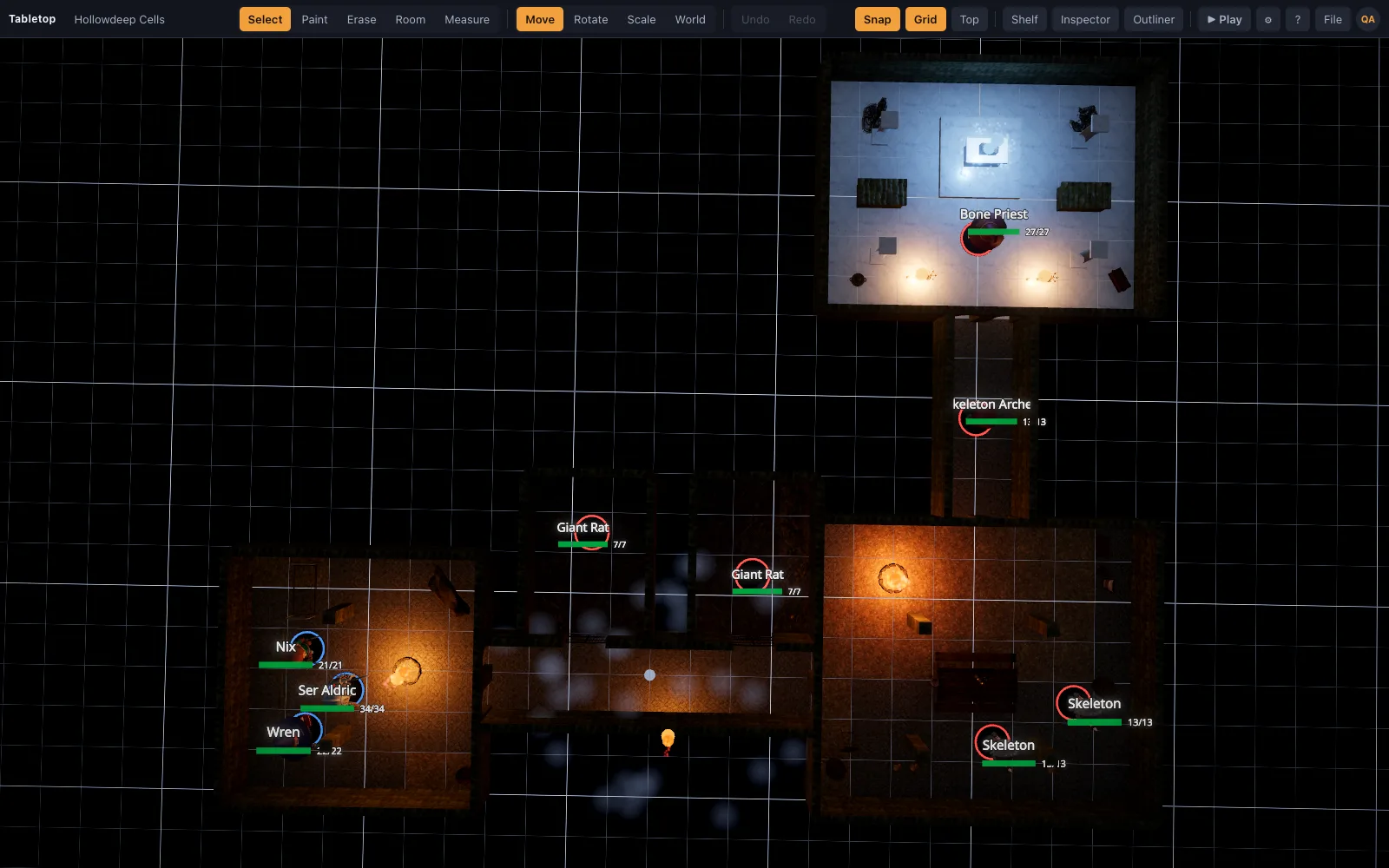
Areas are three dimensional and battle maps usually are not. A fireball centred at floor level reaches 20 feet up, which catches the archer on the balcony and the bird above the fight. A cone aimed upward at a flying creature misses everything on the ground. A cube dropped into a stairwell fills part of two floors.
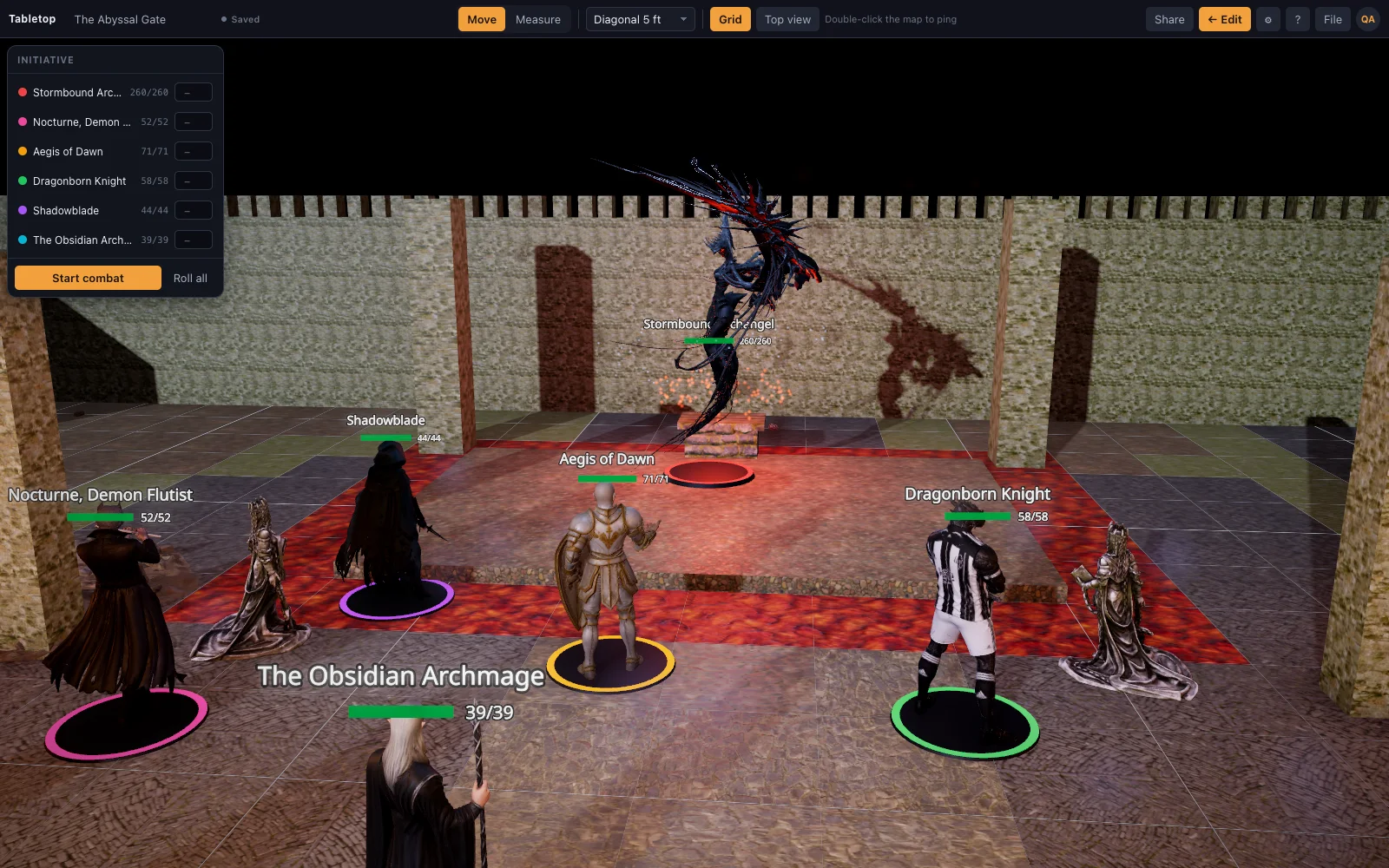
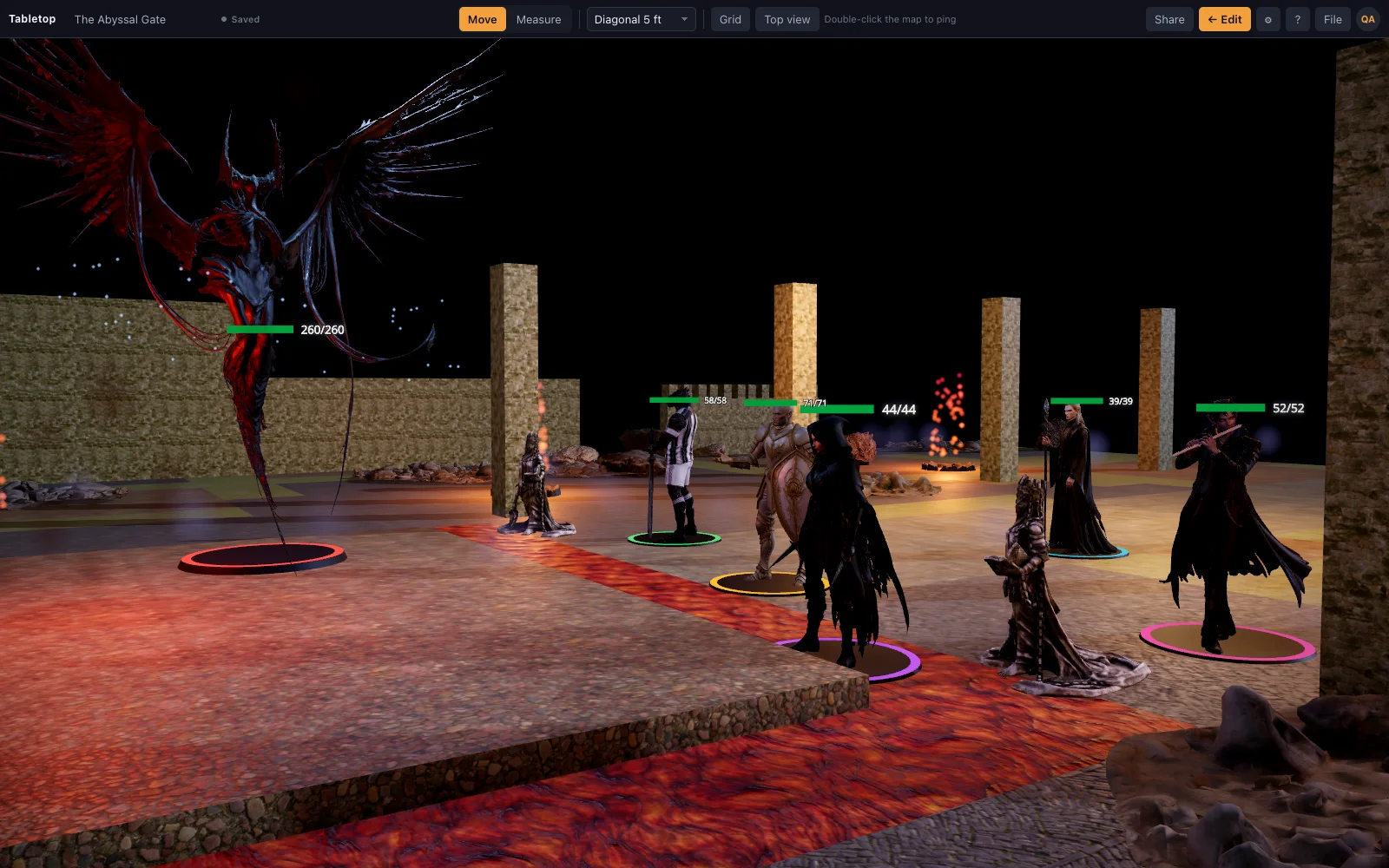
This is where a 3D table earns its place. When the balcony is genuinely 15 feet above the floor and the camera can look along the line, the question of whether the archer is inside the sphere is answered by looking rather than by arbitration. It is also the fastest way to explain to a new player why the wizard is asking everyone to stand apart.
Rulings that keep the fight moving
Write down three defaults and you will rarely stop play again. First, a creature is caught if half or more of its space is in the area; that replaces a corner-counting argument with a glance. Second, the caster picks the point of origin and cannot see round corners, so total cover keeps a target out. Third, when two players disagree, the one who is not casting decides, which makes everyone reasonable very quickly.
None of these are rules as written. They are table rulings, and saying so is the point: a consistent house ruling is faster than the exact geometry and fairer than deciding fresh each time, because the fresh decision always favours whoever argues hardest. Write them on the same card as your initiative order, read them out once at the start of the campaign, and you will spend the rest of it placing origin points rather than relitigating corners.