Prone rules in 5e: standing up, crawling and attacks against you
Prone is a condition with three effects. Your movement is limited to crawling, or to spending half your Speed to stand; your attack rolls have Disadvantage; and attack rolls against you have Advantage from within 5 feet and Disadvantage from further away. Standing up costs half your Speed, so a character with 30 feet of movement spends 15 feet getting up and has 15 feet left. That is the whole rule, and most of the confusion at the table comes from two places: how you got knocked down, and what a prone creature is worth to an archer.
· 5 min read · TerrainTale
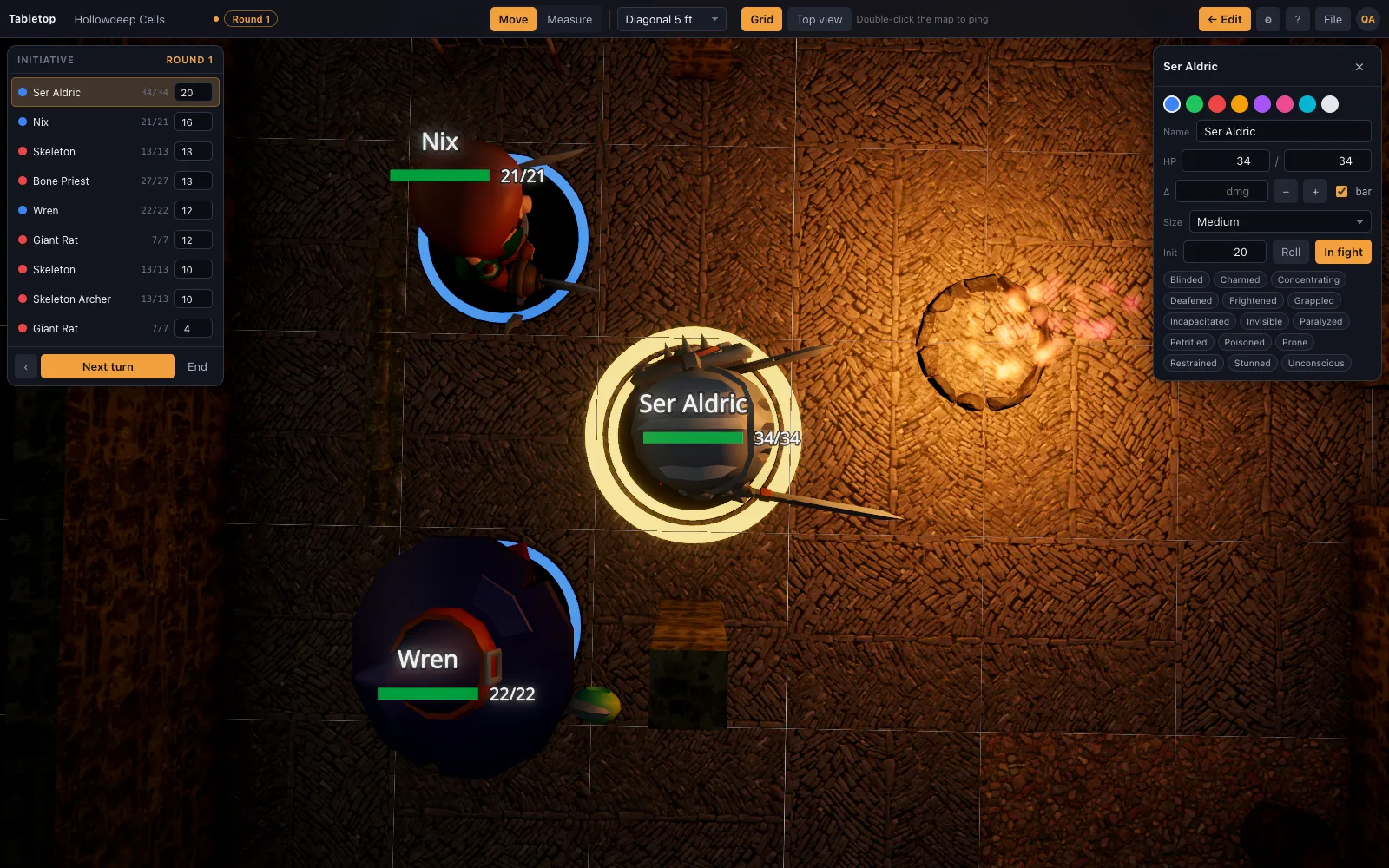
What actually puts a creature prone
In the 2024 rules there are four common routes to the floor. You can drop prone on your own turn for free, which is what a character does before an enemy volley of arrows. An Unarmed Strike can shove: the target makes a Strength or Dexterity saving throw against a DC of 8 plus your Strength modifier plus your Proficiency Bonus, and on a failure you push it 5 feet or knock it prone. A weapon with the Topple mastery knocks a creature prone on a hit if it fails a Constitution save against the same DC. And some monsters do it with their attacks, a wolf's bite or a warhorse's charge among them.
The 2014 rules differ in the mechanics. The 2014 shove is a contested check, your Athletics against the target's Athletics or Acrobatics, and weapon mastery does not exist in 2014 at all, so a 2014 table has no Topple. If a player says their greatclub knocks things down, that is the 2024 Topple mastery, and it only applies to the weapons that list it.
- Dropping prone on your turn costs no movement and no action.
- A shove that knocks prone is one of your attacks, not the whole Attack action.
- A flying creature knocked prone falls unless it can hover.
Standing up: half your Speed, and when you cannot
Standing costs an amount of movement equal to half your Speed, and it is movement, not an action. A monk with 40 feet of Speed spends 20 feet standing and keeps 20. If your Speed is 0, because you are grappled or exhausted, you cannot stand at all, and if you have less movement left than half your Speed you stay down until your next turn. Difficult terrain does not change the cost of standing; it changes the cost of the movement you make afterwards.
Standing up does not provoke an Opportunity Attack. Only leaving a creature's reach does, so the sequence of getting up next to an enemy and then walking away provokes at the walking, not at the getting up. Players who learned older editions often expect the free hit for standing; it is not in 5e, 2014 or 2024.
Crawling on the map
A prone creature can crawl. Every foot of crawling costs 1 extra foot, so it moves at half speed, and it is 3 squares for a 30-foot creature rather than 6. Crawling through difficult terrain stacks the costs: each 5-foot square costs 15 feet, which is one square for most characters and the reason nobody crawls through rubble twice.
Crawling is still movement, so it provokes Opportunity Attacks when it leaves a reach. On a battle map that makes the choice plain: a downed fighter next to an ogre can spend 15 feet standing and 15 feet stepping away and eat one attack, or crawl 3 squares and eat the same attack while still prone at the end. Standing is almost always right unless the creature has nowhere to go.
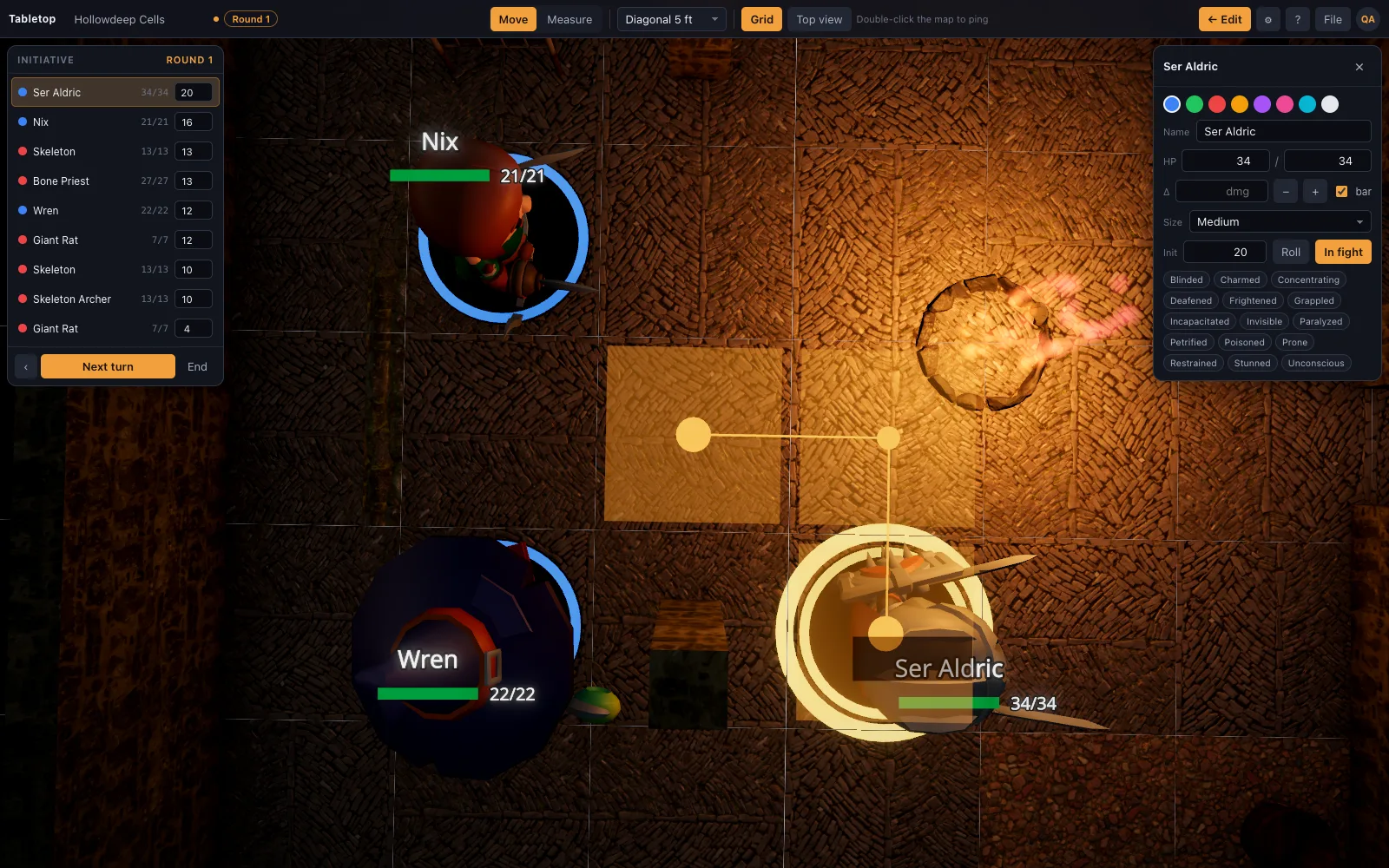
Attacks against a prone creature: the 5-foot line
Advantage if the attacker is within 5 feet, Disadvantage otherwise. That is the sentence that decides most fights around a prone body. A sword next to it gets Advantage. A bow at 30 feet gets Disadvantage. The archer who cannot see why is usually picturing a helpless target rather than a low one; the rule models the difficulty of hitting something flat on the ground from range.
Two practical follow-ons. A creature with a reach weapon attacking from 10 feet away is not within 5 feet, so it has Disadvantage against a prone target and should step in. And a rogue who knocks a target prone and then shoots it has thrown away Sneak Attack, because Disadvantage cancels the Advantage that Sneak Attack needs, unless an ally within 5 feet of the target supplies the condition another way. The prone creature's own attacks have Disadvantage regardless of distance, which is why monsters that get knocked down usually stand rather than swing.
- Melee from an adjacent square: Advantage.
- Any attack from 10 feet or more: Disadvantage.
- The prone creature's own attack rolls: Disadvantage, always.
Prone behind cover, and other table rulings
Prone gives no cover on its own. A creature lying in the open is easier to hit in melee and harder to hit at range, and that is all. Lying behind a low wall is a different matter: the wall gives half cover, plus 2 to AC and Dexterity saving throws, and a DM can rule that a prone creature behind a 3-foot wall is completely hidden from a shooter on the far side, which is total cover and cannot be targeted. Treat that as a ruling about the wall rather than the condition.
On a 3D map it is easy to judge, because you can put the camera at the archer's eye level and see whether the body shows above the parapet. On a flat map, say the rule out loud before the fight: prone behind low cover from a shooter at ground level counts as total cover, and from a shooter above it does not. Consistency is worth more than the exact call.
Tracking it at the table
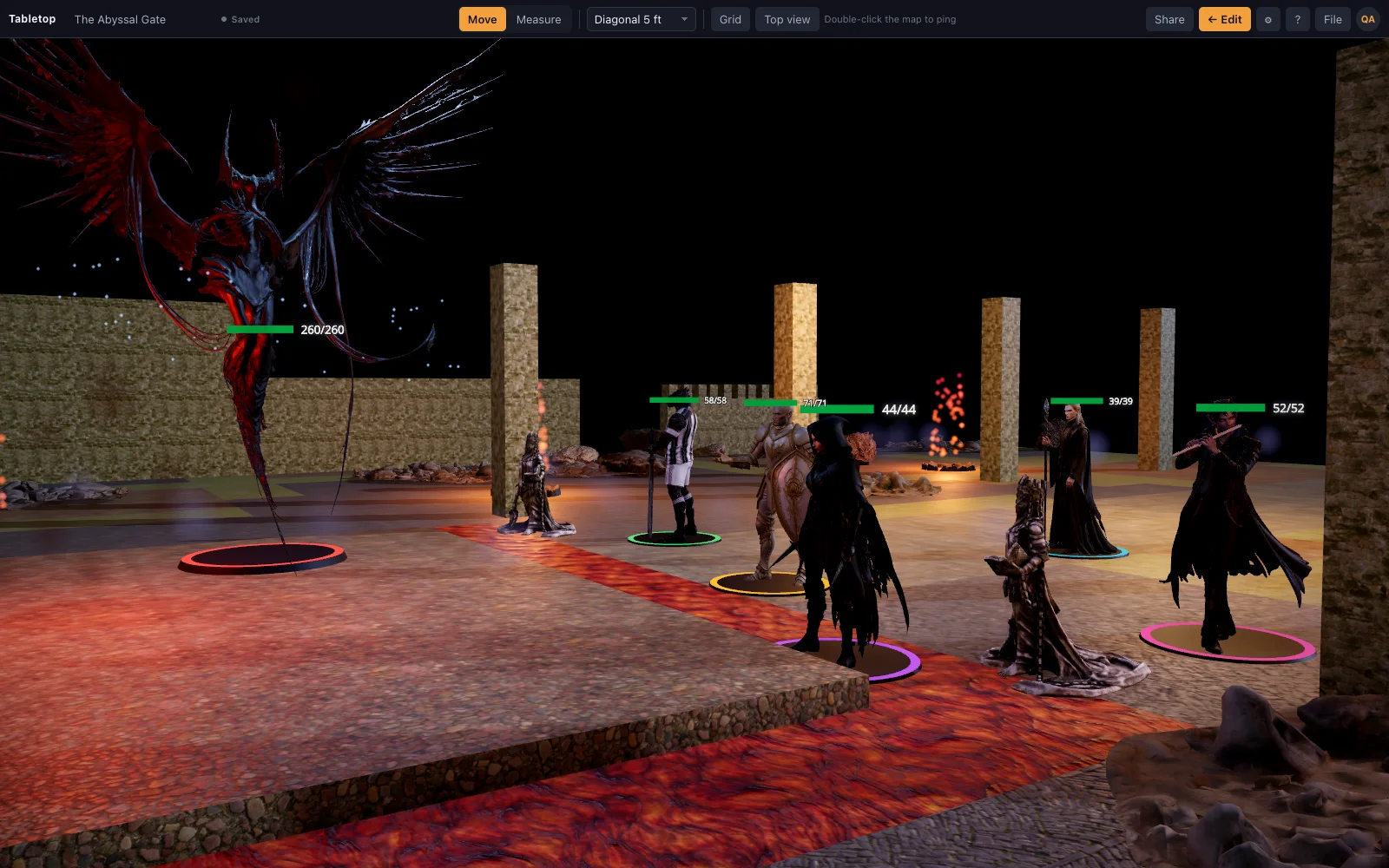
Prone is the condition most often forgotten between turns, because it is applied by one creature's attack and remembered by another creature's turn. Mark it the moment it happens and clear it the moment the creature stands. If your tokens carry conditions, put Prone on the token rather than on a note; TerrainTale tracks conditions and HP on the minis in play mode, so the marker sits where everyone looks.
The other thing to track is movement already spent. A creature that has moved 20 feet, been knocked prone by a reaction, and then wants to stand needs 15 feet it no longer has. Counting movement as you drag the mini, with a ruler that shows feet, settles that without a debate.