Running combat online without slowing the game to a crawl
A six-round fight that takes forty minutes in person takes ninety online, and none of the extra fifty minutes is fun. Almost all of it is dead air: waiting for someone to find a spell, waiting for the DM to describe geometry, waiting for a turn nobody knew had started.
· 7 min read · TerrainTale
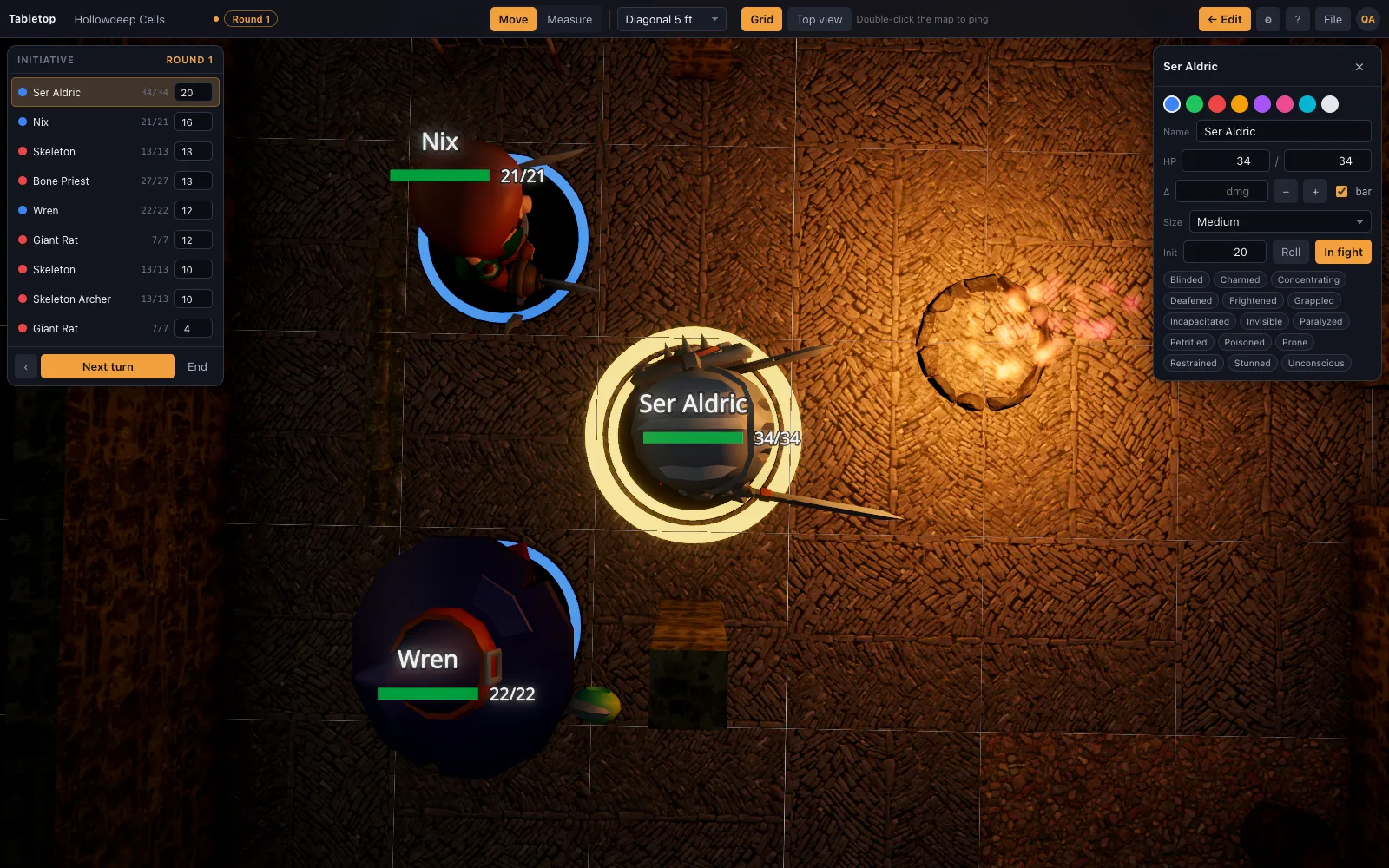
Make the turn order visible and loud
The single biggest cost online is that nobody knows it is their turn. Put the order on screen, highlight the current token, and say the next name out loud: "Kira, you're up — Bran, you're on deck." The on-deck call is worth more than any other change on this list, because it turns waiting into preparing.
Roll initiative before the fight
Roll monster initiative during prep and ask players to roll the moment a fight is obviously coming. Getting eight people to roll and report a number is three minutes you can spend on the first round instead.
Telegraph the map before initiative
Give the room thirty seconds of description while everyone can still see the whole map: what is high, what is cover, what is on fire. Once turns start, questions about geometry cost the whole table. A 3D map does a lot of this work by simply being visible.
Cut the round-trip on rulings
Say yes, keep the momentum, note the rule, look it up after. A wrong ruling costs one moment; a five-minute lookup costs the whole table five minutes multiplied by six people.
- Ninety seconds a turn, and you narrate a hesitating player into an action.
- Damage and healing entered on the token card, not tracked in chat.
- Conditions shown on the mini so nobody asks who is prone.
- One person calls distances — the ruler, not the argument.
Design fewer, better rounds
Most slow fights are slow because they are too long. Fewer, more dangerous monsters with a clear objective produce four thrilling rounds instead of nine tedious ones. When a fight is decided, call it — the last two rounds of mopping up are the ones nobody remembers.
Prepare the monsters the way you prepare a map
Half of the DM-side delay in an online fight is looking things up. Before the session, write each monster down to a single line you can read at a glance: armour class, hit points, speed, the one or two attacks it will actually use, and its saving-throw modifiers. Anything you did not write down, you were not going to use.
Roll damage for identical monsters in one handful, or use the average printed in the stat block. Nobody has ever noticed, and it removes a dozen small pauses from a fight.
- One line per monster: AC, HP, speed, two attacks, saves.
- Average damage instead of rolling, for anything mundane.
- Group identical monsters onto one initiative entry.
- Decide the break point before the fight, not during it.
Keep the players busy between turns
The dead air online is not the DM's turn, it is the four turns a player waits through. Give them something to do: an on-deck call so they plan, a shared map they can measure on, and permission to declare an action before their turn arrives. A table where two people are always thinking is a table that moves twice as fast.
If a player is genuinely stuck, offer two concrete options and move on. "Do you want to close with the archer or hold the door?" is kinder and faster than silence, and it teaches the shape of a turn to newer players without a lecture.