Flanking in 5e: how the optional rule works and whether your table should use it
Flanking is not in the core rules of 5e. It is an optional rule in the Dungeon Master's Guide, and the most commonly adopted one, because it rewards the thing players want to do on a battle map: move. It is also the optional rule most often regretted, because advantage is the biggest bonus in the game and flanking hands it out to anyone who can walk around a monster. Here is how it works, and how to decide.
· 6 min read · TerrainTale
The rule as written
When a creature and at least one of its allies are adjacent to an enemy and on opposite sides of it, they flank it, and each has advantage on melee attack rolls against it. Only melee attacks; a flanking archer gets nothing. Both flankers must be able to act, so an unconscious ally does not count, and the enemy must be able to be flanked at all, which the DM may deny to a creature with no front, such as an ooze.
The rule exists because 5e's grid otherwise gives no positional reward. Without it, the only reason to move around a monster is to reach a different target, and the fighter can stand in the same square for eight rounds without cost.
What opposite sides means on squares
On a square grid the DMG gives a precise test. Draw an imaginary line between the centres of the two flankers' squares. If that line passes through opposite sides or opposite corners of the enemy's space, they flank. For a Medium enemy on one square that gives four flanking pairs: north and south, east and west, and the two diagonals. For a Large creature on a 2 by 2 block the line has to cross the whole block, so two attackers on the same long side never flank, but a great many other pairs do.
- Medium target: flank from N/S, E/W, NE/SW or NW/SE.
- Large and bigger: the line between the flankers' centres must cross opposite sides or corners of the whole space, not just adjacent squares.
- Hex grid: the flankers must be on opposite hexes of the target, counting round the ring.
- Reach does not help: flanking requires being adjacent, so a polearm user standing 10 feet away does not flank.
Why many tables drop it
Advantage adds roughly +4 to +5 to hit on average and doubles the chance of a critical. The rule makes it available on almost every turn once the party is bigger than the enemy, which in most fights it is. Three consequences follow. Rogues get Sneak Attack for free, which was meant to require some effort. Features that grant advantage, such as Reckless Attack, Wolf Totem and the Help action, stop being special. And monsters that are supposed to be threatening get surrounded and shredded, while the party in a corridor never suffers the reverse.
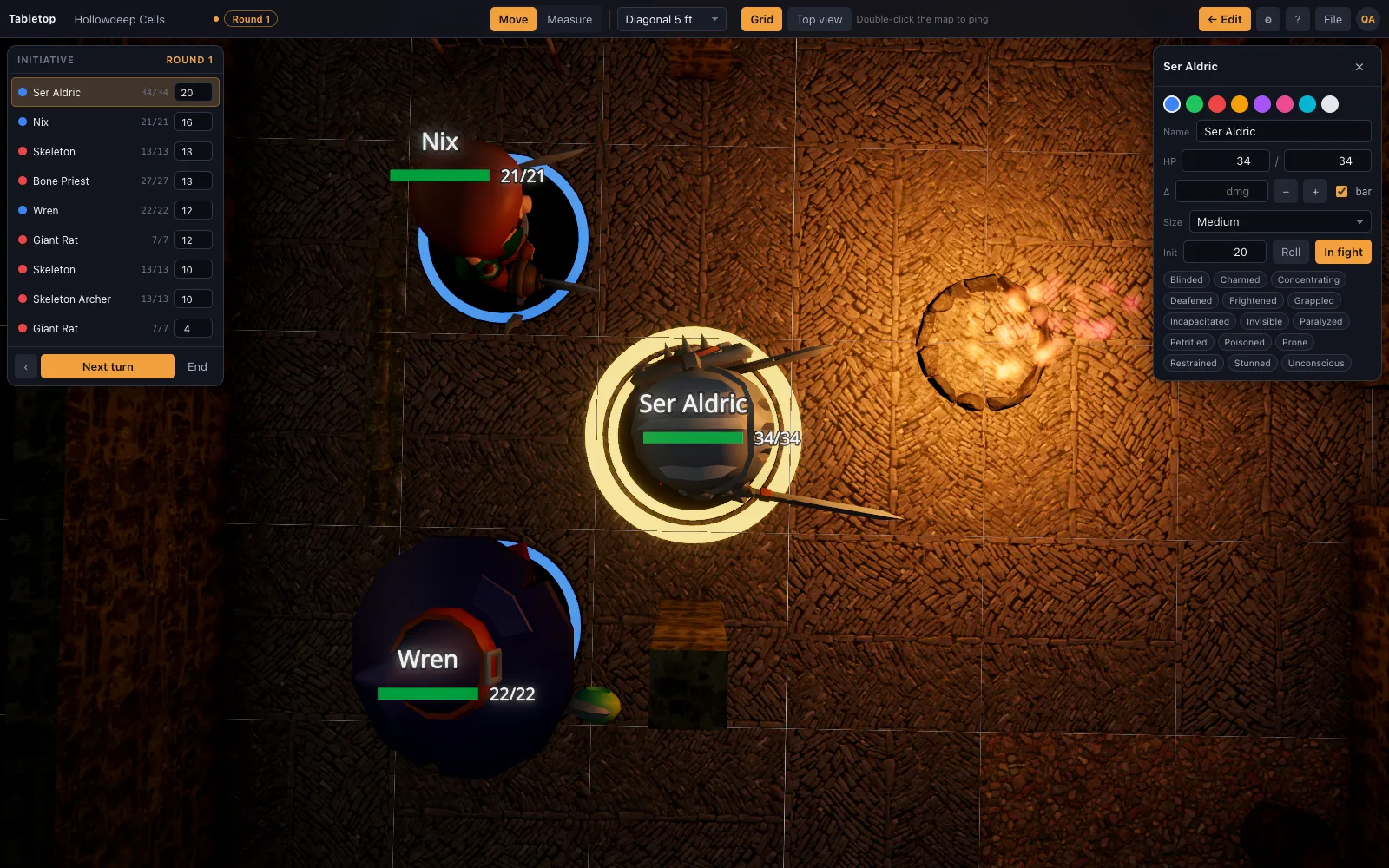
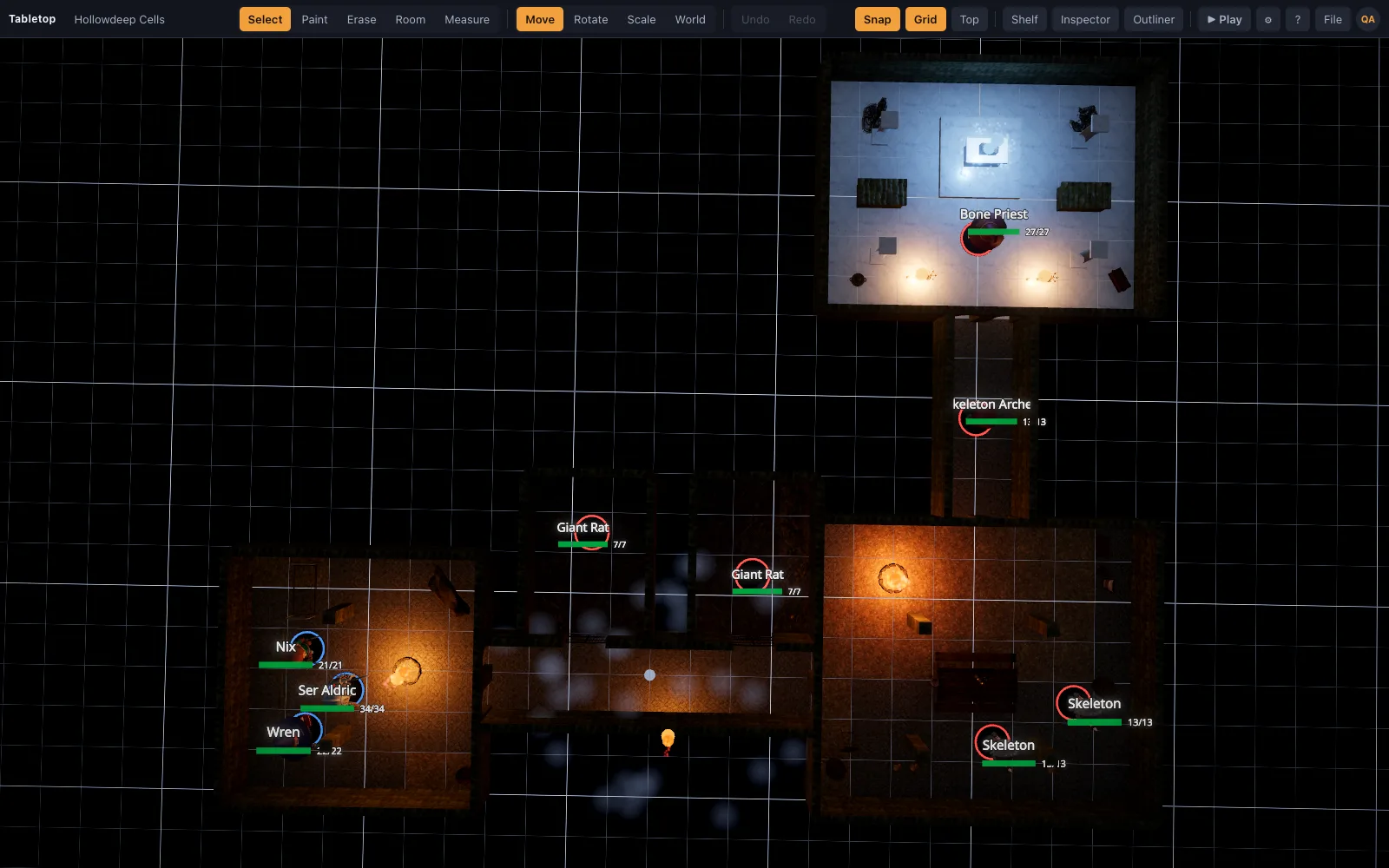
The rule also slows play slightly, because flanking on a grid needs a look at the map every attack. On a VTT this is the smaller problem: when the minis are on their squares, everyone can see the line. TerrainTale keeps the grid visible under the miniatures in play mode for exactly this kind of check.
The alternatives
Tables that want positional reward without free advantage tend to use one of three variants. A flat +2 to hit when flanking, which is the old 3rd edition bonus and roughly half the value of advantage. Flanking only for creatures that would benefit tactically, so a rogue flanking counts but three orcs around a wizard do not, which is DM judgement and works in trusting groups. Or no flanking, but a generous reading of the Help action, so a player who spends their action setting up an ally gets advantage the honest way.
Whatever the choice, say it before the campaign starts and put it in the session-zero notes. A rule added mid-fight feels like a favour to whoever asked.
Building maps with flanking in mind
If you do use flanking, the map has to make it possible for both sides. Rooms that are all open floor let the party surround everything; corridors let the monsters bottle the party up so nothing can be flanked. Aim for a mix: open ground the party has to cross, then pillars and furniture that make a flank a two-turn manoeuvre instead of a free one. Difficult terrain around a boss is a good, quiet way of making the flank cost a turn.