Dim light in 5e: what gets disadvantage, what does not, and what darkvision fixes
Dim light makes an area lightly obscured, and the only thing that does is give disadvantage on Wisdom (Perception) checks that rely on sight. It does not give disadvantage on attack rolls, and it does not let anyone hide on its own. Darkness is the state that bites: it makes an area heavily obscured, and a creature trying to see into it is effectively Blinded. Darkvision moves each state one step brighter within its range, which is less than most players think.
· 4 min read · TerrainTale
The three light states in the 2024 rules
Every square on a map is in one of three states. Bright light is normal vision. Dim light, the edge of a torch's glow, twilight or a full moon, makes an area lightly obscured. Darkness, an unlit room or a night with no moon, makes it heavily obscured.
The effects are short enough to learn by heart:
- Bright light: no effect.
- Dim light: disadvantage on Wisdom (Perception) checks that rely on sight.
- Darkness: a creature trying to see something there has the Blinded condition for that purpose.
- Blinded: you fail checks that need sight, your attack rolls have disadvantage and attacks against you have advantage.
Does dim light give disadvantage on attacks?
No. This is the most common misreading at the table. A fighter swinging at a goblin in dim light rolls normally, and so does an archer shooting into it. Dim light only affects Perception that relies on sight, which matters for spotting a hidden creature or noticing a tripwire, not for hitting something you can already see.
Disadvantage on a check also costs 5 from a passive score. A character with passive Perception 14 notices things in dim light as if it were 9, which is why a sentry at the edge of a campfire's glow misses the rogue in the treeline. The 2014 rules read the same on all three light states; what changed in 2024 is Hide, which now sets a flat DC 15 and gives the Invisible condition, and still needs heavy obscurement or three-quarters cover, so dim light alone is never enough to hide.
What darkvision does and does not fix
Darkvision lets a creature see in dim light within its range as if it were bright light, and in darkness as if it were dim light. Two consequences follow. An elf with 60 feet of darkvision in a pitch-black corridor sees the first 12 squares, but as dim light, so Perception checks there are still at disadvantage. And beyond 60 feet the corridor is simply dark.
Darkvision also sees darkness only in shades of grey, so colour clues vanish. It does nothing against magical darkness such as the Darkness spell, which blocks darkvision outright, and nothing for the half of the party that lacks it. A mixed party in a dungeon still needs a torch, and a torch gives away its bearer from far beyond its own light.
Unseen attackers and targets
Attack rolls change only when someone cannot see. If you cannot see your target, you have disadvantage; if the target cannot see you, you have advantage; if neither can see the other, the two cancel. Two creatures fighting in total darkness without darkvision roll normally, which surprises players who expected chaos.
This is where light becomes tactics. A party with darkvision fighting creatures without it can put out the lights and gain advantage on every attack. A group of cultists holding the only lantern is lit for everyone's archers while they peer into black. Put the light sources on the map and let the players decide what to do with them.
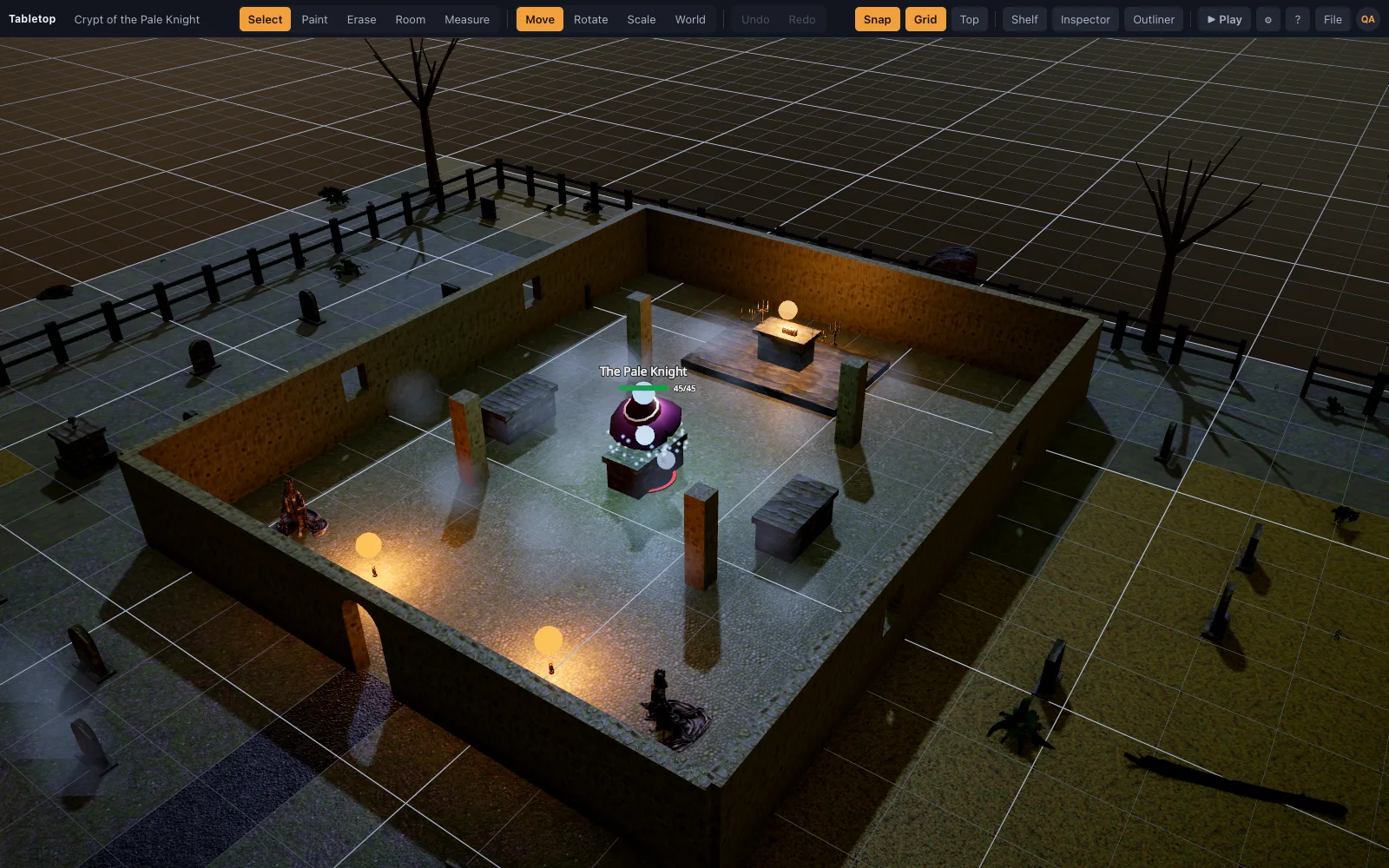
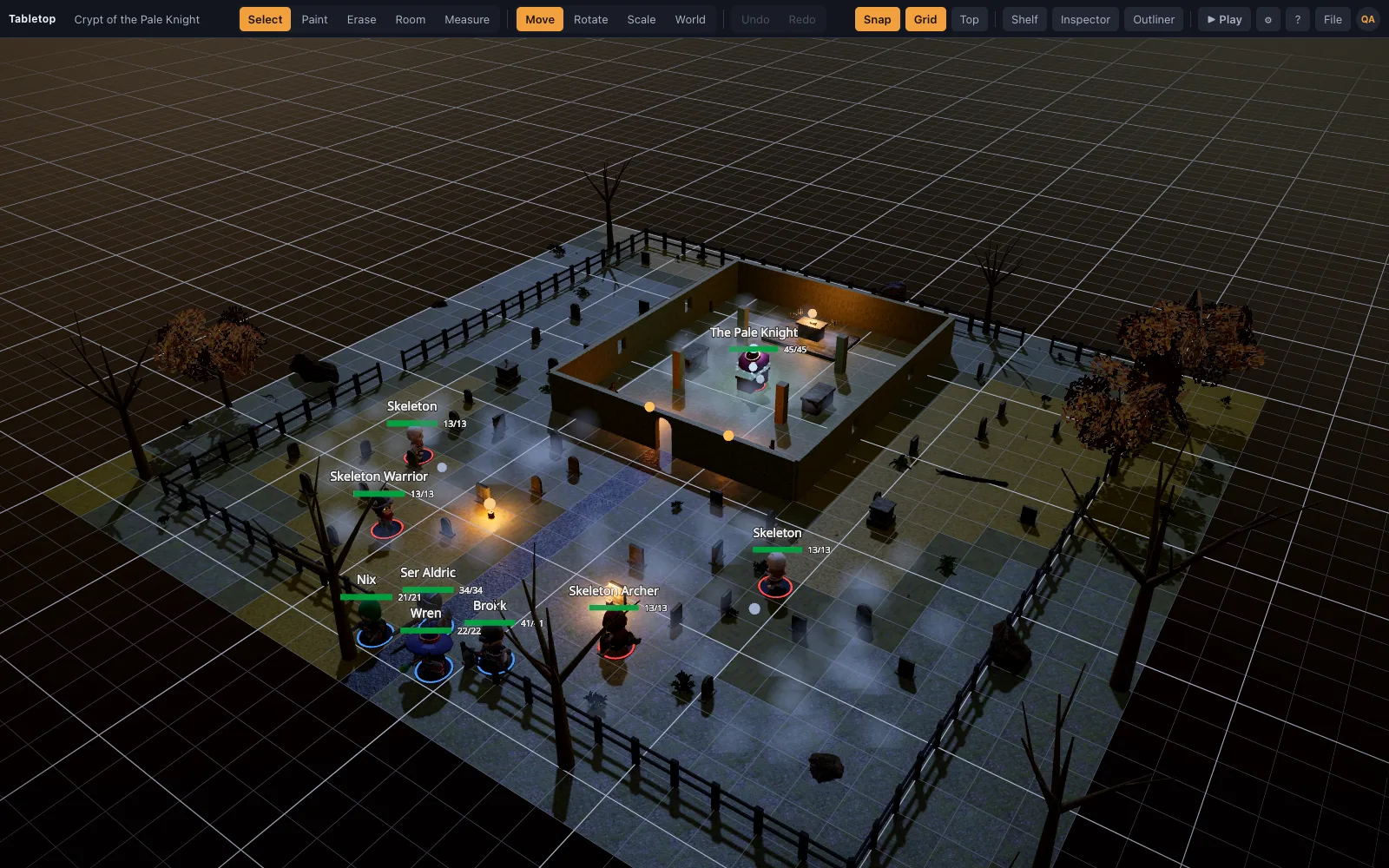
Lighting a map so the rule is visible
The rule only works if everyone can see where the dim ring ends. On paper, shade the dim band with a pencil and leave the bright area clear. On a 3D map with real light, place the torches and braziers where the fight needs them and let the falloff show the bands; a torch gives 20 feet of bright light and 20 more of dim, which is 4 squares and then 4 more. The light sources article has every radius.
Decide one thing before play: which squares are dim when the fight starts. Call it once, and the table will use it.
Two quick checks help at the table. When a player asks whether they can see something, ask where it is: bright, dim or dark, and within their darkvision or not. When a monster tries to hide, ask what it is behind or inside: a shadow is not enough, a thick fog or a pillar is. Most light arguments end with those two questions.