How long is a round in D&D 5e, in the game and at the table
A round in D&D lasts about six seconds of game time, in both the 2014 and the 2024 rules. Ten rounds make a minute, which is why a 1-minute spell such as Bless lasts 10 rounds and a 10-minute spell lasts 100. At a real table, a round with five players and a handful of monsters usually takes several minutes, and a slow one can take a quarter of an hour. The gap between those two numbers is where most fights drag, and most of it can be closed without anyone feeling hurried.
· 5 min read · TerrainTale
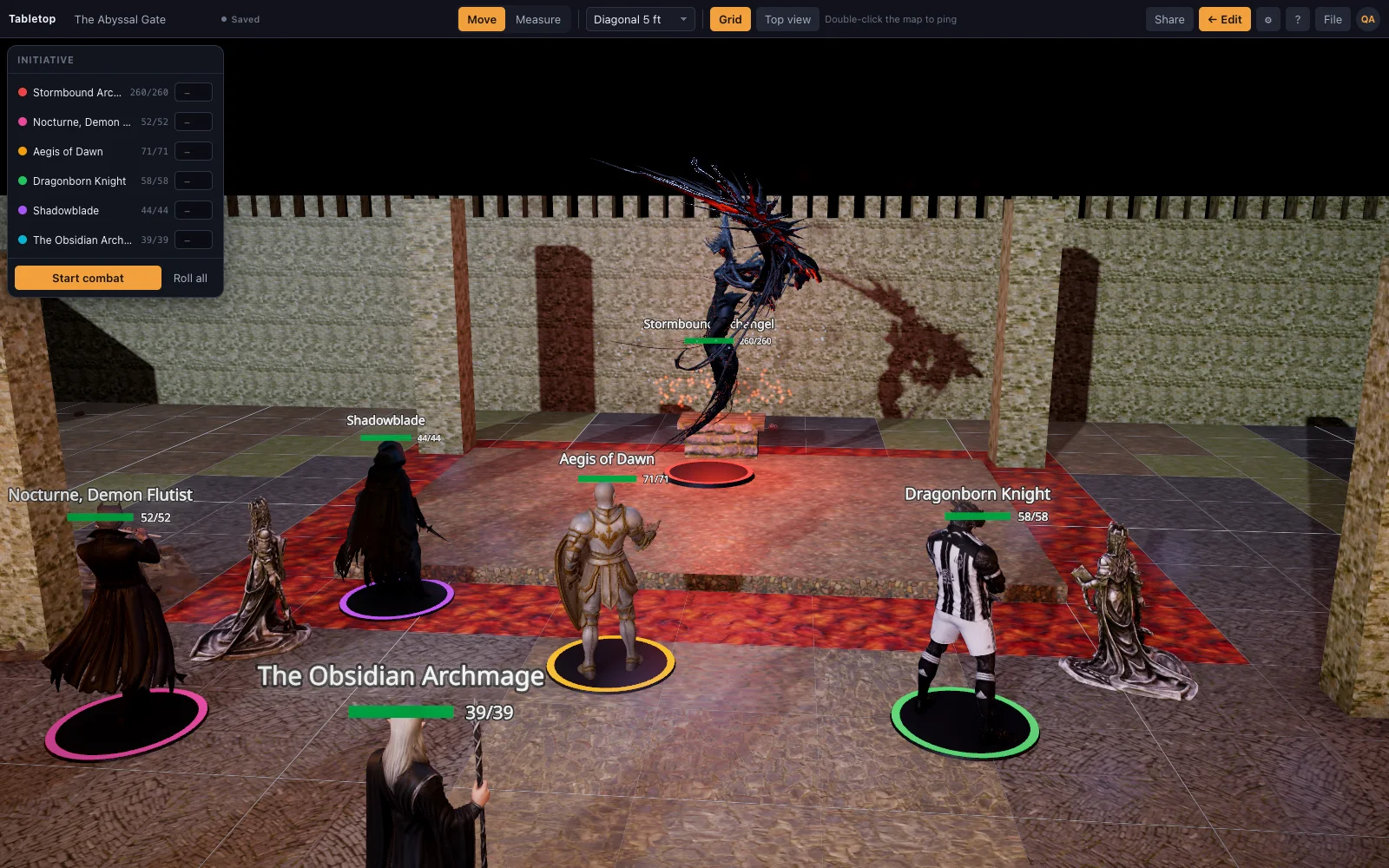
Six seconds of game time
Every creature acts once per round, in initiative order, and all those turns together cover roughly six seconds. That is why a turn holds so little: a move up to your Speed, one action, perhaps a Bonus Action, and a Reaction that refreshes at the start of your next turn. The fiction is that everyone acts at once; the table resolves it one at a time.
The six-second figure is what converts durations. One minute is 10 rounds, 10 minutes is 100, and an hour is 600. When a spell or effect lasts until the end of your next turn, that is one round from now. Track long durations by the round they end on, not by counting down each turn.
- 1 round: about 6 seconds.
- 1 minute: 10 rounds.
- 10 minutes: 100 rounds, usually longer than any fight.
- Until the end of your next turn: one full round.
How long a round takes at a real table
There is no official figure, and tables vary widely, so treat any number as a rough guide. A player who knows their character can take a turn in under a minute. A spellcaster choosing between four options, a DM running six monsters, and a few rules look-ups can each add a couple of minutes. Five players and a DM at an unhurried pace easily spend five to ten minutes on a round, which makes a four-round fight the best part of an hour.
The useful measurement is your own. Note the time when initiative is rolled and when the last monster falls, and divide by the rounds. Once you know the number, you know whether the problem is a slow turn, a slow DM or simply too many creatures.
Where the time goes
Most slow rounds lose time in the same places. The player whose turn it is has not thought about it until their name is called. Someone asks how far away the goblin is and the table counts squares out loud. A spell's text gets read in full. The DM's monsters each need a decision, and six identical ones become six separate turns. Damage is rolled one die at a time.
None of these is anyone doing something wrong. They are the ordinary friction of a turn-based game, and each has a simple fix that saves a minute here and there. Over a four-round fight with six turns a round, a minute saved per turn is nearly half an hour.
Eleven ways to shorten a round
Pick the ones that fit your group; nobody needs all of them. The biggest wins are usually the on-deck call and grouping identical monsters, because they cut dead time rather than asking anyone to speed up.
- Call who is up next as well as who is up now, so they plan ahead.
- Roll attack and damage dice together.
- Run identical monsters on one initiative count.
- Keep a card or note of each character's go-to action.
- Measure before the player commits, not after, with a ruler that reads feet.
Six more fixes on the DM's side
The DM runs more turns than anyone, so the DM's habits matter most. Write each monster's plan in one line before the session: the goblins shoot and hide, the ogre goes for the nearest target. Use average damage for large groups of minions. Track hit points and conditions where everyone can see them so nobody asks. Let a fight end when the outcome is clear; the last two bandits can surrender or flee. Keep a simple rule for looking things up: rule on it now, check it after the session. And give a clear description of the battlefield at the start, so players are not asking what is where on every turn.
Initiative on screen instead of on paper
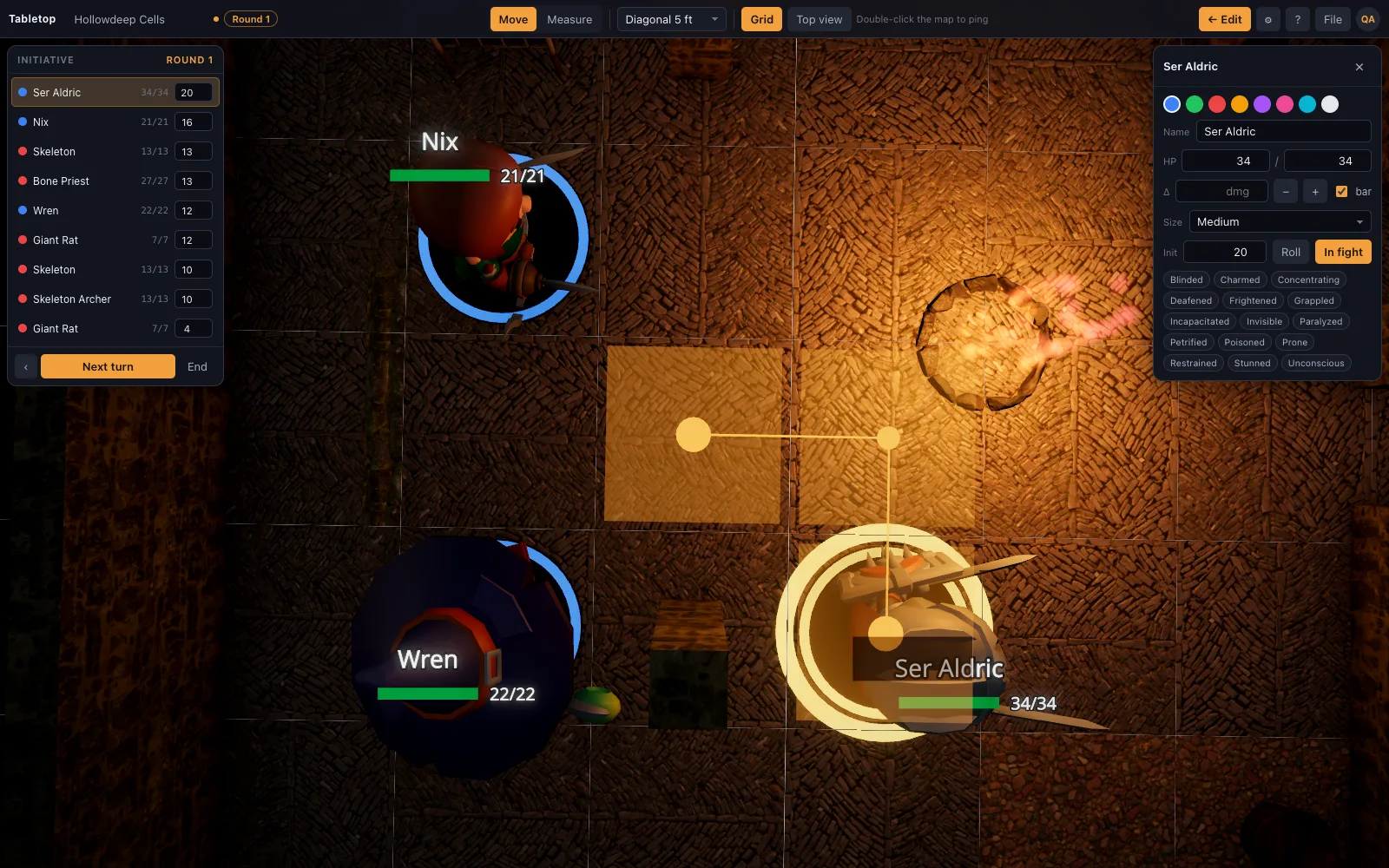
A visible initiative order does a lot of the work in these lists. When everyone can see whose turn it is, who is next, and each creature's health and conditions, the questions that eat time stop being asked. TerrainTale's play mode keeps an initiative tracker with HP bars and conditions on the tokens themselves, so the order and the state of the fight are on the map rather than in the DM's notebook.