Theatre of the mind vs battle maps: the answer is both, on purpose
The two camps are arguing about different fights. Narration is better at the ones where position barely matters, and a map is better at the ones where it decides everything. A DM who can switch cheaply gets both.
· 6 min read · TerrainTale
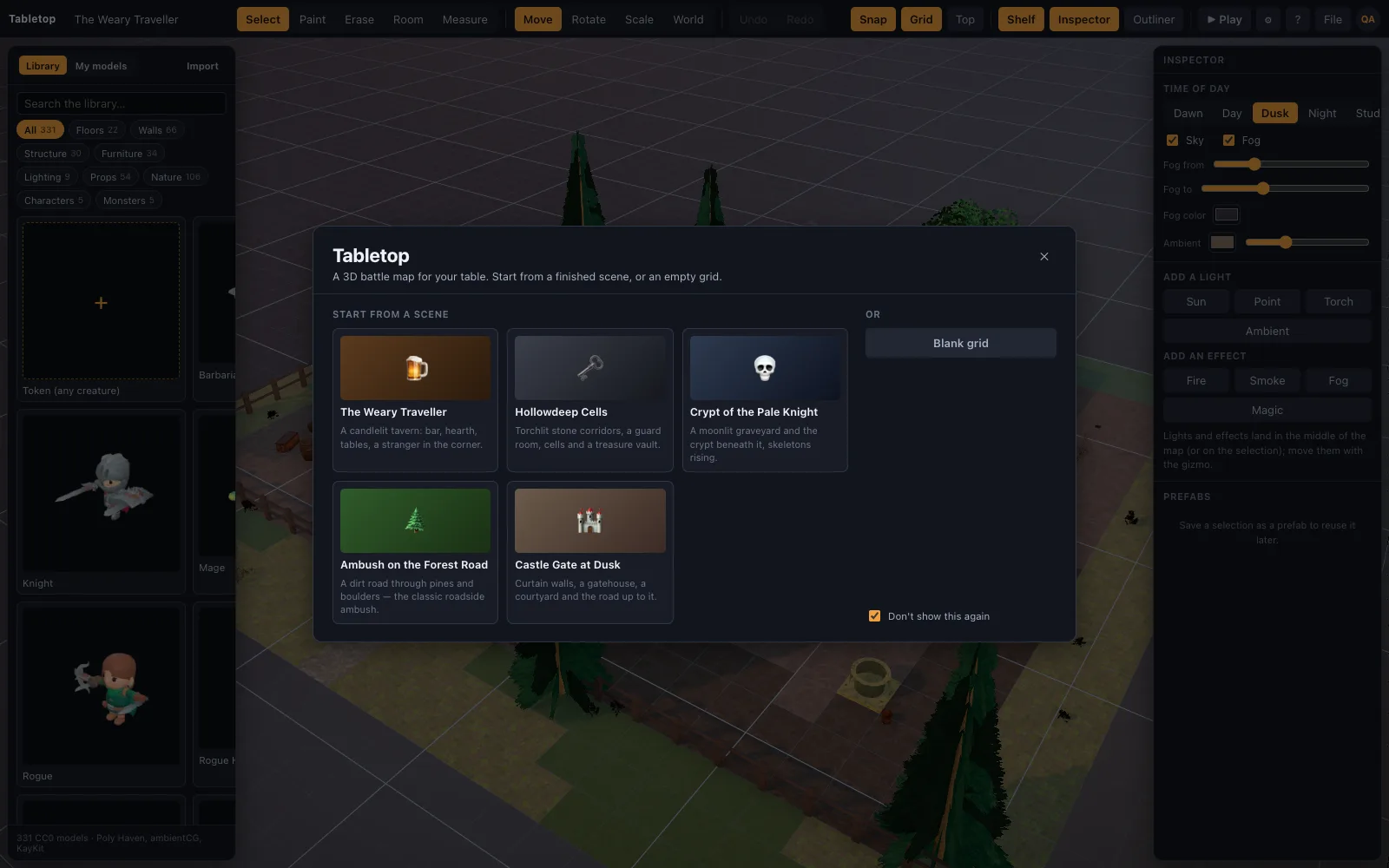
What narration is better at
Speed, pace and surprise. Three wolves on a road resolves in ten minutes with no setup, and it can start the moment a player says something reckless. Narration also handles the impossible-to-map: a fight in a collapsing tunnel, on a rope bridge in fog, inside a dream.
What a map is better at
Anything where a player is about to spend a resource on position. Area-effect spells, opportunity attacks, cover, flanking, height, chokepoints — all of these are guesswork without a map and become tactics with one. If a fight has an objective other than "reduce them to zero", map it.
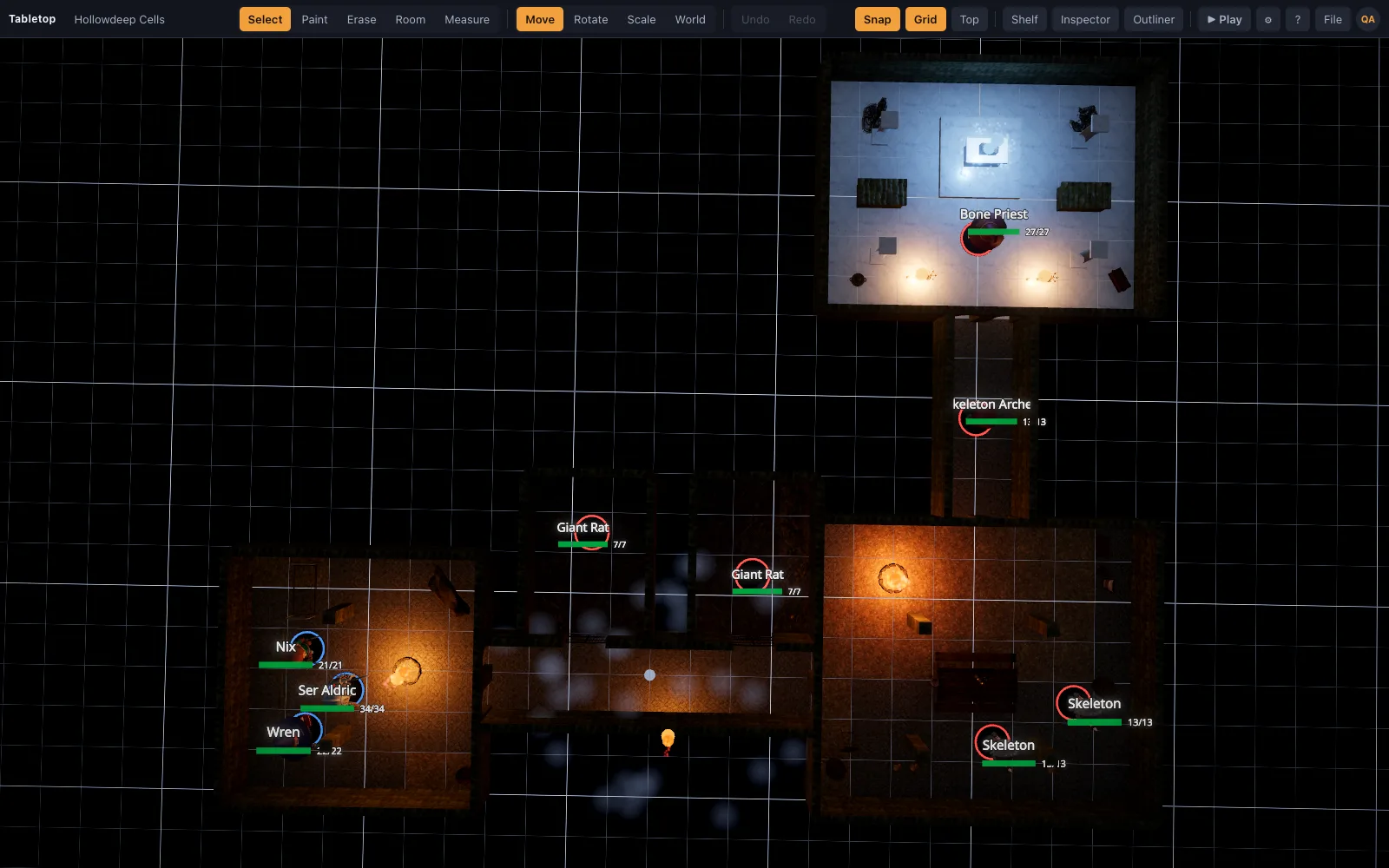
A rule for switching
Map the set-pieces and narrate the rest. Concretely: one to three mapped fights a session, everything else described. Prep only the mapped ones, and keep a generic room, a road and a cave in your projects folder for the fights you did not see coming.
The switch itself should be announced: "this one is on the table" or "this one we do in the head". Ambiguity about which mode you are in is what actually causes arguments, not either mode.
The hybrid that works
Show the map, keep the tokens loose. Players see the room and the rough positions without measuring every step; you call for the ruler only when a spell or a charge makes it matter. Most tables land here after a year and would have been happier landing there in month one.
Narrating well enough that a map is not missed
Theatre of the mind fails when the DM holds a floorplan in their head and the players hold five different ones. The fix is a short, fixed vocabulary of distances: close (you can touch it), near (one move), far (two moves or a bowshot). Use those three words consistently and players can make ranged and movement decisions without a grid.
Then describe the room in the order a person would notice it — the exit, the threat, the thing that is odd — and repeat the threat count every round. Three sentences, same shape every time. Consistency is what makes narration playable; poetry is what makes it confusing.
- Three distance bands, named the same way every session.
- Say what is between people, not only where they are.
- Repeat the enemy count and rough positions at the top of each round.
- When a player asks a geometry question twice, put it on the map.