How to run a tavern brawl in D&D: the rules and the map tricks
A tavern brawl is a fight where nobody wants anyone dead, the furniture matters more than the weapons, and the fun is in the shoves. The 2024 rules give you everything you need: an Unarmed Strike does 1 plus your Strength modifier, or you can use it to grapple or shove instead; a chair is a d4 improvised weapon; and any melee attack can knock its target out rather than kill it. The map does the rest, because a room full of tables is a room full of cover, difficult terrain and things to throw.
· 6 min read · TerrainTale
Set the stakes before the first punch
Say out loud that this is a brawl, not a battle. Nobody has drawn steel, the watch is ten minutes away, and the innkeeper is counting the damage. That framing tells the players that the fighter's greatsword stays sheathed, that the wizard's Fireball would be a crime, and that the point is to win the room, not to reduce it to 0 hit points.
Then give the brawl a goal that is not killing. Throw the loudmouth out of the door. Hold the bar for three rounds until the drunk sailor's friends give up. Get across the room to the informant before the thugs do. A brawl with a goal ends when the goal is met, which is the escape hatch you need when the players start counting hit points and wondering why the barkeep has 11 of them.
Fists, chairs and bottles in the 2024 rules
An Unarmed Strike in the 2024 rules is a melee attack that uses Strength and adds your proficiency bonus, and on a hit it does 1 plus your Strength modifier in bludgeoning damage. A level 3 fighter with Strength 16 punches at +5 for 4 damage. A Monk uses its Martial Arts die instead, which is why the monk should be the brawl's star.
An improvised weapon does 1d4 damage and can be thrown 20 feet, or 60 with disadvantage. The 2024 rules add that an object which resembles a real weapon can be treated as that weapon at the DM's discretion, so a broken bottle can be a dagger and a table leg a club. Let the players describe the object first and then tell them the die. A thrown tankard is 1d4; a whole bench swung by someone with Strength 18 is a table ruling, and a d6 with two hands is generous enough.
Nobody needs to be proficient with a chair. Improvised weapons do not get proficiency unless the object resembles a weapon the character is proficient with, which is one more reason to let the rogue call a bottle a dagger.
- Unarmed Strike: 1 + Strength modifier bludgeoning, adds proficiency to the attack roll.
- Improvised weapon: 1d4, thrown 20/60 feet, no proficiency unless it resembles a real weapon.
- Monk: Martial Arts die instead of 1, and Dexterity if it is higher.
Grapples and shoves on a crowded map
In the 2024 rules a grapple or a shove is an option when you make an Unarmed Strike rather than a separate contest. The target makes a Strength or Dexterity saving throw, its choice, against a DC of 8 plus your Strength modifier plus your proficiency bonus. Fail the shove and you are pushed 5 feet or knocked Prone. Fail the grapple and your speed is 0 and you have disadvantage on attacks against anyone but the grappler. The 2014 rules used a contested Athletics check instead, so if your table is used to rolling Athletics against Acrobatics, that is the version you are remembering.
On a tavern map those two options are the whole fight. Shove a thug over a table and he is Prone, difficult terrain between him and you, and adjacent attackers get advantage. Shove him 5 feet through the door and he is outside, which was the goal. Grapple the ringleader and drag him at half speed towards the door, which needs a free hand and is still possible while holding a chair in the other. Because the save is the target's choice, a nimble halfling will escape a shove more often than a drunk half-orc, and that is fine.
The tables are the terrain
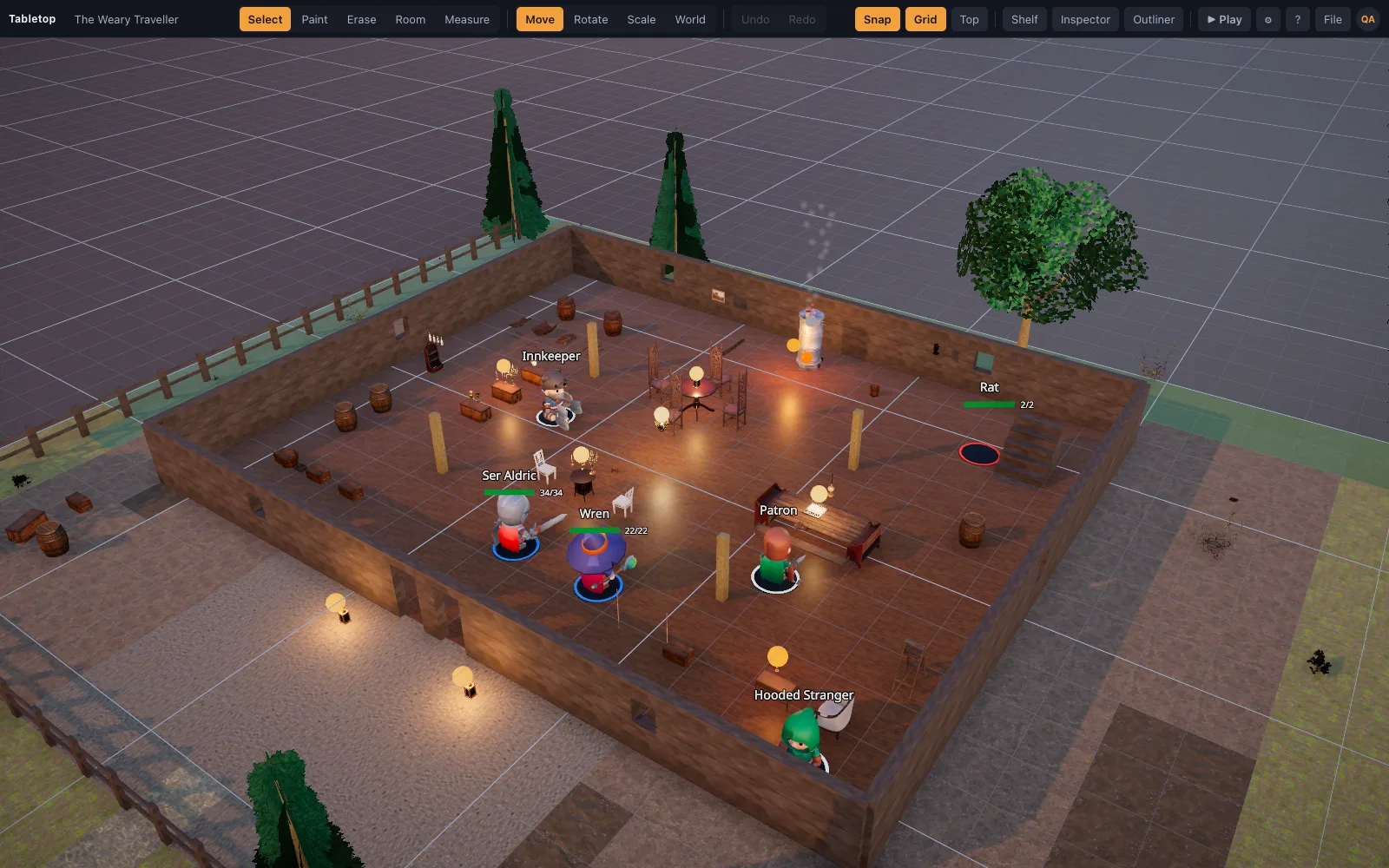
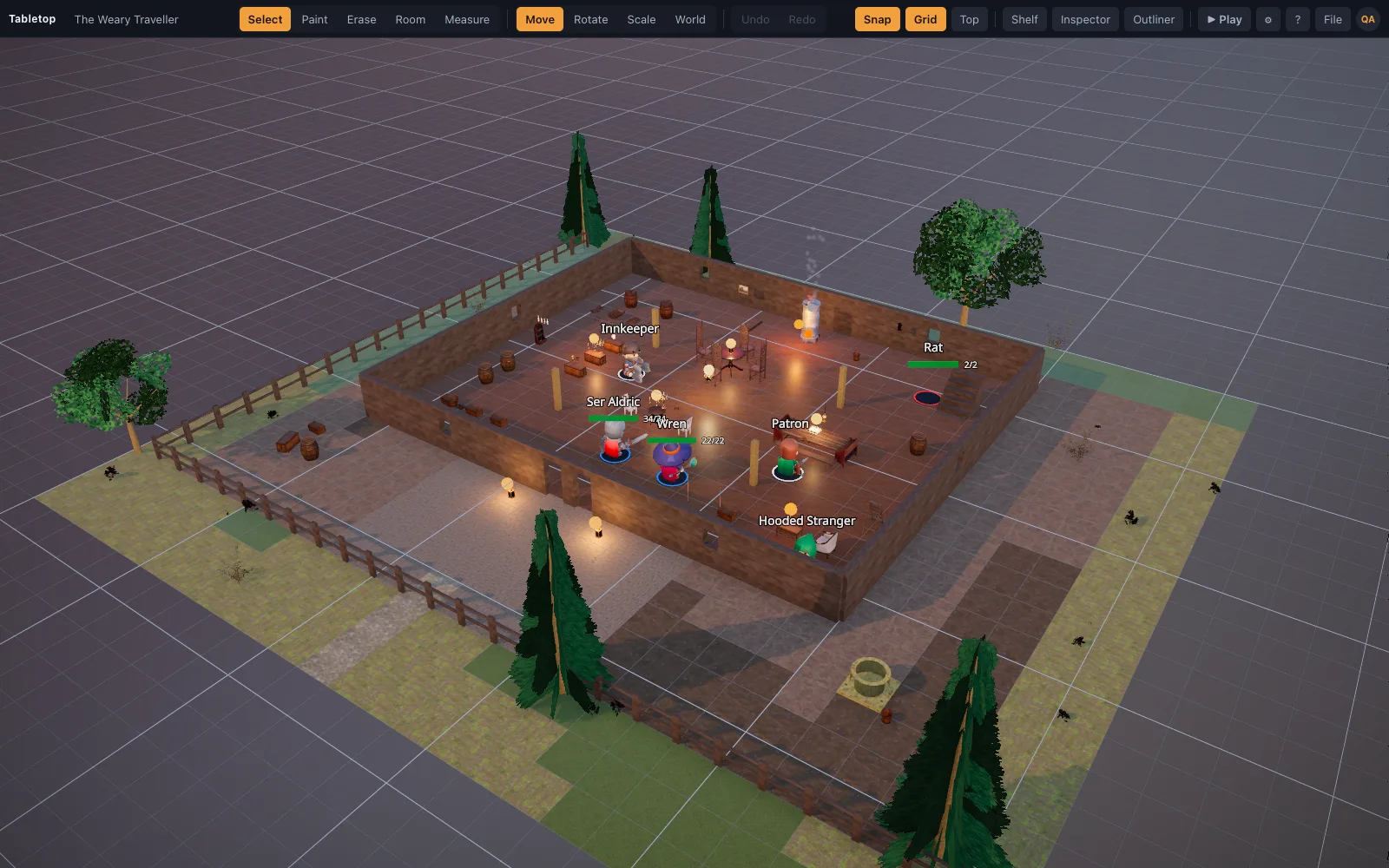
Draw the tavern as a room of 10 by 14 squares with six tables of 2 by 1 squares each and benches beside them, a bar along one wall, a fireplace, a staircase and the door. Each table is an obstacle: it gives half cover against thrown bottles, it costs double movement to climb over, and it is a platform 3 feet higher than the floor if someone wants to jump on it.
Let the furniture change during the fight. A table shoved over on its side is three-quarters cover for the people behind it. A bench thrown across the room is difficult terrain where it lands. Track this on the map rather than in your head, because half the joy of a brawl is seeing the room get wrecked. In TerrainTale the room tool drags out a walled tavern from its Tavern kit and a table is a model that sits on the grid, so tipping one over is a move rather than a redraw.
Use the levels. A character on the bar or on a table is 3 feet up, which does nothing to the rules of a melee attack but gives a fine reason to rule that the shove off the edge knocks the target Prone on landing. The staircase is where the brawl escalates, since being pushed down it is 1d6 falling damage per 10 feet, which is enough to end a friendly fight.
Knocking people out, not killing them
The 2024 rule is simple. When a melee attack would reduce a creature to 0 hit points, the attacker can instead leave it at 1 hit point and knock it out; the creature has the Unconscious condition and starts a Short Rest. That is a change from 2014, where the creature went to 0 hit points and was stable, and it means a brawler wakes up sore rather than needing a medic. Remind the players of the option before the first knockout so nobody accidentally kills the mayor's son.
Ranged attacks and spells do not get this choice, which is the rule doing your work for you: the archer and the warlock have to join the brawl on its own terms or sit it out. If a player insists on Eldritch Blast, the crowd notices and the tone of the evening changes. Say so and let them decide.
Ending it
A brawl should be over in four rounds. Bring the watch, have the innkeeper produce a crossbow, or let the loudmouth's friends drag him out when he is down. Then settle the bill: the damage to the room, the bruised reputations and the one drunk who turns out to be somebody important. Those consequences are why the brawl was worth playing on a map rather than narrated, because everyone can see exactly which table went through the window.