Castle and siege battle maps: gates, walls and the courtyard fight
Castles are built to make attacking them miserable, which is exactly why they make good battle maps: every piece of the architecture is a tactical problem somebody solved in stone eight hundred years ago.
· 7 min read · TerrainTale
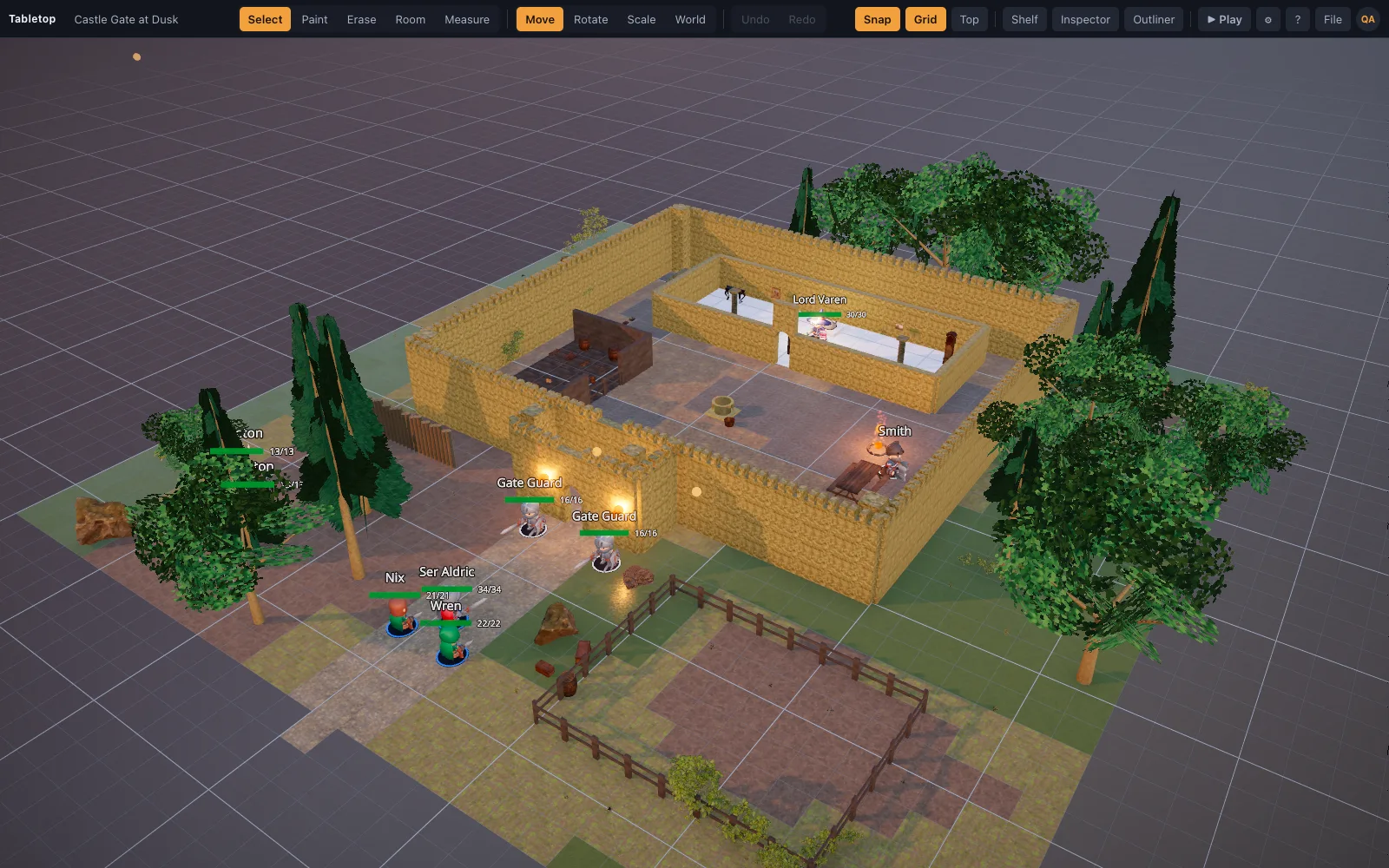
The pieces and what each one does
The gatehouse is a chokepoint with murder holes above it — a place where numbers stop mattering. The curtain wall is elevation with a walkway, which turns archers into a persistent threat rather than a first-round burst. The courtyard is a killing ground: open, overlooked, and the only route to the keep. The postern is a small back door, which is the answer the players are meant to find.
- Gatehouse — chokepoint, two squares wide, overlooked.
- Parapet — 20 ft up, reachable by two stairs.
- Courtyard — open, exposed, 25×25 or larger.
- Postern — the clever route, guarded lightly.
Scale it down, hard
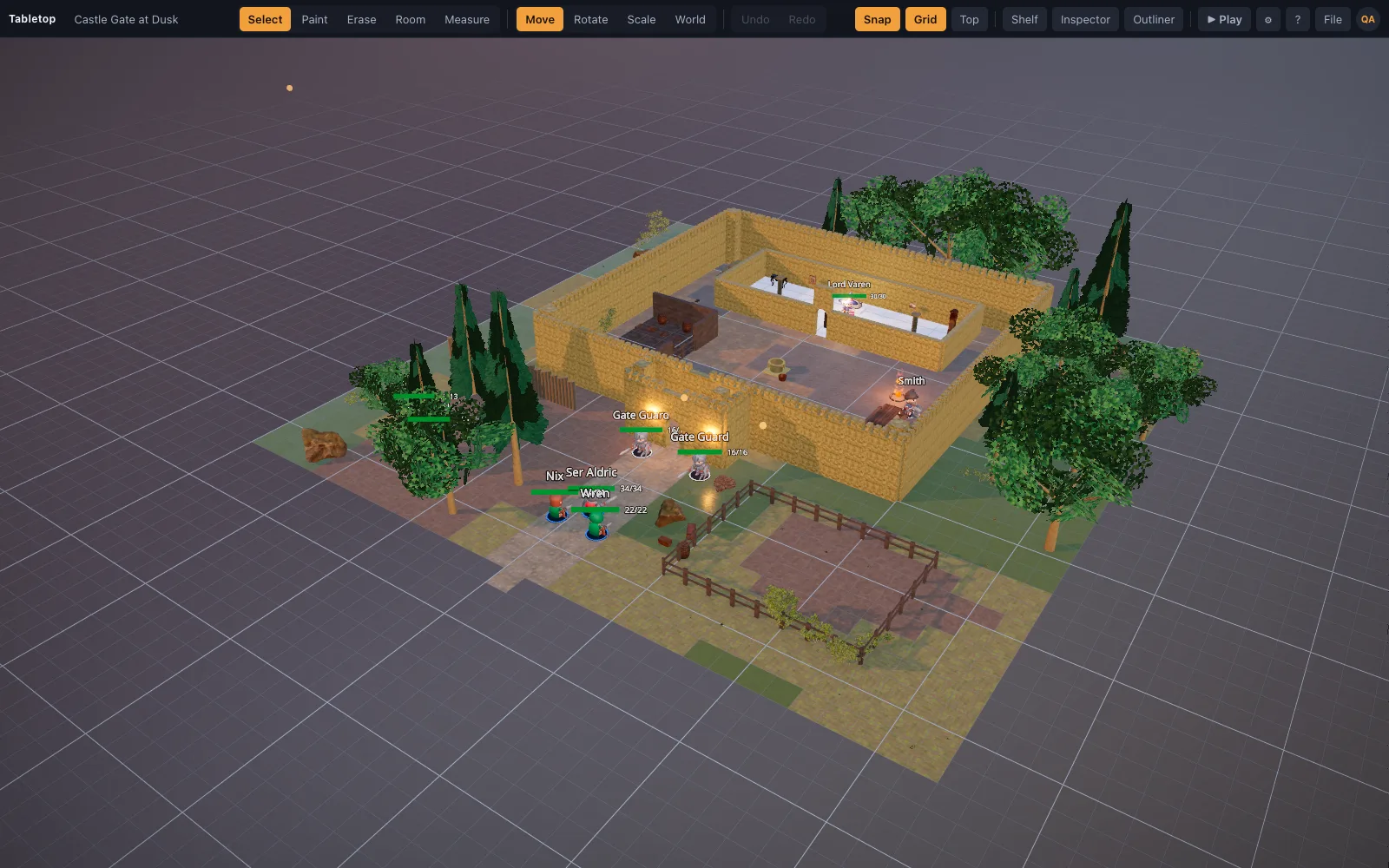
A real castle is far too big to play on. Build the gate, one stretch of wall, the courtyard and one tower, and narrate the rest. A map that fits on a screen at a readable zoom is a map that gets used; a historically proportioned fortress is a map you pan around while your players wait.
Running a siege without a spreadsheet
Do not stat the garrison. Give the siege a clock — four rounds until the ram is through, six until the reinforcements arrive — and abstract the mass combat into that clock. The party fights the six enemies in their squares; the war is a countdown they can influence.
Every player action that would help the wider battle moves the clock by one. That single rule makes a battle feel enormous while tracking exactly one number.
Building it
Two curtain-wall runs, a gatehouse between them, a courtyard behind, a tower at one corner. With a castle kit that is four drags plus stairs. The Castle Gate at Dusk starter scene is the same shape, lit for the hour when an assault would actually happen.
Cover, arrow slits and murder holes
Castle architecture is a cover system. An arrow slit gives three-quarters cover — plus five to armour class and Dexterity saves — to whoever is behind it, which is why one defender at a slit is worth four in the open. A crenellated parapet gives half cover to anyone standing behind a merlon, and full cover to anyone crouching. Murder holes above a gate passage let defenders attack with total cover of their own.
Hand these numbers to the players explicitly. "Half cover" means something concrete, and a party that knows the parapet is worth two points of armour class will fight for the parapet.
- Arrow slit — three-quarters cover, +5 AC and Dex saves.
- Crenellations — half cover standing, full cover crouched.
- Gate passage — murder holes above, total cover for defenders.
- A raised portcullis is cover for both sides and a timer for one.
Approaches, and giving the party a choice
A castle map is only a good map if there is more than one way in. Give the party at least three, each with a different cost: the gate (fast, loud, lethal), the wall (slow, a climb, exposed), and the postern or the drain (quiet, cramped, and it splits the party). Let scouting reveal them, and let the choice be made before initiative rather than during it.
That choice is the encounter. Everything after — the guards, the alarm, the courtyard crossing — is consequence, and consequences are much easier to run than plans.