Boss fight arena design: how to build a battle map for the villain
The boss fight is the one map of the arc that players remember, and it is usually built last and in a hurry. It deserves the opposite. A villain in an ordinary room is a bag of hit points; a villain on a map built for them is the climax. The difference is five decisions, none of which take long.
· 7 min read · TerrainTale
Give the villain a stage
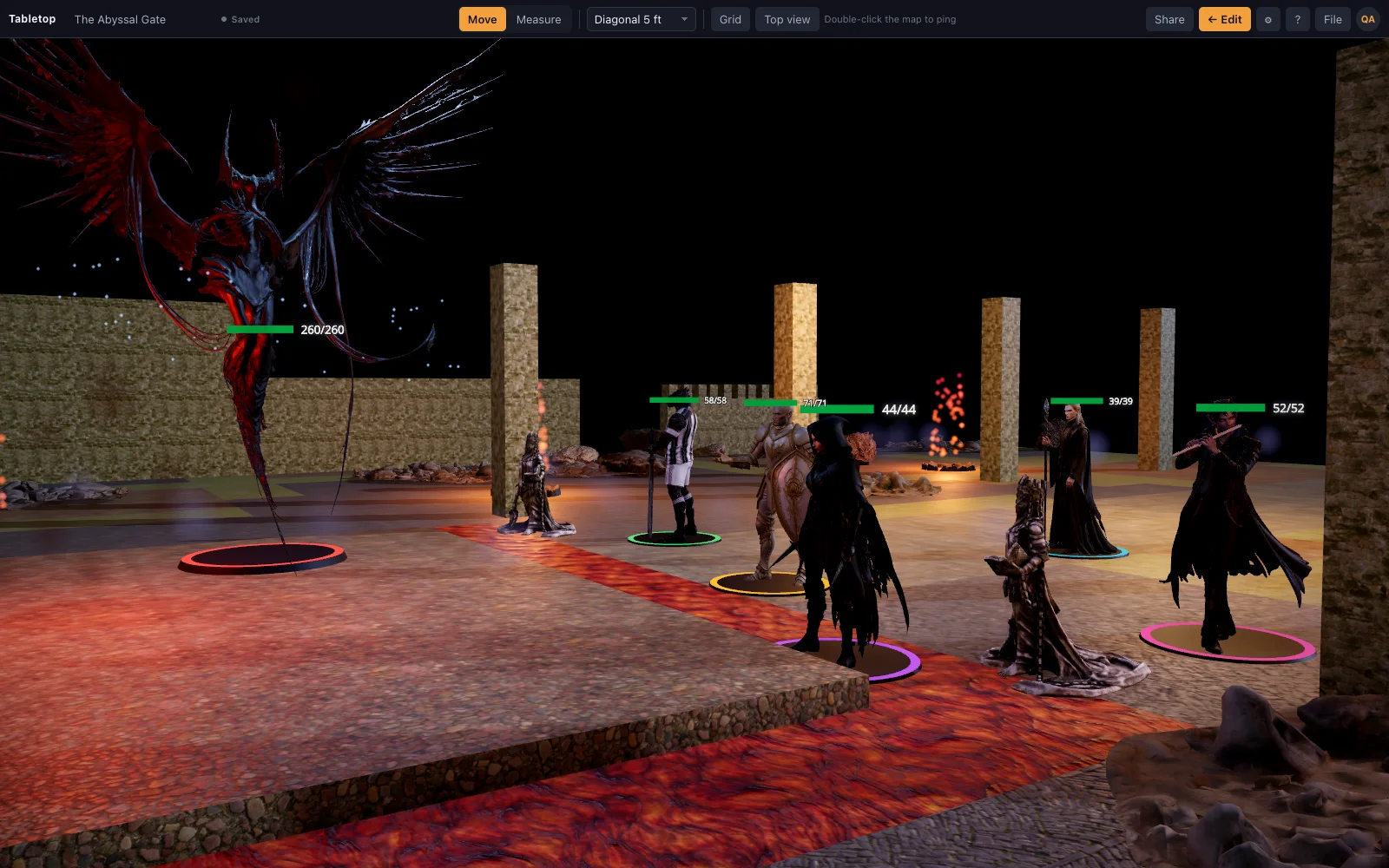
The boss needs a place that is visibly theirs: a dais, an altar, a throne, a ritual circle, a bridge they hold. Raise it by a step or two so the party has to come up to them and so every camera angle shows the villain above the crowd. Put the thing they are doing on the stage, the ritual, the hostage, the gate, so that the fight is about reaching it and not just about hit points.
The stage should be roughly a fifth of the map. Bigger and the villain never leaves it; smaller and it is just a step.
Size the floor for the monster
A Huge dragon takes a 3 by 3 block and wants to move. A Gargantuan one takes 4 by 4. If the arena is 12 squares across, the dragon has three positions and the fight is a slugging match. Aim for an open area at least five times the boss's width in each direction: 15 by 15 for Huge, 20 by 20 for Gargantuan, with room around the edges for the pillars and cover that give the party something to do.
- Large boss (2 by 2): 12 by 12 squares of usable floor.
- Huge boss (3 by 3): 15 by 15 or more.
- Gargantuan (4 by 4): 20 by 20, and think about flight.
- Add a third for the terrain around the edges; never fill the middle.
Height is the second dimension of a boss fight
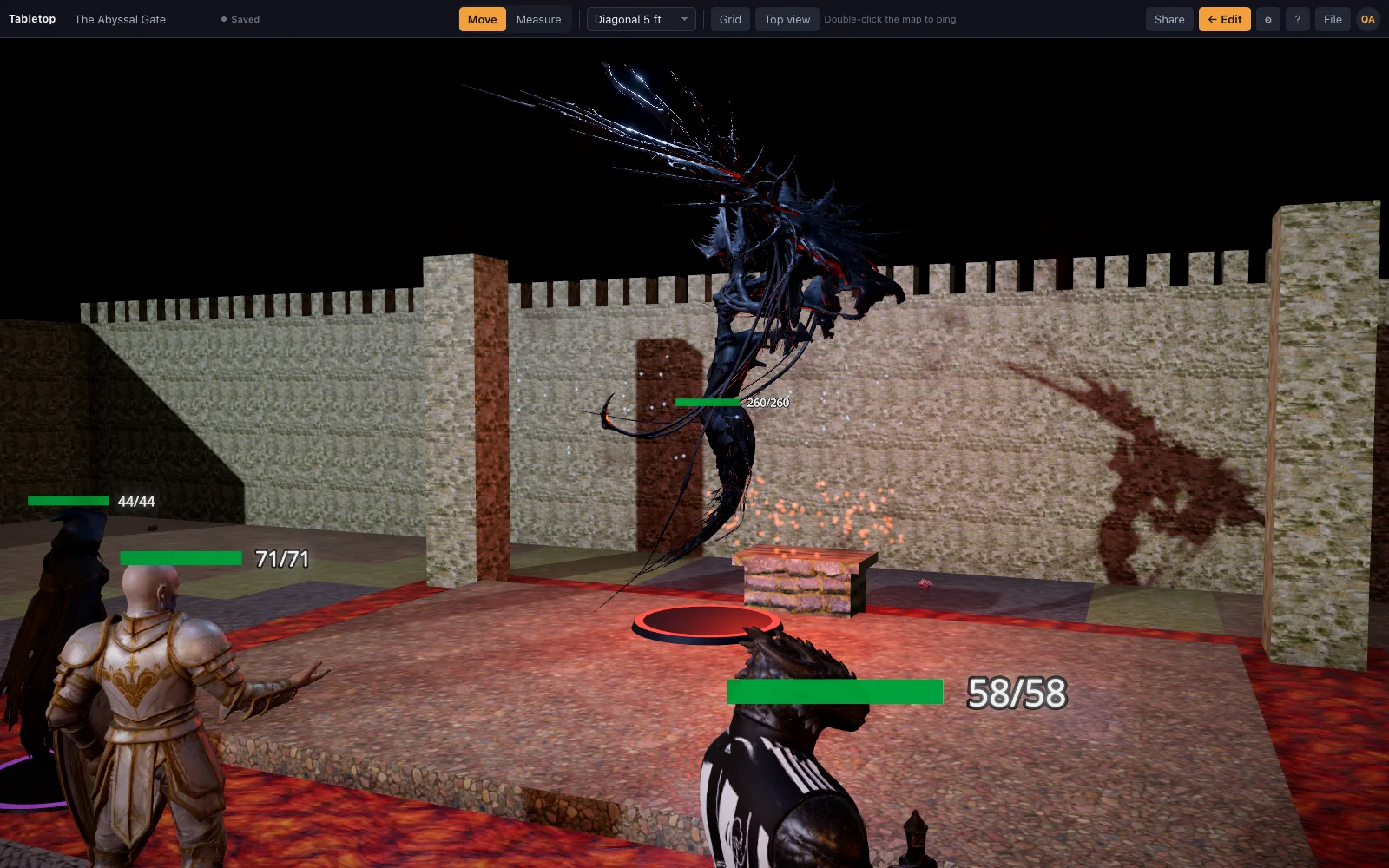
Nothing turns a boss room into an arena faster than two levels. A gallery around the walls 10 feet up for the archers and the cultists. A pit in the centre. A staircase up to the dais. A collapsed section that becomes a slope. Height gives the party a plan (get the wizard onto the gallery) and gives the boss a plan (knock them off it), and a fight with two plans is a fight with a story.
This is where a 3D table changes the design, because height that has to be explained on a flat map is simply visible. TerrainTale's ruler counts the vertical feet in a jump or a climb, and the camera can be dropped to any level so everyone sees what the archer on the gallery sees.
Let the map change during the fight
A boss with phases is the standard advice; a map with phases is rarer and more memorable. At half hit points the roof comes in and the rubble makes a new wall. The ritual completes and the floor between the party and the dais becomes a chasm. The braziers go out and the room is dark. The bridge falls. Each of these is a moment on the table, and each is a few seconds of editing: paint a strip of rubble, delete a floor section, switch the lights off.
Plan two changes, not five. The first around the midpoint of the fight, the second as the villain's desperate move. Put the trigger in your notes so it happens on a round, not on a whim.
Something for every player
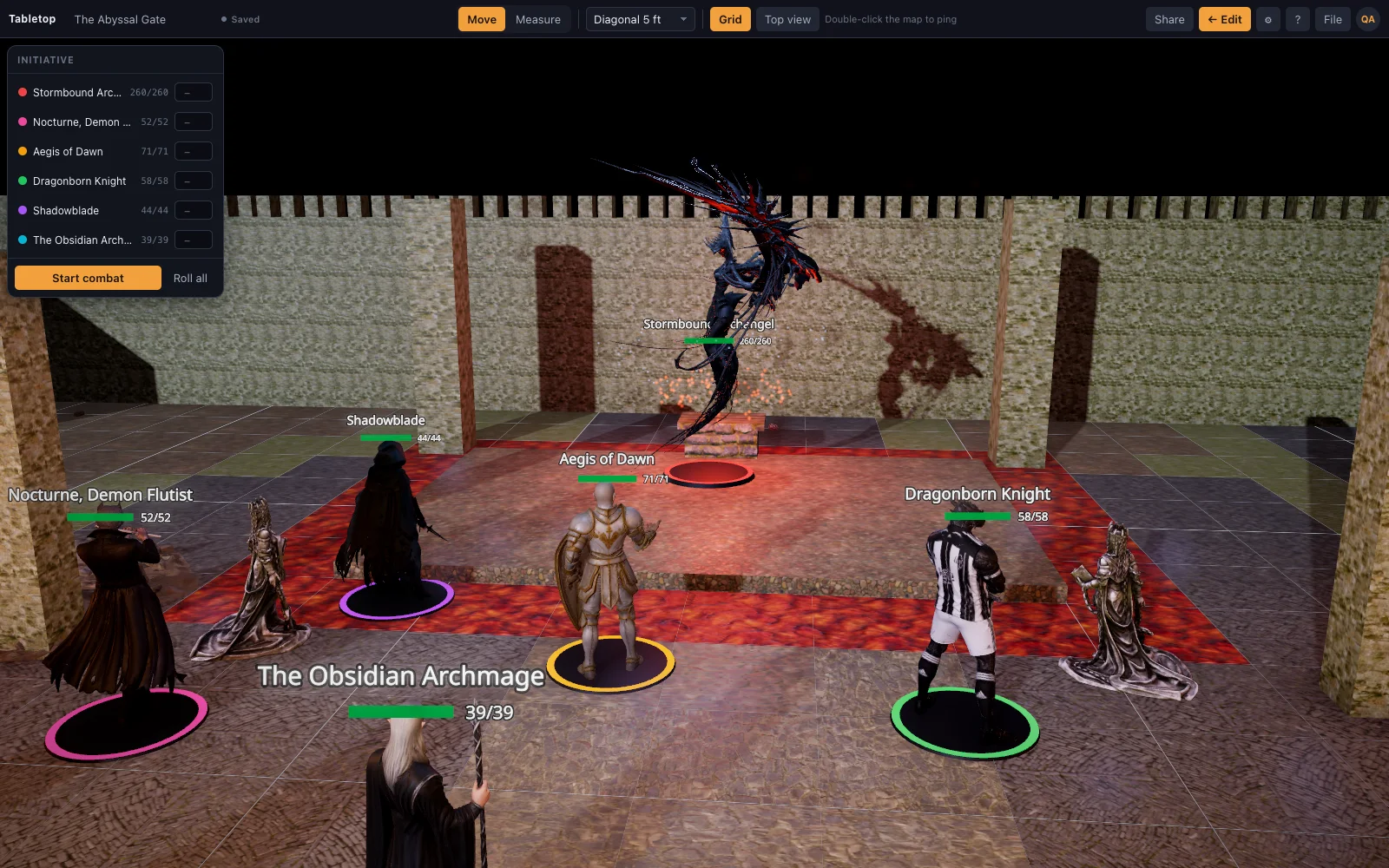
The last check is to walk the map as each character. Does the rogue have somewhere to hide and flank from? Does the archer have a vantage? Does the fighter have a way to reach the boss without eating three attacks of opportunity? Does the wizard have a line to the dais for the one spell that matters? If the answer for any of them is no, add the pillar, the ledge, the side passage that fixes it. A boss map where one player has nothing to do is a boss fight one player watches.
A worked example
A ruined courtyard, 20 by 24 squares. A dais at the north end, three steps up, with a gate the villain is opening. A colonnade down each long side, the columns giving half cover and a route for the rogue. A gallery over the west colonnade, 10 feet up, reached by a stair at the south end. Four braziers, one at each corner of the dais, which is the only light. At the midpoint, two of the braziers go out. When the villain drops below a quarter, the gate opens and something comes through. That is the Abyssal Gate scene on this site's screenshots, and it took under an hour to build with the Castle kit.