3D vs 2D battle maps: what actually changes at the table
The 3D-versus-2D argument is usually had about screenshots. At a table it is a much duller and more useful question: which one makes players ask fewer questions before they decide what their character does?
· 7 min read · TerrainTale
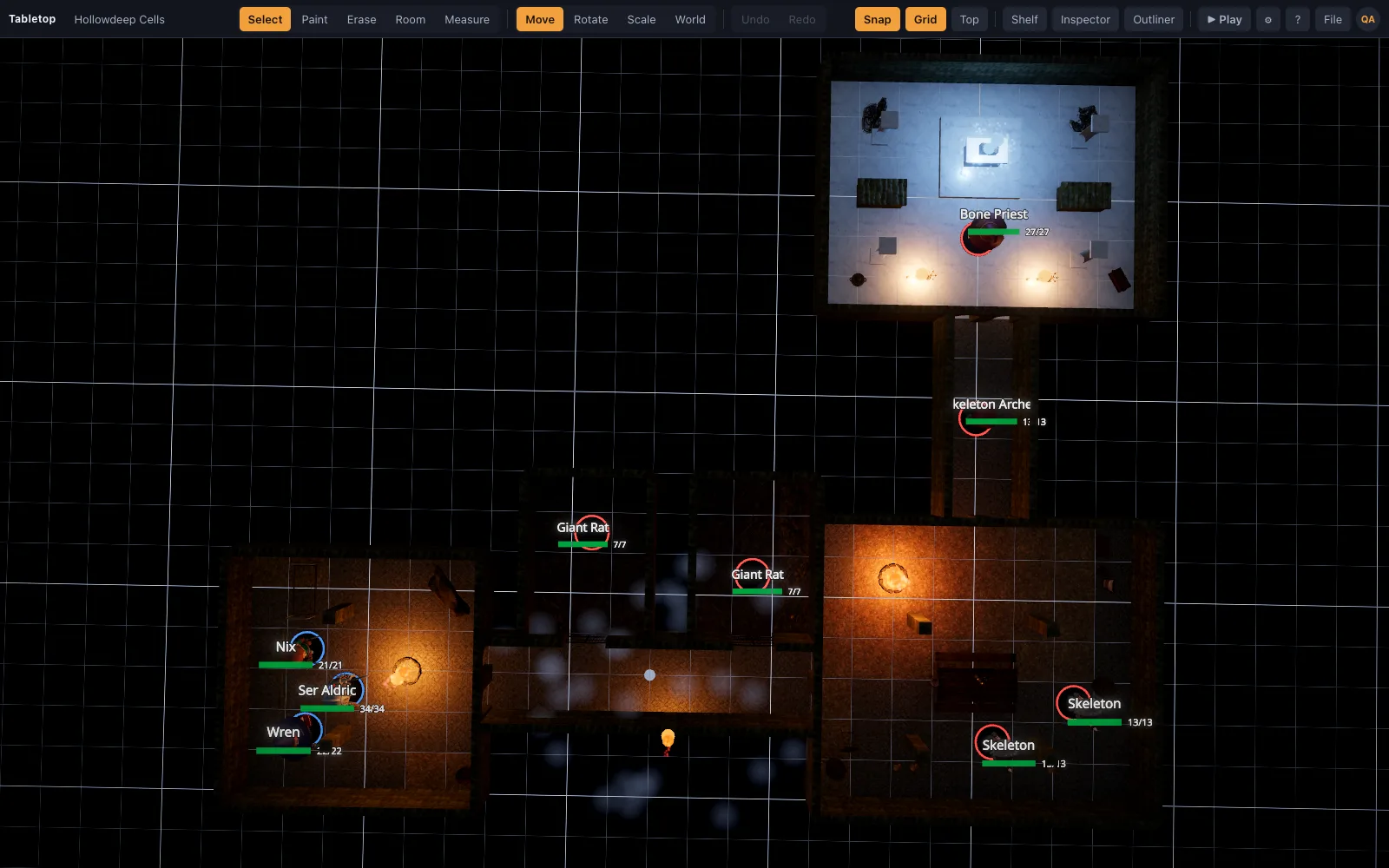
What 3D genuinely adds
Height stops being a footnote. On a flat map, "the archers are on the balcony" is a label the DM has to keep repeating; in 3D the balcony is above the room and everyone can see who is on it. The same goes for cover: a pillar you can see behind is a pillar players use.
It also compresses explanation. A room read in one glance is a room you do not have to describe twice, and the description you do give can be about smell and sound instead of geometry.
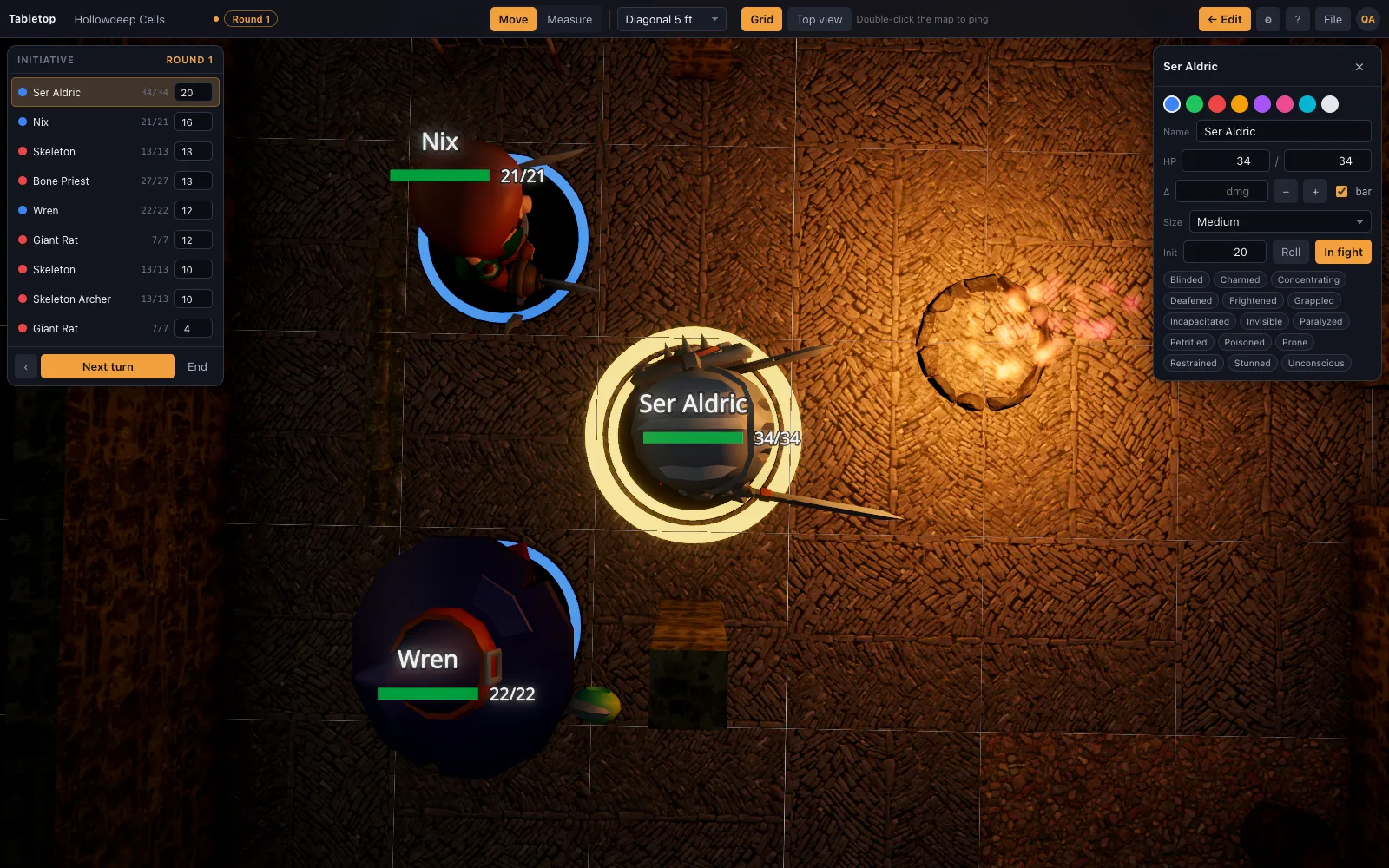
What 2D still does better
Flat maps are unbeatable for overhead clarity in dense dungeons, they are trivially cheap to make (a sketch on a grid works), and they never occlude anything. There is no camera to fight, which matters when six people share one screen.
A 3D table that cannot go top-down is worse than a 2D map. One that can is a superset — which is why a top-down camera preset is a feature, not an afterthought.
The performance question
The honest objection to 3D is hardware. This is less true than it was: a browser-based table that instances repeated geometry and picks a quality tier from the GPU runs on an integrated laptop chip. The thing to check is not the frame rate on your machine but on the oldest laptop at the table.
A rule of thumb
Use 3D when the fight has verticality, cover, or a place worth showing. Use flat when the map is a corridor grid and the fun is in the tactics, not the scenery. And keep whichever you use on the same 5-foot grid, so movement never becomes an argument.
What changes for the DM, not the players
The prep economics are different in a way screenshots never show. A flat map is a picture: cheap to find, expensive to change, and impossible to reuse once the players have seen it. A 3D scene is a set of objects, so changing it is dragging things — the same tavern becomes a burned tavern in four minutes, and the dungeon you built in March supplies three rooms in September.
Against that, a 3D scene has a camera, and a camera is a thing the DM has to operate while also running four monsters. The tables that get on best with 3D bind two or three camera presets on day one and never free-fly during a fight.
- Flat maps: fastest to obtain, slowest to modify.
- 3D scenes: slower to start, near-free to modify and reuse.
- Budget a session or two of camera practice before it feels invisible.
What players report after the switch
The consistent feedback from groups that move from flat maps to a 3D table is not that it looks better — it is that they ask fewer questions. "Is there anything between me and the archer?" is a question a flat map generates several times a round and a 3D room mostly answers by existing.
The second thing they report is more use of terrain. Players who could always have flipped a table start flipping tables when the table is visibly a table, at a visible height, in a visible place. That is the whole argument for 3D reduced to one sentence: it makes the map's affordances obvious, and obvious affordances get used.