Throne room battle maps: the audience chamber as an arena
A good throne room map is a long rectangle, about 8 squares wide and 16 to 20 deep, with a raised dais at the far end, two rows of columns down the sides, doors at both ends and one secret way out behind the throne. The approach is the point. The room was built to make visitors walk a long way under watch, and in a fight that walk becomes the problem the party has to solve.
· 5 min read · TerrainTale
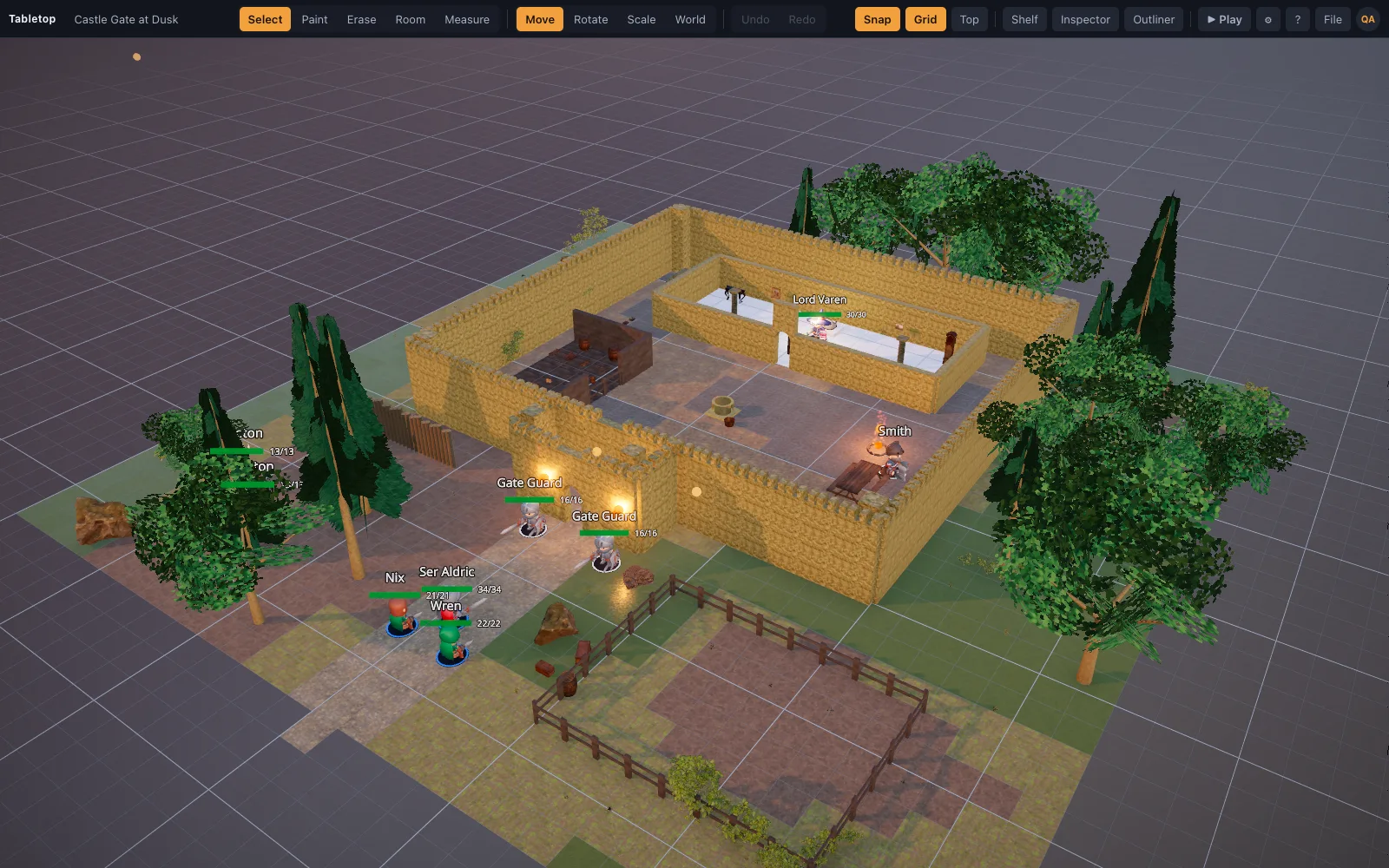
How big should a throne room map be?
Start at 8 by 16 squares, which is 40 by 80 feet, and stretch it to 20 deep if the monarch has archers. At that length a character with Speed 30 needs three turns of plain movement to go from the doors to the foot of the dais, or a Dash on the first turn and a move on the second. That is the tension you want: long enough that the throne cannot be rushed in round one, short enough that a determined party gets there by round two.
Keep the side aisles behind the columns 2 squares wide. They are the flanking routes, and they should be tight enough that two guards can hold one. A room wider than about 10 squares loses its shape; it stops being a gauntlet and becomes a hall where everyone spreads out.
The dais: height as a rule, not decoration
Raise the dais 5 feet with three or four steps across its front. Steps count as ordinary movement for most tables; if the stair is steep or broken, make those squares Difficult Terrain and the climb costs 10 feet a square. The throne itself can give Half Cover to anyone standing behind it, the +2 to AC and Dexterity saves that low walls and furniture give.
Height pays off at range. A crossbowman on the dais sees over the heads of anyone in the aisle, so the party's front line does less to screen the people behind it. Put the dais's edge 2 squares from the back wall so there is room to fight on top of it, not just to stand.
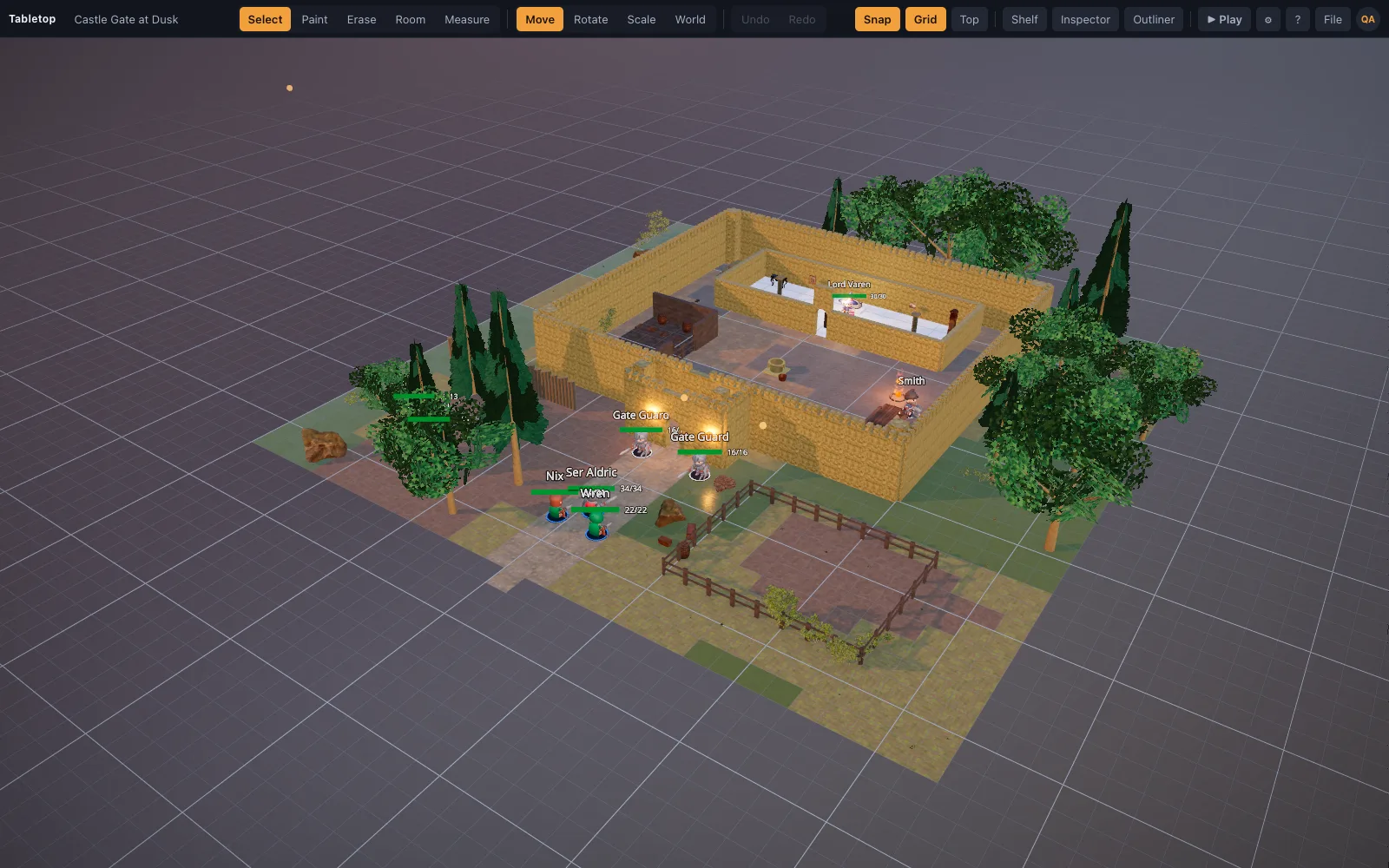
Columns and what they do for cover
Space the columns every 3 squares down both sides. A single column one square across usually grants Half Cover, and a character tucked right behind one from a narrow angle can have Three-Quarters Cover, +5 to AC and Dexterity saves; decide the angle once with a line from the attacker's square and stick to it. Columns also break line of sight for spells that need a clear path, which rewards players who move from column to column rather than walking up the carpet.
The carpet itself is worth marking. A long runner down the middle is the route nobody should take, and a DM who puts a trap, a pit or a waiting spell on it tells players to use the aisles without saying so.
Guards, doors and the audience
Put two guards at each door and two more flanking the dais, which is six for a small court. The court itself is the interesting part: courtiers, petitioners and servants turn the room into a crowd. Creatures who are not fighting still occupy squares, and passing through them costs double movement under the 2024 rules, so a panicking crowd slows everyone. Have the crowd run for the exits in initiative order and the lanes change every round.
Give the doors a purpose. The main doors at the back of the hall are where reinforcements arrive on round three. A small side door by the dais leads to the guardroom. Barring the main doors, a heavy action in a fight, is a good objective for one character while the others press forward.
- Main doors: reinforcements from round three.
- Side door by the dais: the guardroom, two more guards.
- Gallery above the aisles: archers with height and cover.
- Secret door behind the throne: the monarch's escape.
Where does the fleeing monarch go?
A monarch who can flee makes the fight a race rather than a brawl. Put a secret door 2 squares behind the throne leading to a narrow stair. The monarch moves on their turn, the guards close ranks to buy them a round, and the party has to choose between chasing and finishing the fight. If the monarch reaches the stair, the next map is a chase, not a new encounter.
Decide in advance what counts as escape: reaching the stair, closing the door behind them, or getting 60 feet away. Write it down. A clear goal lets the monarch act sensibly and lets the players see what they are racing against.
Building it in 3D
A throne room is where a 3D table earns its keep, because the height of the dais and the gallery is the whole design. In TerrainTale the Room tool drags a walled, floored hall with the Castle kit in one move, the ruler counts height as well as distance, and torches along the columns cast real shadows down the aisles.