Misty Step 5e rules on a grid: where a teleport can land and what stops it
Misty Step moves you up to 30 feet, as a Bonus Action, to an unoccupied space you can see. On a square grid that is any empty square within six squares in a straight line, including squares above you, as long as you can see it. The move uses none of your Speed, provokes no Opportunity Attacks and leaves any grapple behind. What stops it is the word see: a wall, a closed door, darkness you cannot see through or a Silence spell. Here is how to read each of those on the map.
· 5 min read · TerrainTale
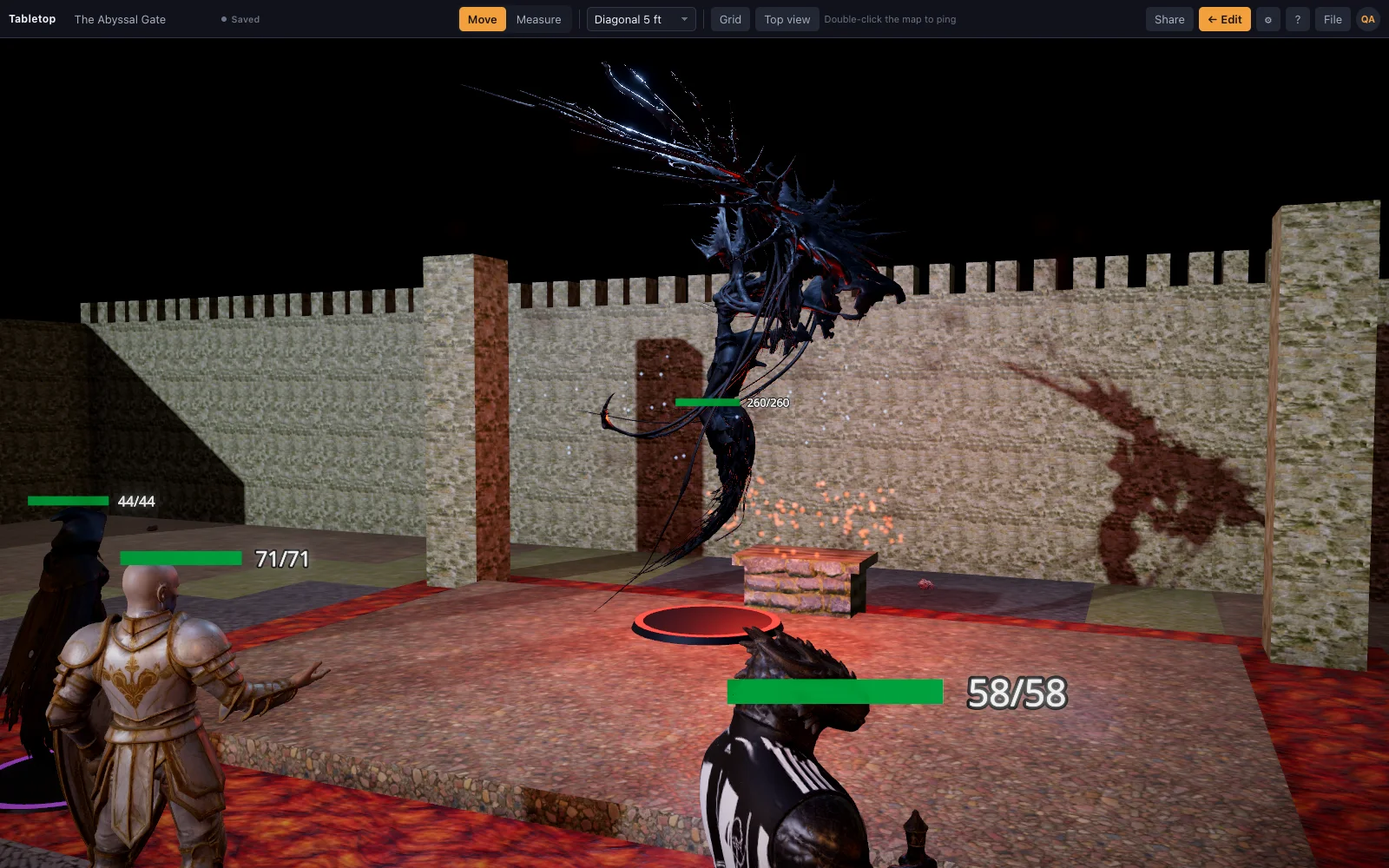
What Misty Step does, in numbers
Misty Step is a 2nd-level conjuration spell with a casting time of one Bonus Action and only a Verbal component. You teleport up to 30 feet to an unoccupied space you can see. Under the 2024 rules teleporting does not spend any of your movement and never provokes Opportunity Attacks, so you can walk your full Speed, step, and keep the Action for an attack or a cantrip.
One limit has changed since 2014. The 2024 rule is that you can cast only one spell with a spell slot on a turn, so Misty Step plus a levelled spell like Fireball is off the table, but Misty Step plus a cantrip is fine. Under the 2014 bonus-action spell rule the second spell also had to be a cantrip with a casting time of one action, which plays almost the same at most tables.
- Bonus Action, Verbal only, 30 feet, a space you can see.
- Uses no movement and provokes no Opportunity Attacks.
- One slot-using spell per turn in 2024, so pair it with a cantrip.
Which squares can you land in?
Any square whose centre is within 30 feet, six squares on a grid that counts diagonals as 5 feet, that nobody else occupies and that you can see. Unoccupied rules out squares with a creature in them, ally or enemy. It does not rule out squares of Difficult Terrain, a burning floor or Spike Growth, so a careless teleport can still hurt. It also does not require the ground: a square 30 feet up in the air is a legal destination, and you fall from it at once unless you can fly.
Seeing the square is the rule that does the work. You can teleport through iron bars, a window or a portcullis, because you can see the space on the other side. You cannot teleport behind a wall, around a corner or through a closed door. In magical Darkness or thick fog the squares you cannot see are out of reach, even if you know exactly where they are.
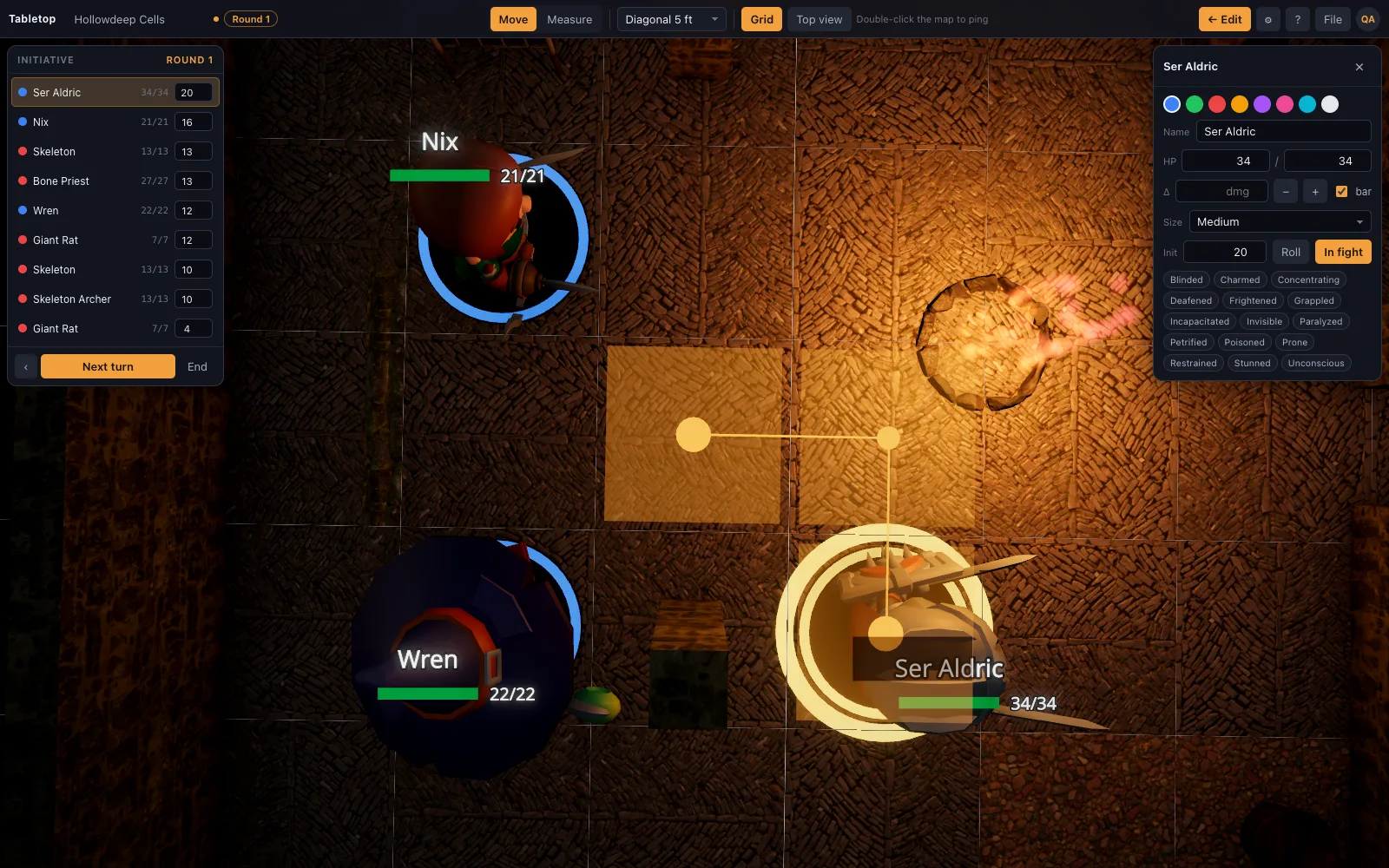
Does Misty Step get you out of a grapple?
Yes. The Grappled condition sets your Speed to 0, but teleporting does not use Speed, so the condition does not stop the spell. Once you arrive the grapple ends, because under the 2024 rules a grapple ends when the distance between the two creatures exceeds the grapple's range. Most tables rule the same for Restrained from a Web spell: Restrained sets Speed to 0, which does not stop a teleport, and leaving the space leaves the webbing behind, though the 2024 Web spell can catch you again if you land inside its area.
What does stop the escape is anything that stops casting. A creature that is Incapacitated cannot take Bonus Actions, a Silence spell removes the Verbal component, and a gag does the same. Those are the counters a DM planning to hold a spellcaster should reach for.
Dimension Door and the bad landing
Dimension Door is the long version: a 4th-level spell, an Action to cast, and a range of 500 feet. You do not need to see the destination; you can name a distance and direction, such as 200 feet straight down. You can bring one willing creature within 5 feet of you, which arrives within 5 feet of your destination. If either of you would land in a space occupied by a creature or filled by objects, each traveller takes 4d6 force damage and the spell fails.
That penalty is the reason to describe the map in feet. A wizard porting 120 feet north through a wall needs to know whether the far side is a corridor or solid rock. Thunder Step at 3rd level sits between the two: 90 feet, one willing passenger, and thunder damage to creatures next to the space you leave.
How DMs block or bait a teleport
Line of sight is the main control. A room with no windows and one door means Misty Step can only go somewhere the party could have walked anyway. Darkness, fog and smoke cut the range down to what the caster can see. Low ceilings matter less than people think, because 30 feet of teleport usually goes sideways, not up. The heavy counters, Silence and spells like Forcecage, are best saved for a boss who knows exactly what the wizard can do.
Baiting works too. A visible ledge above the fight, an arrow slit into the next room or a balcony across a chasm invites a step, and on the other side something can be waiting. That kind of puzzle reads best on a map with real height, where the ledge is a place and its 25 feet are visible at a glance.