Tavern battle maps, and the bar fight everyone remembers
Every campaign starts in a tavern and most of them fight in one eventually. A tavern is also the easiest map to get wrong, because a big open room with tables is not a battle map — it is furniture.
· 6 min read · TerrainTale
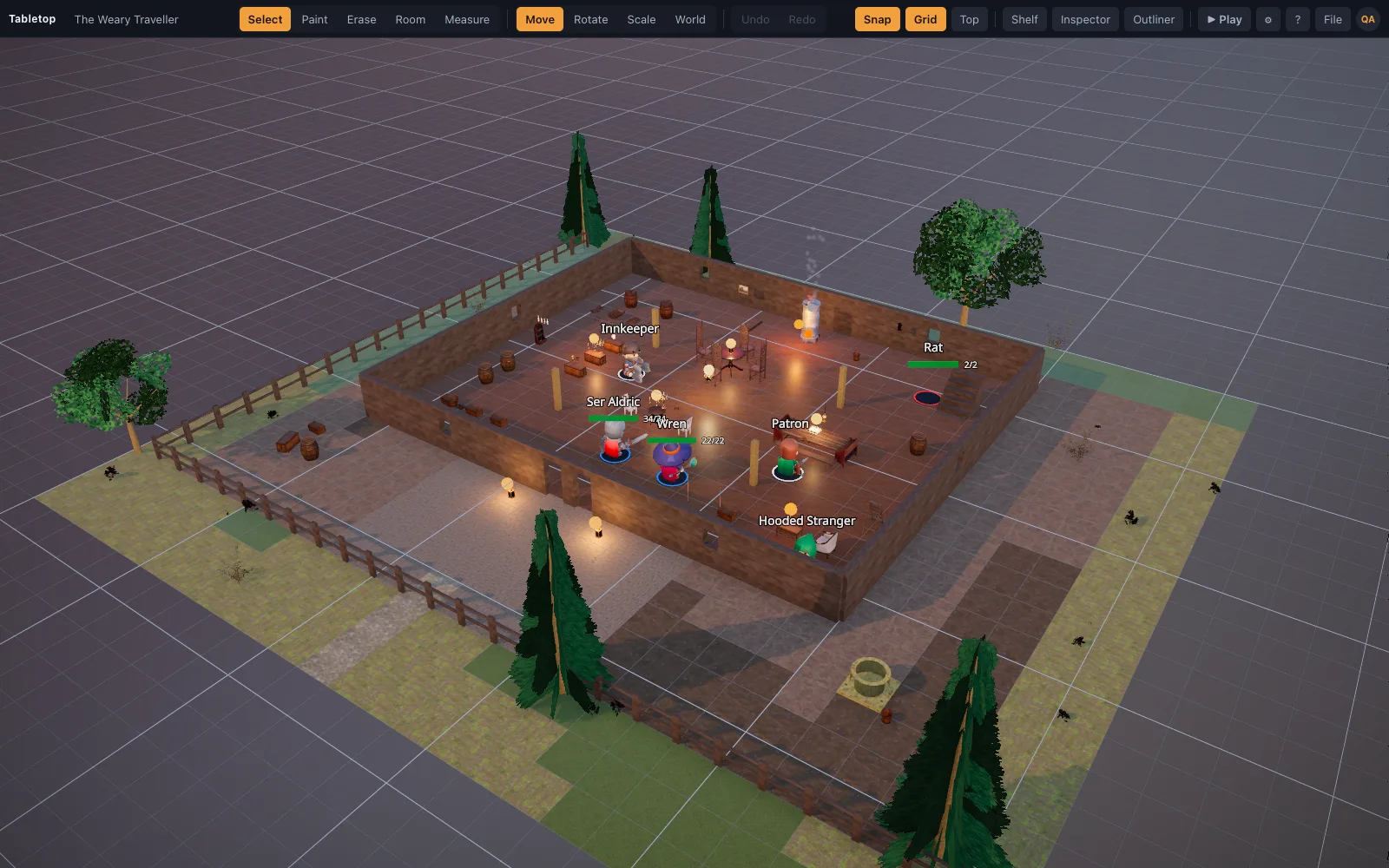
The five things a tavern needs
A bar long enough to vault and hide behind. Tables that can be flipped into cover. A hearth that is genuinely dangerous — a fire is the only terrain in the room that changes decisions. Stairs or a gallery, so the fight has a second level. And two exits, so nobody is trapped and everyone has somewhere to run.
- A bar as a wall you can cross with an action.
- Four to six tables, flippable.
- A live hearth and a woodpile.
- Stairs to a gallery or rooms above.
- A front door and a yard door.
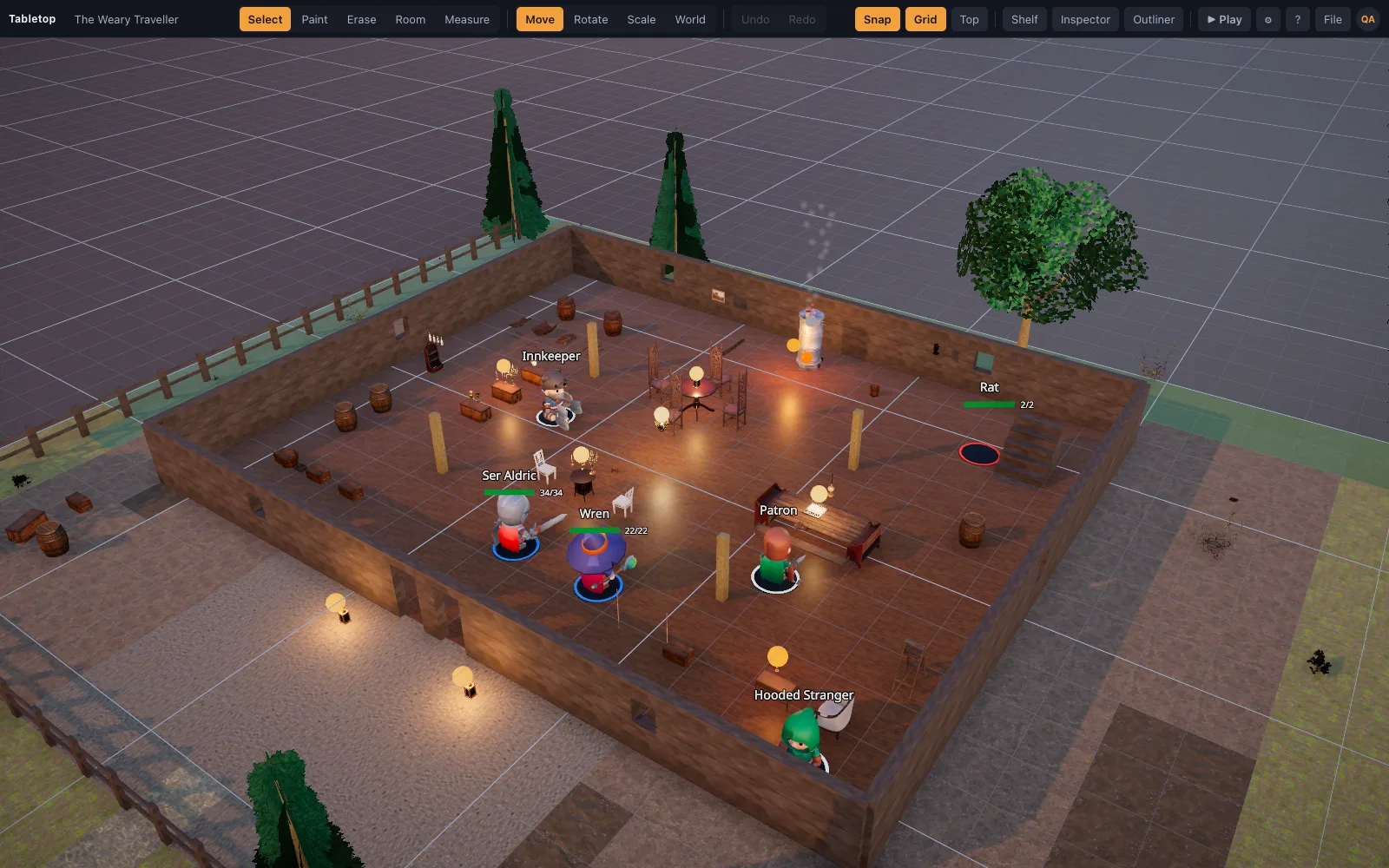
Scale it for a brawl, not a banquet
A common room around 24 by 20 squares fits ten combatants without anyone standing in a queue. Keep the walkways two squares wide — one square makes the whole fight a chokepoint, three squares stops the furniture from mattering.
Light it low
A tavern lit by a hearth and candle clusters gets you shadows in corners, which is where the stranger with the hood sits. Dim light means disadvantage on perception checks that rely on sight, so the room does mechanical work as well as atmospheric.
Reuse it for the whole campaign
Build one good tavern and it becomes six locations: the same room by daylight with the shutters open, at midnight with chairs stacked, burned out, crowded for a festival, empty after a plague. Change the light and two props and the players will not recognise the floorplan — they never do.
The Weary Traveller starter scene is a working example: bar, hearth, long tables, a yard outside with a well and a cart.
Give the brawl rules of its own
A tavern fight is rarely to the death, and treating it like a normal encounter drains it. Run it with non-lethal damage as the default, a bouncer who joins on round three, and a landlord counting the cost of every broken thing out loud. Improvised weapons — a stool, a tankard, a fistful of stew — should be encouraged with a flat 1d4 and a ruling in the player's favour every time.
The win condition is usually social: get thrown out, get the information, or get the crowd on your side. Say that out loud at the top of round one and the whole table plays differently.
- Non-lethal by default; nobody dies over a spilled drink.
- Improvised weapons always work, always 1d4, always fun.
- A bouncer, a landlord and a bill for the furniture.
- A social objective, stated before initiative.
The yard, the cellar and the gallery
The best tavern maps are three small maps stapled together. The yard outside gives you a chase and a place for the fight to spill into. The cellar gives you a dark, cramped second location with barrels for cover. The gallery upstairs gives you height and a railing worth throwing someone over.
Each is a few minutes of building and each one roughly doubles how long a tavern stays useful, because a party that has fought in the common room has not yet fought in any of the other three.