Your first online D&D session: a checklist that actually works
The first online session fails for boring reasons: someone cannot hear, someone cannot log in, and nobody agreed how dice work. None of that is about the game, and all of it is fixable in the fifteen minutes before it starts.
· 6 min read · TerrainTale
Settle the three tools, and only three
Voice, map, dice. Pick one thing for each and nothing else. Every extra tool is another login, another window, and another thing to fail on a Tuesday. Text chat lives in the voice tool you already have.
Whatever you pick, the test is the same: can a new player go from a link to moving their miniature in under two minutes?
- Voice — whatever the group already uses.
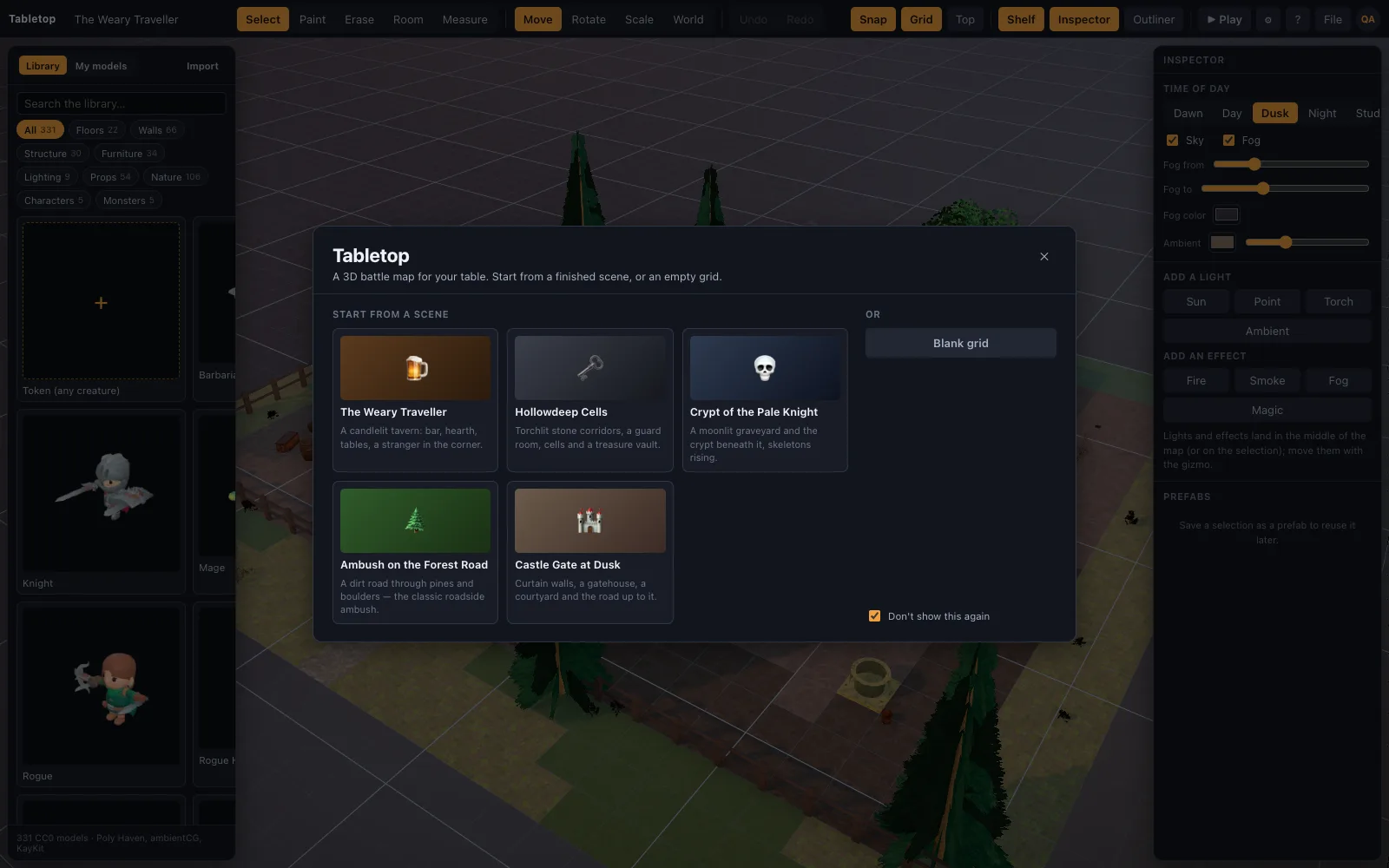
- Map — one shared link, no install.
- Dice — physical, or one roller everyone can see.
- Notes — one shared document, optional.
Run a fifteen-minute rehearsal
Not session zero — a technical rehearsal a day or two before. Everyone joins, says a sentence, moves a token, rolls a die. You will find the broken microphone, the browser that needs updating and the player behind a corporate firewall while there is still time to fix them.
Agree the table rules out loud
Cameras on or off. Whether dice are physical or rolled in the tool. Who moves player minis. What happens when two people talk at once — online, the answer needs to be explicit, because the usual body-language cues are gone. And your safety tools, named before anyone needs them.
Prep a short first session
Plan two hours of material for a three-hour slot. The first online session always loses thirty minutes somewhere, and a session that ends early leaves everyone keen rather than exhausted. One mapped fight is plenty.
Fix the audio before anything else
Every other problem on this list is an inconvenience; bad audio ends campaigns. Cheap wired earbuds with a microphone beat laptop speakers and a built-in mic by an enormous margin, because the built-in combination causes echo that the software then fights by cutting people off mid-sentence.
Ask everyone to use headphones of any kind. That single rule removes echo cancellation from the equation and is worth more than any amount of tuning.
- Headphones for everyone — the one non-negotiable.
- Push-to-talk for anyone with a keyboard they hammer or a dog.
- One person shares screen at a time; the map is not a screen share.
The first fifteen minutes of session one
Open the call fifteen minutes early and treat that window as part of the session. People arrive, sound is checked, tokens appear on the map, and the game starts on time with everyone already in the room. An online table that starts at "can you hear me?" has spent its first burst of enthusiasm on logistics.
Then start with something the players do rather than something you say. Five minutes of description into a silent call is the hardest way to begin; a question directed at one player by name is the easiest.