Sigil is shutting down. Here is what to do before the end of October
Wizards of the Coast announced that Sigil, the 3D virtual tabletop built for D&D Beyond, closes at the end of October 2026. If your group ran its fights in Sigil, the maps, minis and sessions inside it go with it. This is the short version of what to do in the weeks left: what is worth saving, what you should stop investing in, and how to land somewhere that will not vanish with a corporate strategy change.
· 6 min read · TerrainTale
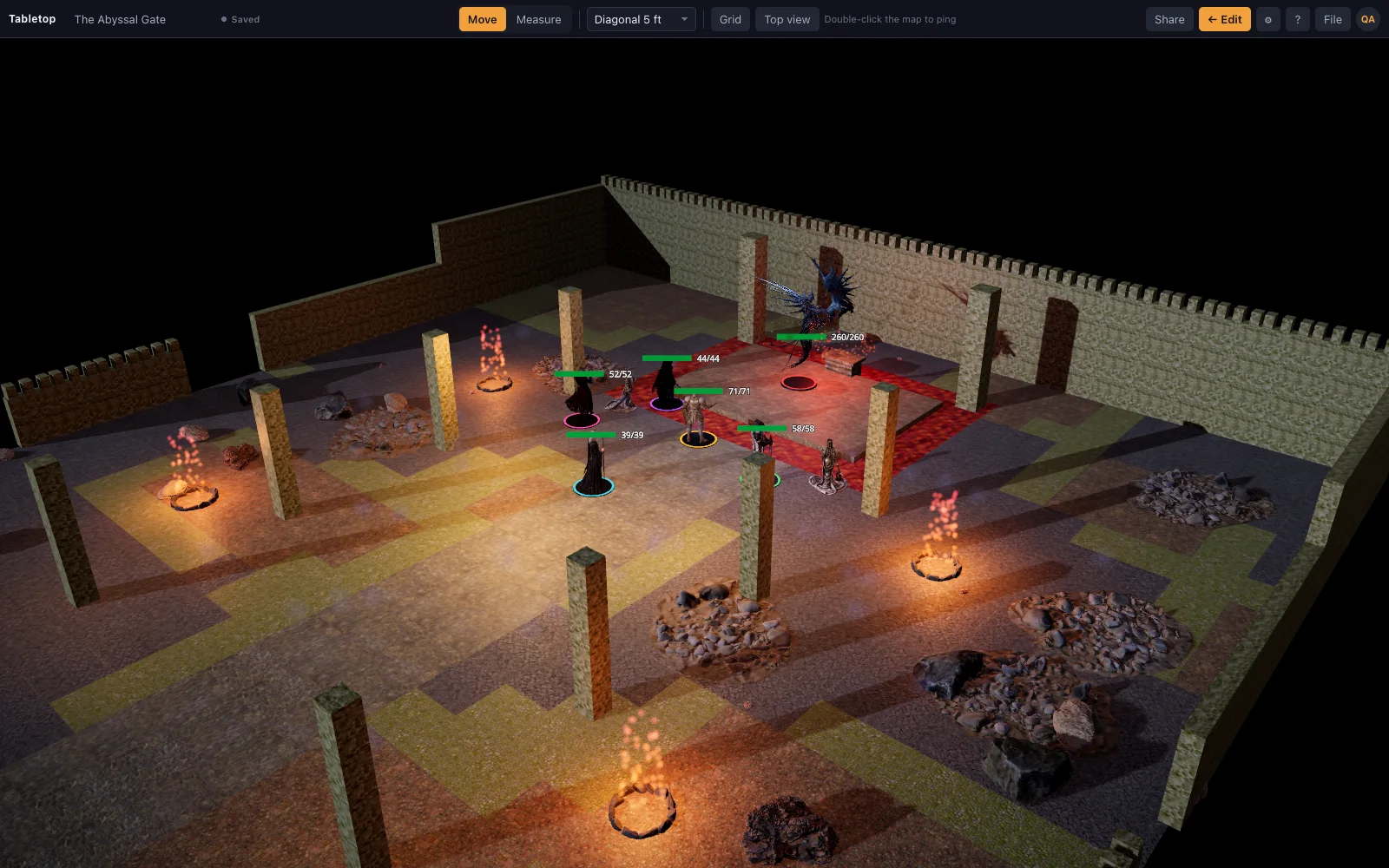
What actually disappears
Sigil was a Windows desktop application backed by a hosted service. When the service stops, the application stops with it: scenes were stored in Sigil's format on Sigil's servers, minis were made in its own mini maker, and the D&D Beyond sync that made it convenient was the same dependency that makes it unrecoverable. There is no announced export to a common 3D format, so treat everything built inside Sigil as gone after the closing date.
What does not disappear is the knowledge. If you spent a year learning how to run a fight on a map with real height and light, that skill transfers to any 3D tabletop. The maps are the cost; the habits are the asset.
The save-what-you-can checklist
Do these in the next session, not the last one, because the last one tends to be a scramble.
None of this needs Sigil to be running later. Screenshots and notes are enough to rebuild a map in an hour with a room tool, because the hard part of a map is the decisions, and those are already made.
- Screenshot every scene from above and from the angle you used at the table. A top-down shot is a floor plan you can rebuild from.
- Write down the grid size of each map in squares, and where the doors and stairs are. Two numbers and a sketch is a full spec.
- Export whatever Sigil lets you export from its own menus, even if you are not sure you can open it. Formats sometimes become readable later.
- Save your monster and character art separately. Any image becomes a standee token in most VTTs, including TerrainTale, so portraits keep working.
- Copy your session notes out of any linked campaign tools while the links still resolve.
What to look for in the replacement
Groups leaving Sigil tend to shortlist by feature and regret it. The feature that matters is the one that ended Sigil: whether your maps outlive the service. Ask three questions of anything you try next. Can I export a scene as a file I can read? Can I run the server myself if the company stops? Are the assets under a licence that lets me keep them?
TerrainTale answers yes to all three, which is why it exists in this list: every scene is a JSON file you can export today, the server is open and self-hostable, and the library is CC0 scans. It runs in a browser tab on macOS, Windows, Linux and ChromeOS, so the Windows-only limitation goes away too. What it does not have is D&D Beyond sync, so character sheets stay on your character sheet tool, which for most groups is where they were anyway.
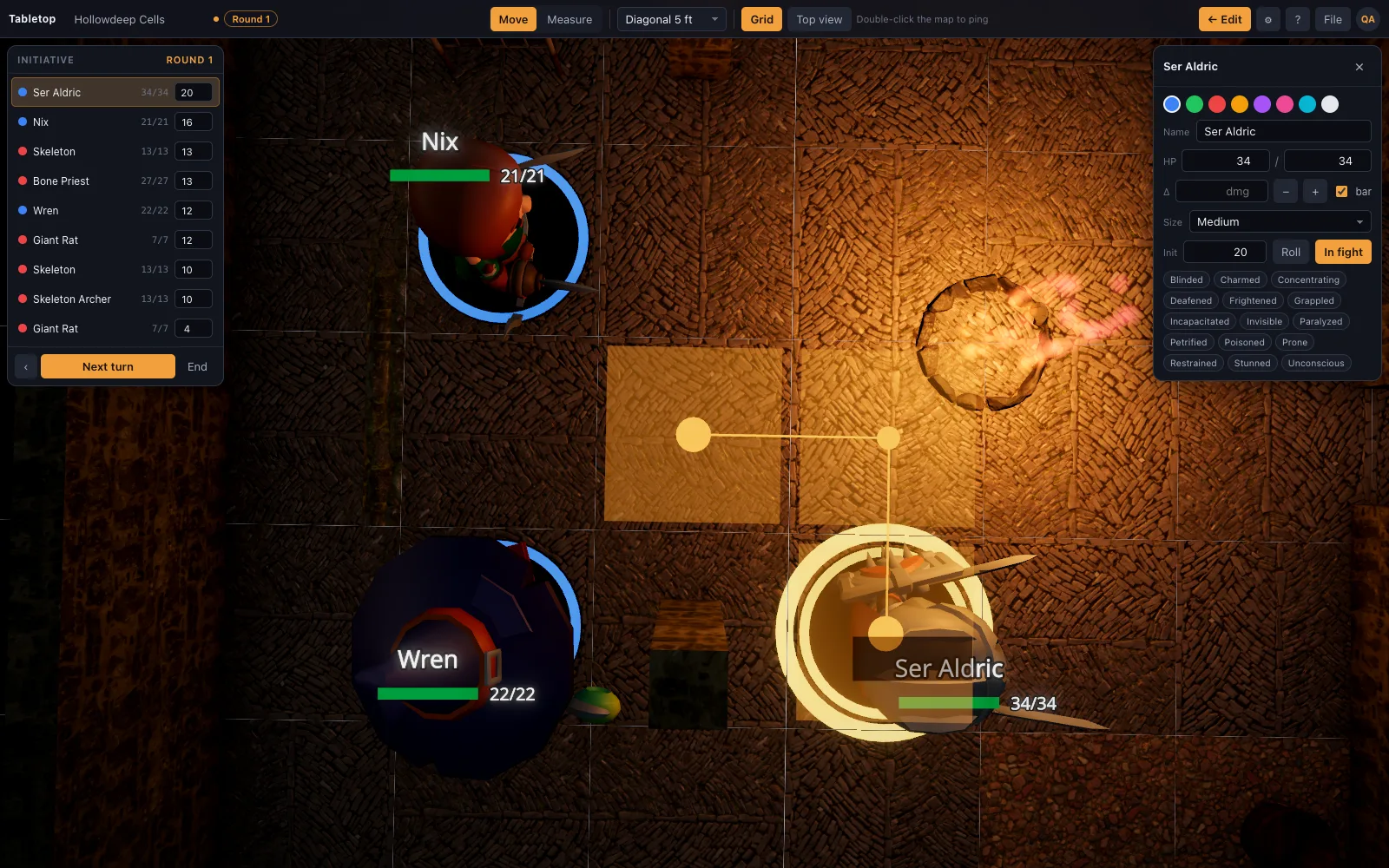
Rebuilding a map in an afternoon
Start from the screenshot and the square count. Drag the room tool for each room using a kit that matches the original (Dungeon, Castle, Tavern, Crypt, Cave, Manor, Cottage), which gives you floored, walled rooms in a handful of drags. Add the doors on the edges where your sketch says they were. Then place light, because torches and candles do more for a Sigil-style look than any amount of furniture.
If you would rather describe than drag, write a scene recipe: a short JSON description of rooms, walls and props that the app builds into a grid-correct map. An AI assistant can write one from a paragraph of description, and you can import it straight in. The five starter scenes cover a tavern, a dungeon, a crypt, a forest road and a castle gate for the sessions that cannot wait.
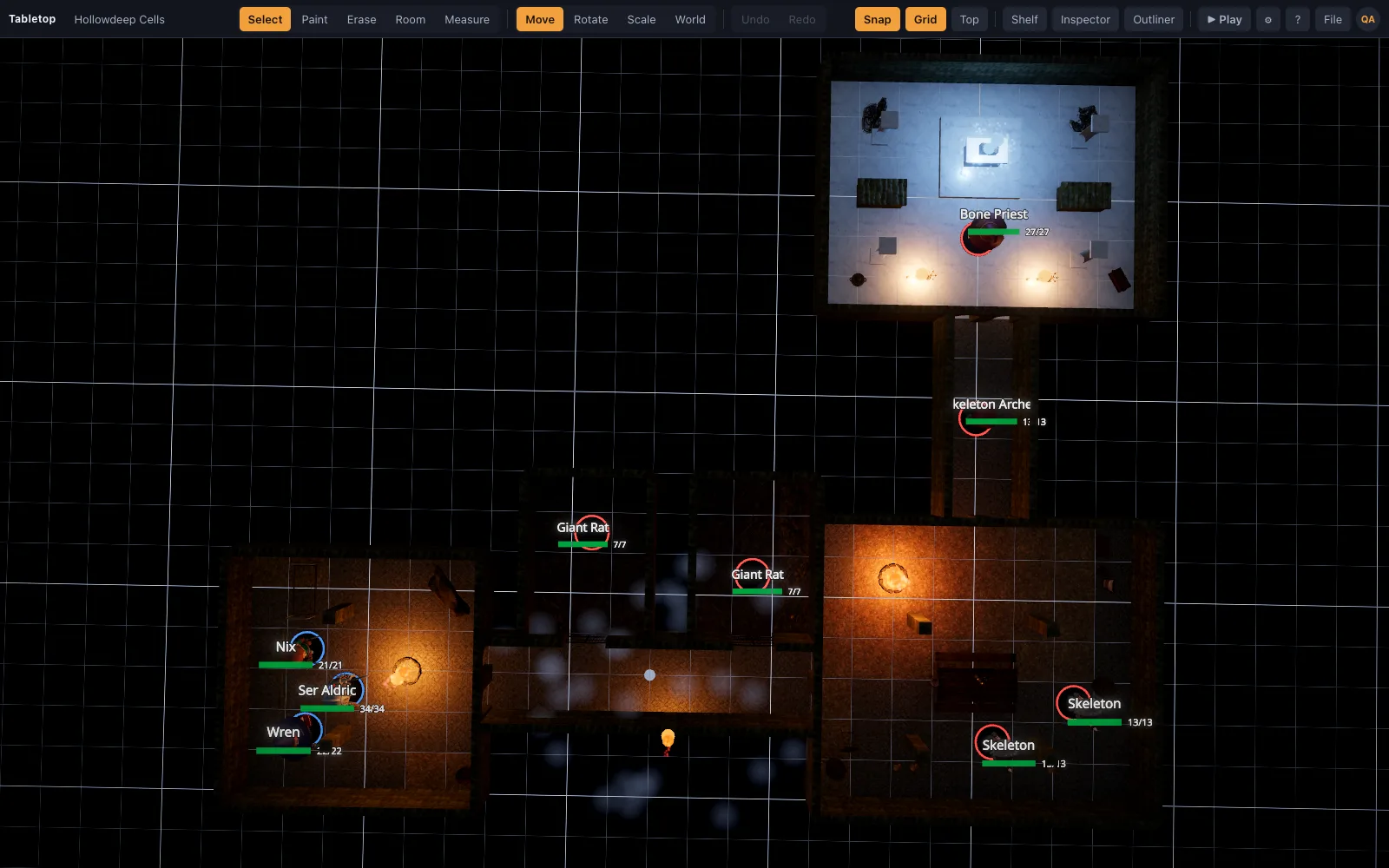
Do not rebuild everything
The temptation after a shutdown is to recreate the whole campaign's map library. Rebuild the next three sessions and stop. Most saved maps are never used twice, and a map made the week it is needed is always better than one made in a panic six weeks earlier. The point of moving is to get back to playing, and the first session on the new table is the only deadline that matters.