Running combat with 3D miniatures instead of flat tokens
A flat token tells you where a creature is. A miniature tells you what it is, at a glance, from across the table. TerrainTale's Play mode runs a fight with animated 3D minis that idle in place, stand on real bases, and take the right footprint for their size, on the same five-foot grid every token-based tool uses — and it hides everything that isn't the fight the moment you press it.
· 6 min read · TerrainTale
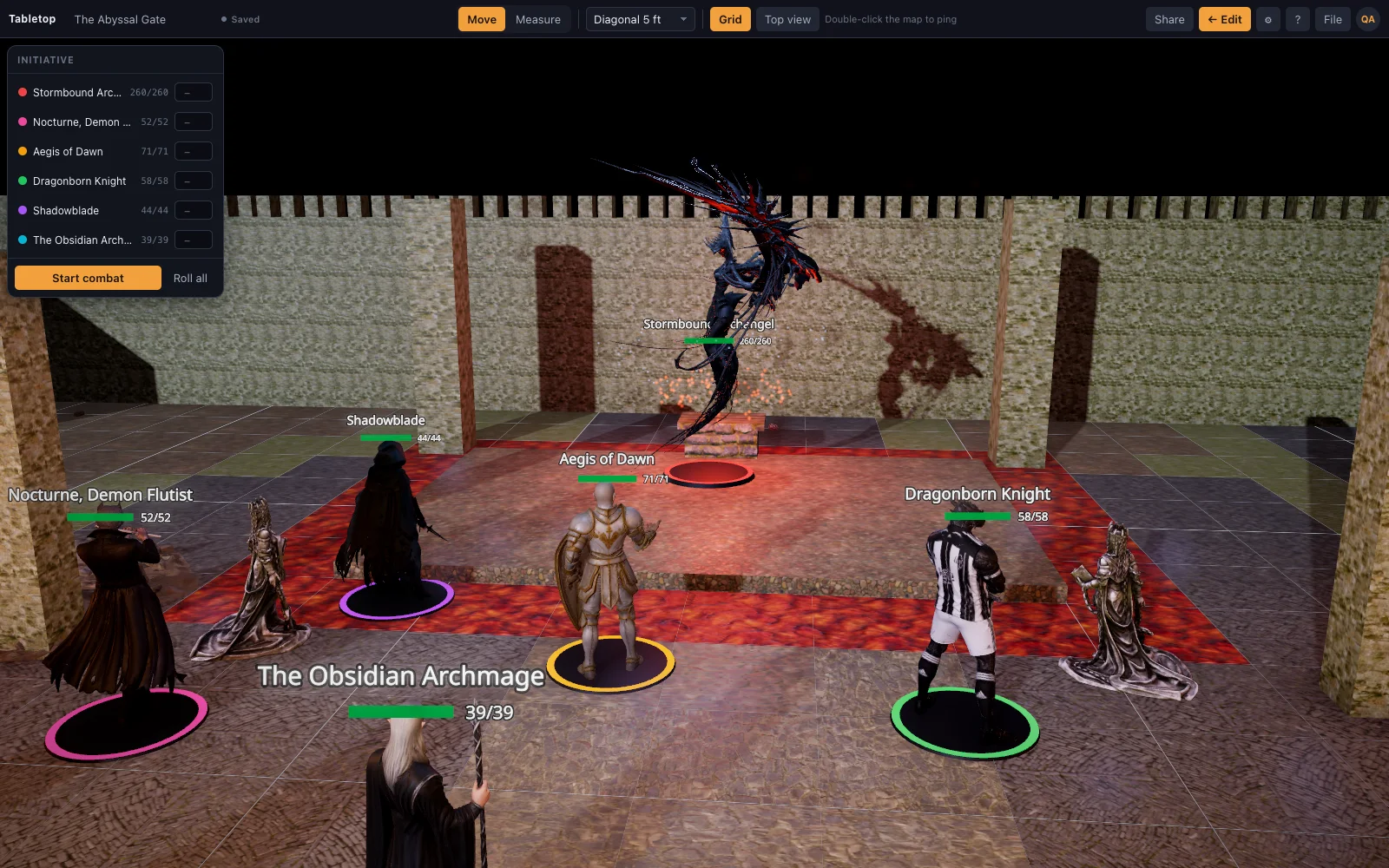
A mini reads faster than a token
The built-in characters are rigged, animated KayKit models — a knight, a barbarian, a mage, a rogue and a hooded rogue for the party; a skeleton warrior, mage, rogue and minion for the other side. They idle rather than standing frozen, so a glance across the table tells you who is a person-shaped threat and who is a shape you don't recognize yet, before you've read a single name.
A base ring under each mini is coloured by disposition — ally, hostile, neutral — so 'is that thing on my side' is answered by colour, not by clicking.
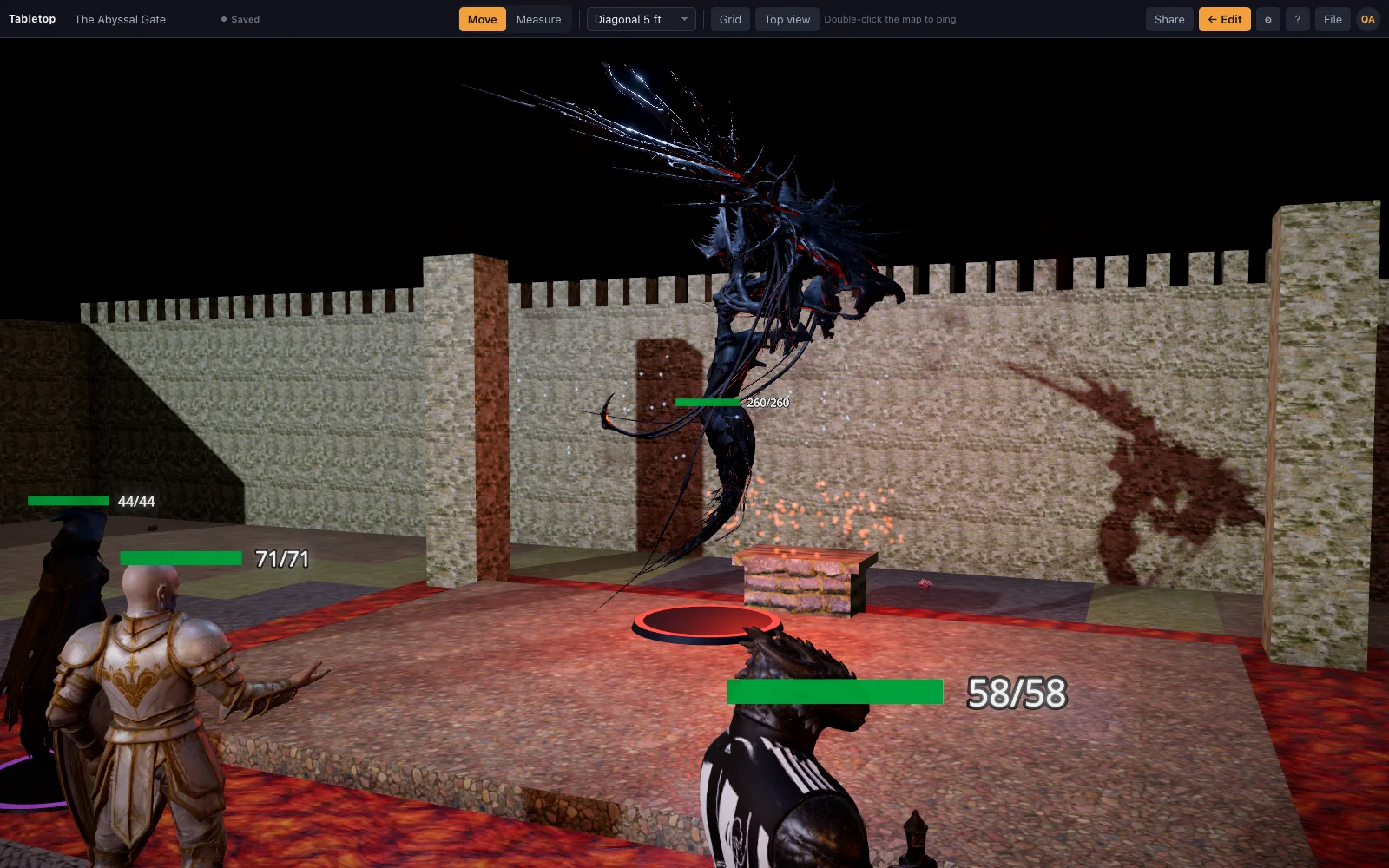
Size takes the footprint it should
A Large ogre occupies two squares by two on the grid, not one oversized token pretending to. Small, Medium, Large and bigger sizes each take the right number of cells, so a corridor that fits one ogre but not two reads as tight the moment you place it, without a ruling.
What Play mode strips away
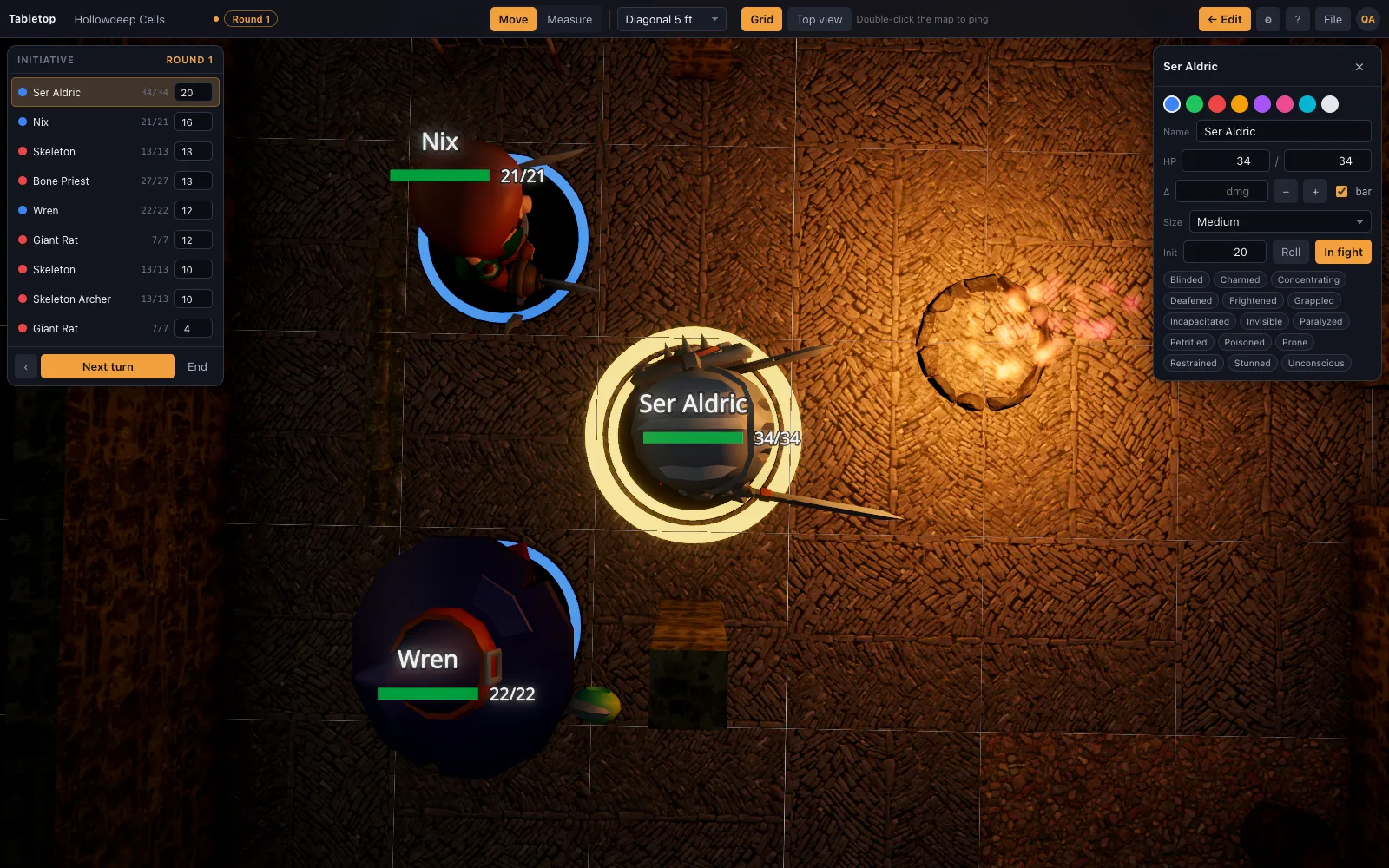
Pressing P drops the editor entirely: what's left is the map, Move and Measure, the grid toggle, the top-down view and the initiative tracker. There's no panel to misclick, no menu a player leaning over the table can bump mid-fight — Play mode is deliberately narrower than the editor, not a reskin of it.
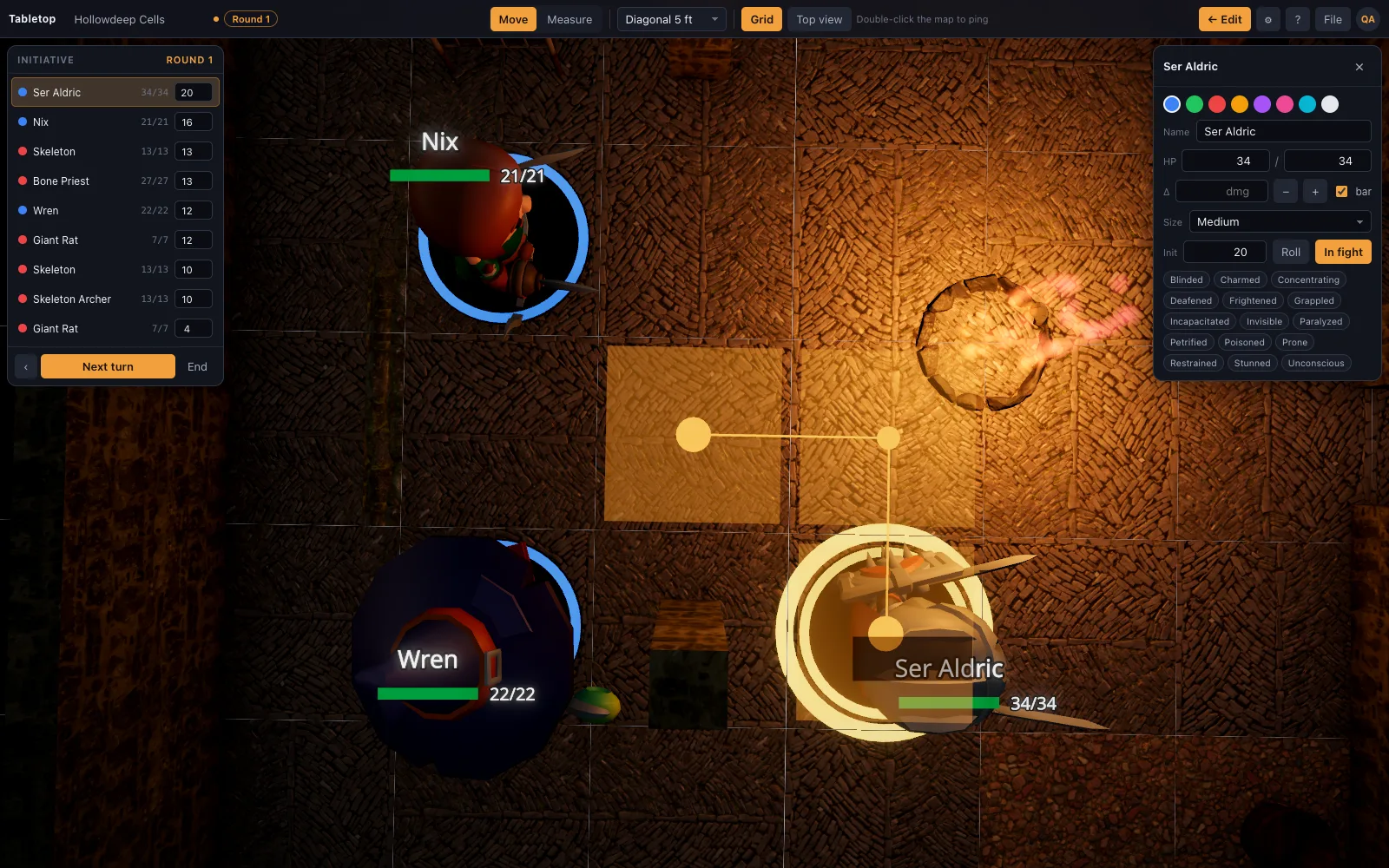
Movement is measured as it happens
Dragging a mini shows the ruler live, in feet, so a move is measured as it's made rather than eyeballed afterward. Names and HP sit beside each mini in large type, and a double-click pings a spot on the map to draw attention without touching a token.
For creatures with no model, a standee stands in
Not every monster needs a rigged mini. Drop any image onto the window — art from the book, a portrait, a photo of a physical figure — and it becomes a standee token: a flat picture on a base that always turns to face the camera, the way a cardboard pawn does at a real table. Mixing a shelf of animated minis with standees for the rest of the bestiary is the normal way most tables fill out an encounter.
What a token-based tool has to fake, this doesn't
A flat-token tool usually solves 'is this Large creature really two squares wide' with a bigger circle and a label, and solves 'who's the enemy' with an icon in the corner. Both are real solutions, but they're both extra information you have to read. A 3D mini standing at the right height, taking the right footprint, with a coloured ring under its own base, answers the same two questions with the shape and colour already in front of you — nothing to read, just to see.
None of this changes what the game needs from a DM. The rules still live in the book; Play mode's job is only to keep the table legible while you run them.