Conditions in combat: tracking them so they actually matter
Prone, restrained, poisoned, frightened — every condition in 5e is a small rules change that's supposed to shift a fight's tactics. In practice most of them get applied once, in the excitement of the turn that caused them, and then quietly forgotten by round three because nothing on the table reminds anyone they're still active.
· 5 min read · TerrainTale
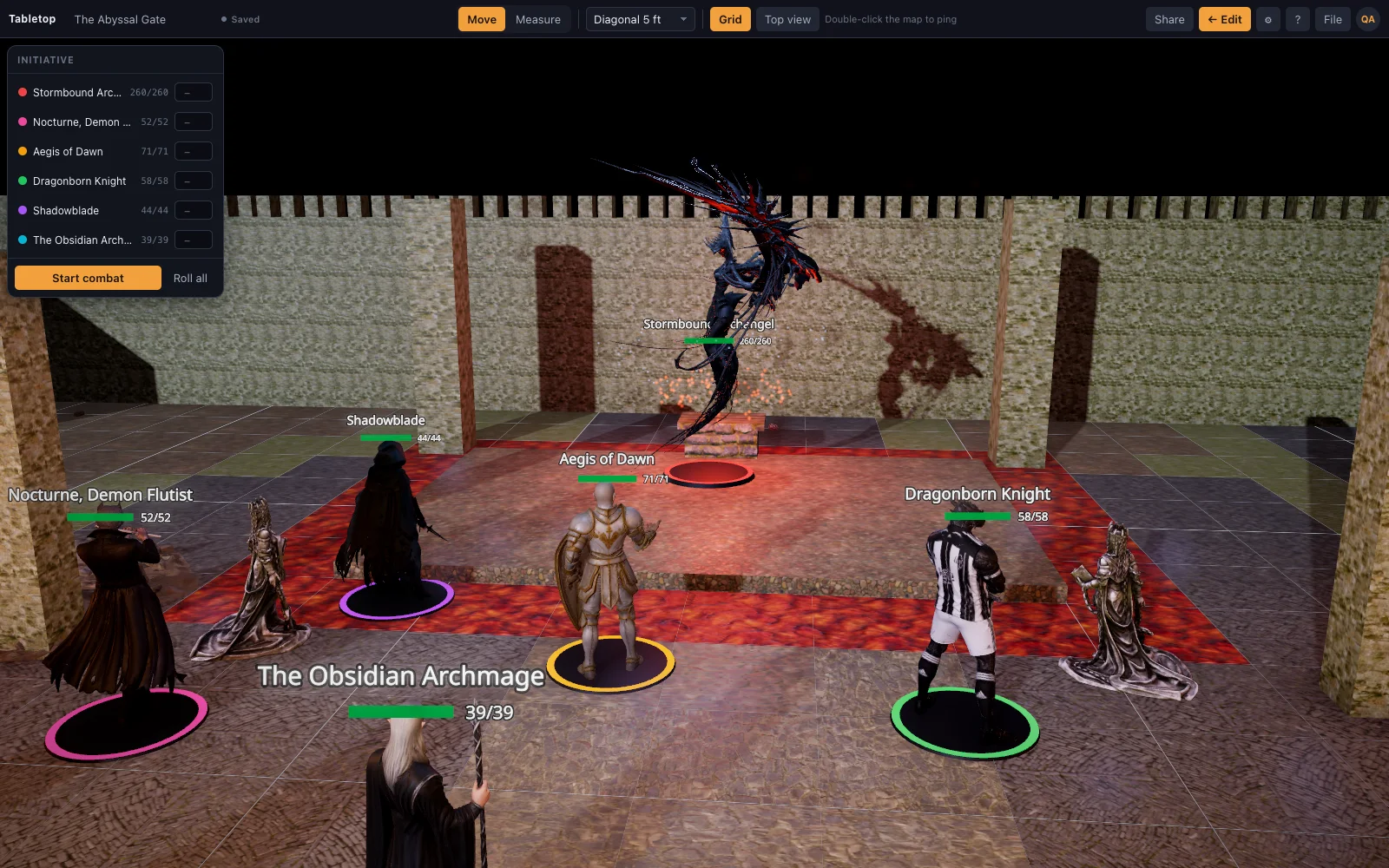
A condition is only as good as its reminder
The rules text for a condition matters less than whether the table remembers to apply it. A goblin knocked prone grants advantage to melee attacks against it for exactly as long as it stays prone — a fact that's easy to honor the turn it happens and easy to lose track of two turns later when three other things have happened since.
TerrainTale's token card carries a list of conditions right next to HP, so selecting a mini to resolve an attack shows both in the same glance: how hurt it is and what's currently affecting it. There's no separate condition sheet to cross-reference.
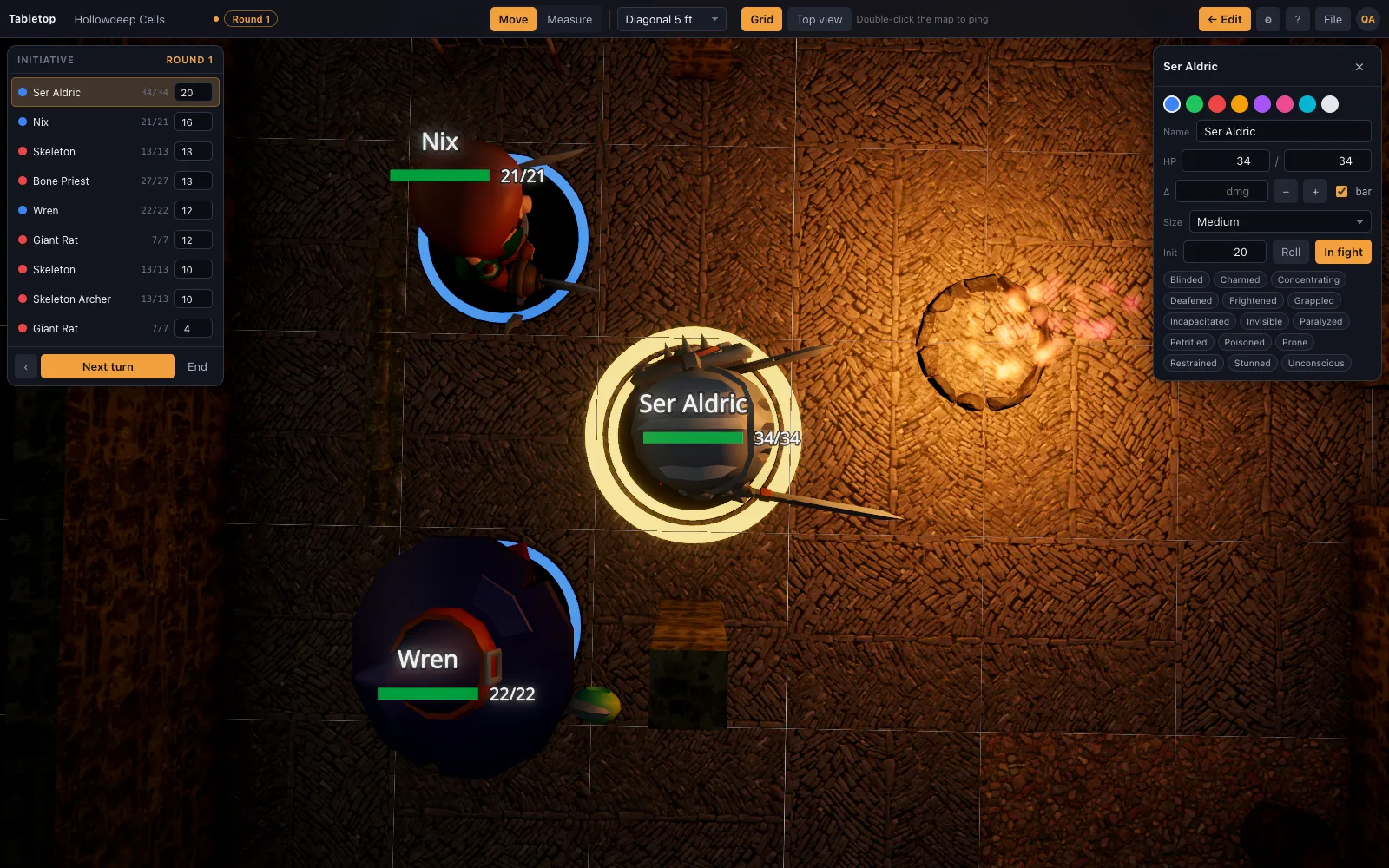
Conditions live with the creature, not the round
Because conditions sit on the token itself rather than on a note tied to "this round," they survive exactly as long as they should — through however many turns pass until someone removes them or a save clears them — without depending on the DM's memory to carry them forward. The hostile/ally/neutral ring on each base keeps the who's-who readable at a glance, so a quick scan of the table shows both a creature's allegiance and, on its card, its current state.
- Conditions listed on the same card as HP, size and portrait
- Hostile/ally/neutral rings make the table readable without opening any card
- Movement is charged per turn as a mini is dragged, so a restrained or grappled creature's reduced options are visible in what actually happens on the drag
What tracking a condition does not do
Listing a condition on a card is bookkeeping, not rules enforcement — the tracker doesn't stop a prone creature from being moved, or automatically apply the attack-roll penalty a condition implies. That's deliberate: 5e's conditions interact with each other and with specific abilities in ways that need a person's judgment, not a rules engine guessing at intent. What the card buys back is the harder problem, which is simply remembering the condition is there at all when it's time to matter.
Where this pays off most
The value shows up hardest in longer fights and in fights with several afflicted creatures at once — a grappled ogre, a frightened cultist, a poisoned wolf all present in the same round. Cross-referencing three separate conditions against three separate creatures from memory is exactly where a table loses track; having each one sit visibly on its own token removes the memory requirement and leaves only the ruling.
Visible to the whole table, not just the DM
In Play mode and in a shared room, the initiative tracker and its token cards are the same for players as for the DM, so a player can check their own condition, or a target's ring and visible state, without asking. That turns "wait, am I still prone?" from a table-stopping question into something a player can answer by looking.
A short list beats a long argument
The practical upside of putting conditions on the card isn't fewer rules disputes about what a condition does — it's fewer disputes about whether a condition is still active at all, which is a much more common and much more avoidable argument at most tables. A short, visible list next to a creature's name settles that question before it becomes one.