Tracking movement in combat without a whiteboard
Every table that has run 5e combat for more than a session has had this moment: a player has already moved once this turn, moves again after casting a spell, and nobody remembers exactly how far the first move was. A whiteboard tally or a mental note is the usual fix. A table that charges movement automatically does not need either.
· 5 min read · TerrainTale
What 5e actually asks you to track
5e gives every creature a speed — 30 feet for most player characters — that it can spend across its turn in any combination: move, act, move again, so long as the total doesn't exceed the speed. That flexibility is the part that is easy to describe and tedious to enforce by hand, because it means movement has to be added up across however many separate drags a turn actually takes, not just checked once.
Per-turn accrual: what it means on the table
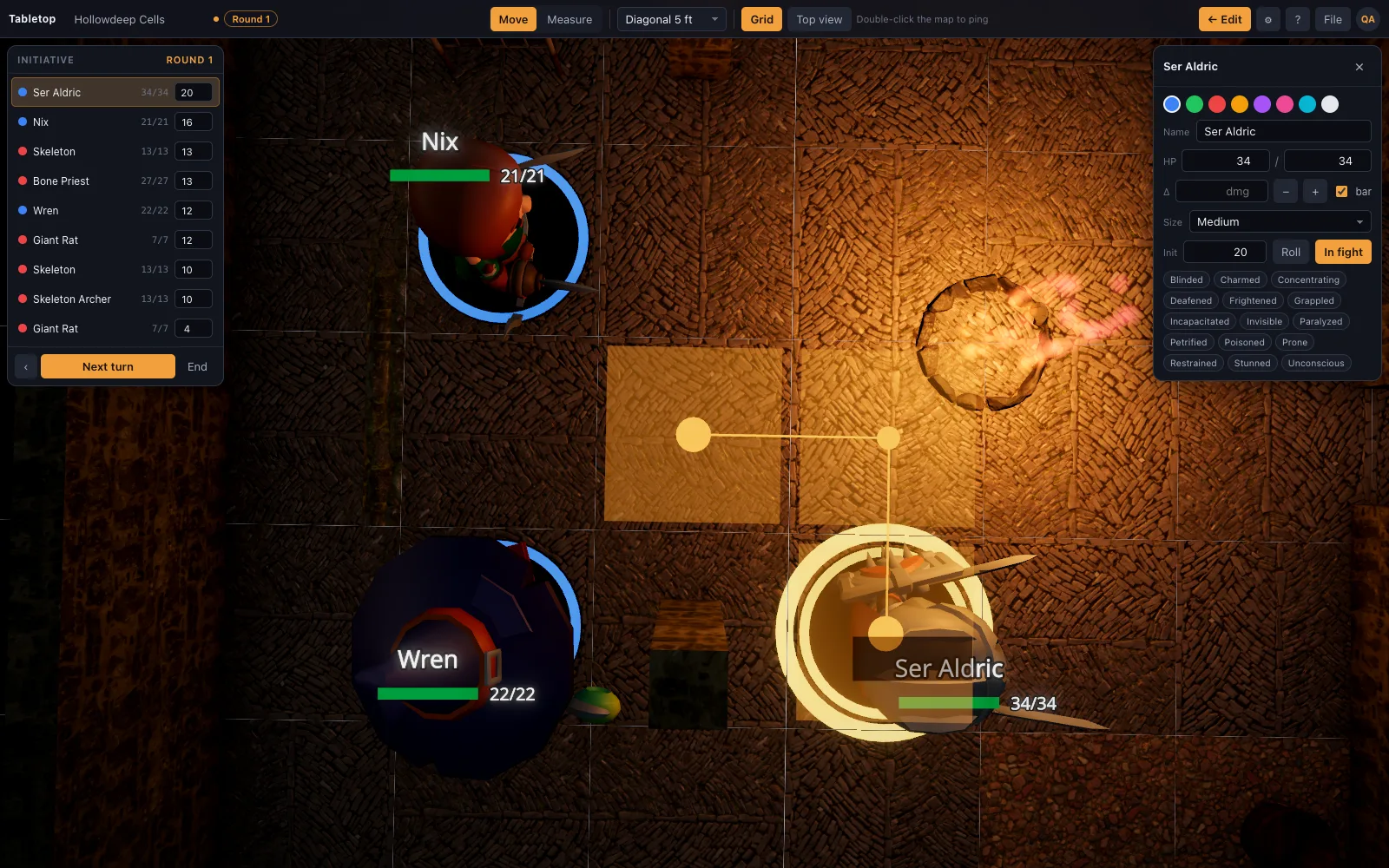
Dragging a mini across the grid charges that move against its remaining movement allowance for the current turn, so a fighter who moves 15 feet, attacks, then wants to move another 10 feet is charged against the same running total rather than a fresh one. The allowance resets when initiative advances to the next turn, so the accounting starts clean for everyone at the start of their own turn.
This is the same mechanism the ruler uses to report distance in the first place — see how the readout works — applied continuously across a turn instead of just for a single drag.
Why this matters more than it looks
Split movement is common in practice — closing half the distance, attacking, then repositioning with what is left — and it is exactly the case a whiteboard tally handles worst, because it requires someone to remember and subtract correctly twice in the same turn under the pressure of everyone else waiting. Automatic accrual removes the arithmetic without removing the tactical decision: the player still chooses when and how far to move, they just don't have to also be the table's movement clerk.
It also removes a common source of table friction — the moment someone insists they only moved 20 feet when they moved 35 — by making the running total visible rather than remembered.
The tracker knows when movement resets
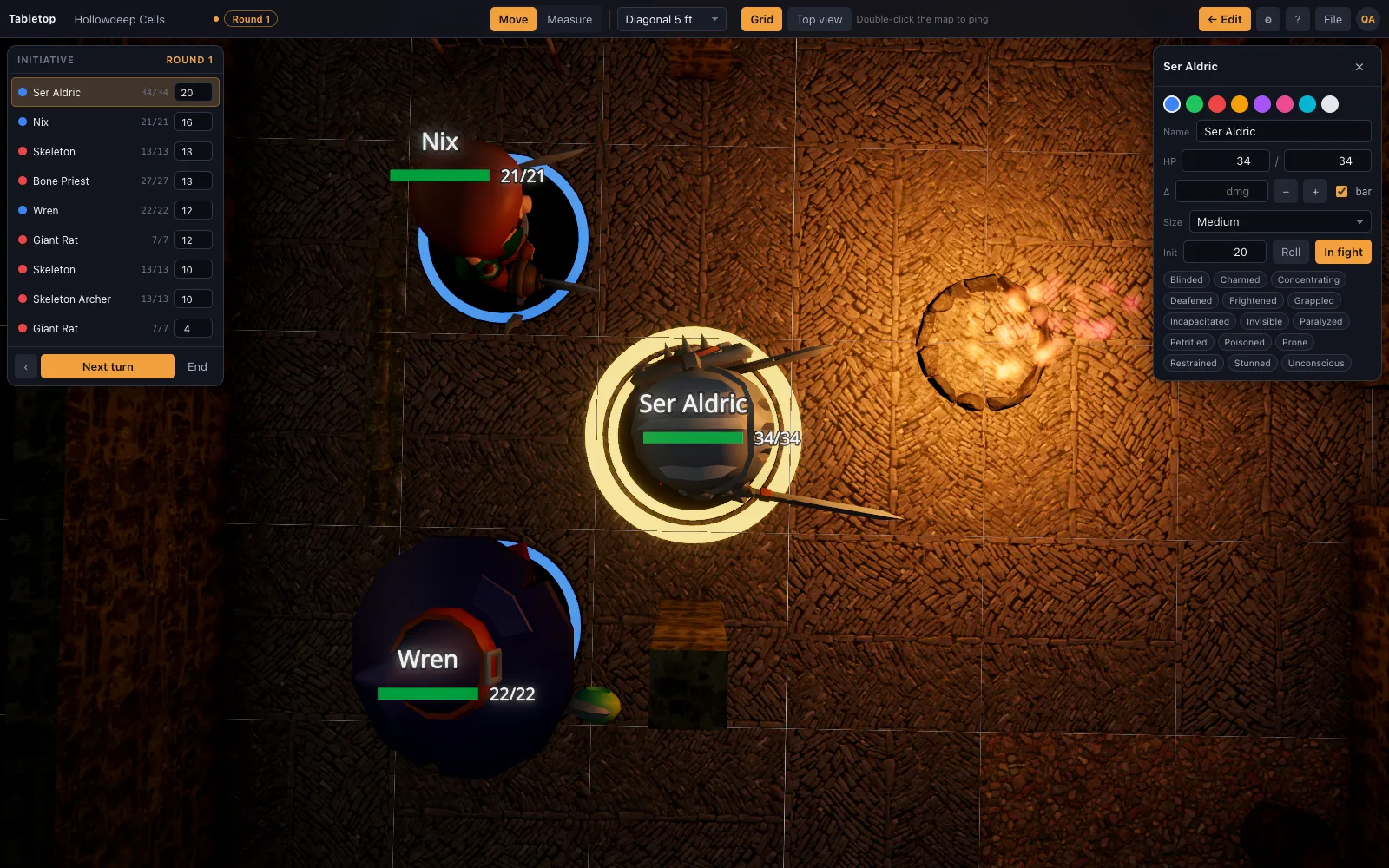
Because movement allowance is tied to the current turn, it works together with the initiative tracker rather than as a separate system: starting combat puts every mini on the map into the order, advancing to the next turn resets that mini's movement, and the token whose turn it is glows so the reset is visible, not just assumed.
What this replaces at the table
Before this kind of tracking, tables typically reached for one of a few workarounds: a dry-erase number next to each mini that someone updates by hand, a shared spreadsheet nobody remembers to open mid-fight, or just trusting players to self-report how far they've gone. All three fail the same way under time pressure — the tally falls out of sync with the actual map, usually in the direction that favors whoever's turn it currently is, and the DM ends up adjudicating a dispute about movement instead of running the encounter.
Charging movement automatically against the same total the ruler already measures removes that entire category of dispute. The number the table sees is the number that's true, because it's the same measurement the map is built on rather than a parallel record someone has to keep matching to it.