What a shared room does (and doesn't) let players do
It's worth being exact about a shared room's boundaries before you rely on it at the table. Here's what a seated player can actually do, and what's deliberately kept to the DM.
· 5 min read · TerrainTale
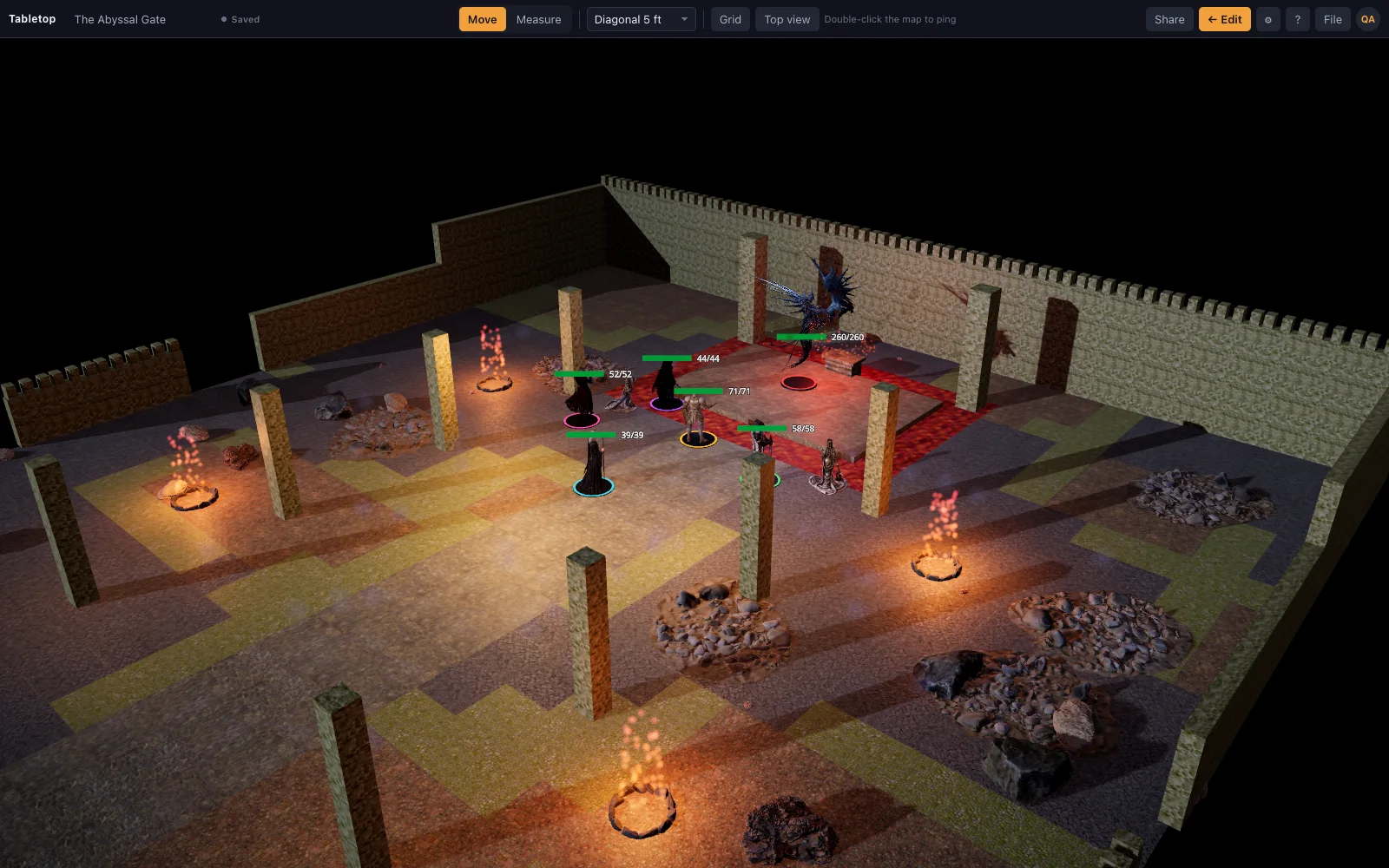
What a seated player can do
Once let into a live table, a player can drag their own miniature (with the same live ruler and waypoints the DM sees), nudge it with the arrow keys, measure distances with the ruler (M), ping a spot on the map with a double-click, select a mini to read its card, add or remove conditions on any mini that isn't locked, and watch the initiative order update in real time.
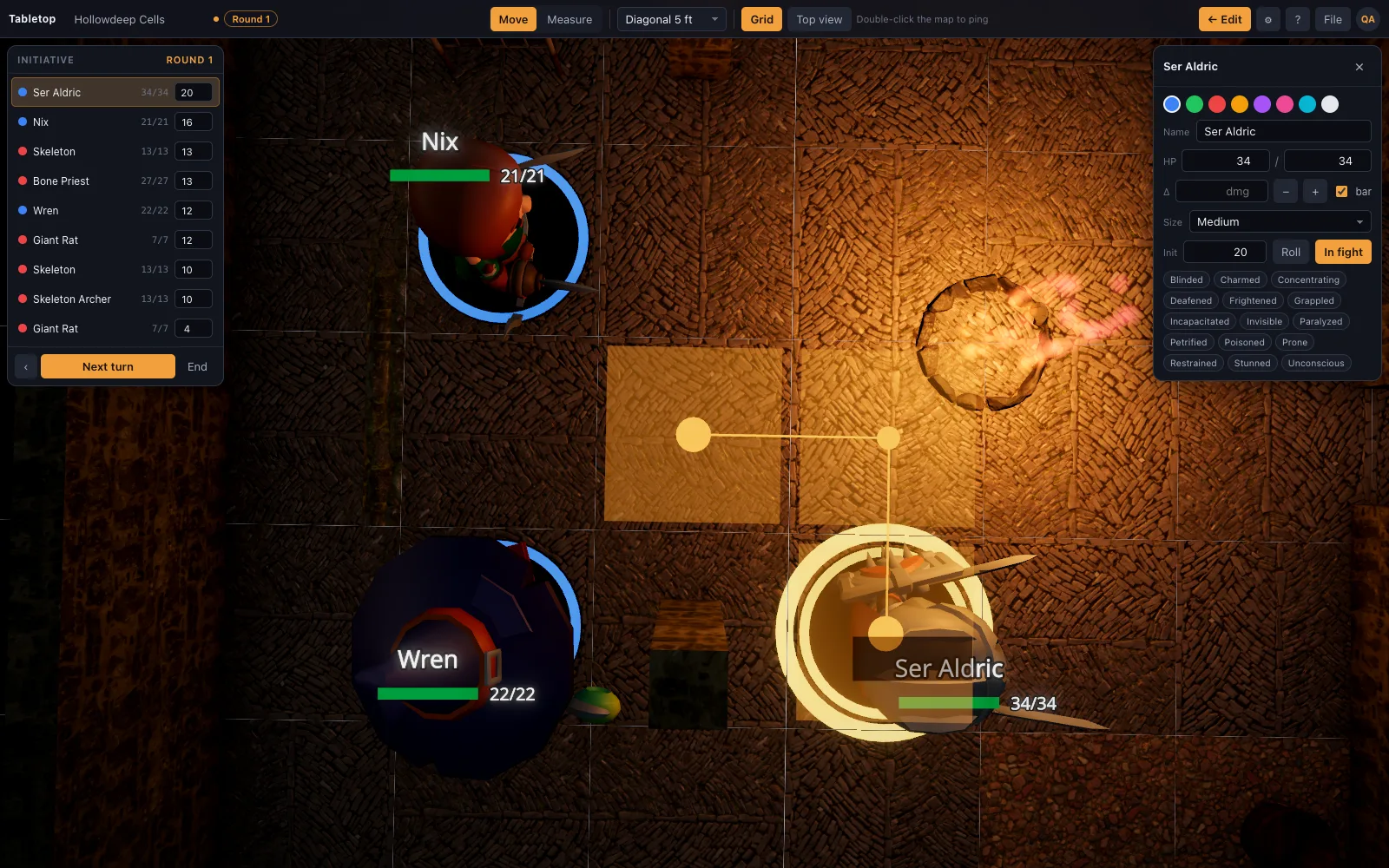
What a seated player cannot do
A player cannot edit the scene, change a mini's HP directly, run the initiative tracker, save the scene, or reach the editor at all — those panels and shortcuts are hidden from a player's view, and the DM's own copy of the scene refuses anything a player's client tries to send outside what's allowed.
What isn't in the room at all
There is no player-controlled token movement beyond a player's own seated mini, no shared multi-cursor editing view where players build the scene alongside the DM, no fog of war, and no player chat or voice built into the app — a table still needs its own voice call or in-person conversation alongside the shared map. A room shows the same map to everyone; it isn't a collaborative level editor.
Models a player never sees
If the DM drops in their own model file rather than using the built-in library, that model isn't in the shared library, so a player's browser can't fetch it — it simply isn't drawn on their screen, and a toast tells the DM how many pieces were skipped. The rest of the scene is unaffected.
A hidden mini is genuinely hidden
A mini flagged Hidden from players is left out of what's sent to a player's browser entirely — not dimmed, not faded, absent from the data. The DM sees a ghosted marker on their own screen and can reveal it with a button when it matters.
Setting expectations before your first shared session
The clearest way to explain a shared room to a new group is by what it replaces and what it doesn't: it replaces everyone squinting at one screen shared over a call, but it doesn't replace the table talk, the rules calls, or a DM's usual tools for keeping secrets. Those still work the way they always have — the room's job is only to put the map itself in front of everyone at once.
Knowing the actual boundary up front avoids a player assuming they can, say, drop a new token onto the map themselves or peek at a hidden mini's stats — neither is possible, and neither should surprise anyone once the limits are clear.
The short version
A player moves their own mini, measures, pings, reads cards and manages conditions. The DM edits everything, runs the tracker, and controls who's hidden. There's no fog of war, no player editing of the scene, and no shared multi-cursor build view — the room is a live window onto the DM's table, not a second copy of the editor handed to everyone.