Torches and shadows: why dynamic light changes how a room reads
A painted torch on a flat map is a picture of light. A torch that actually casts light — with a radius, a falloff, and real shadows from whatever stands between it and the wall — is light. The difference sounds academic until a player leans on it to plan an approach.
· 5 min read · TerrainTale
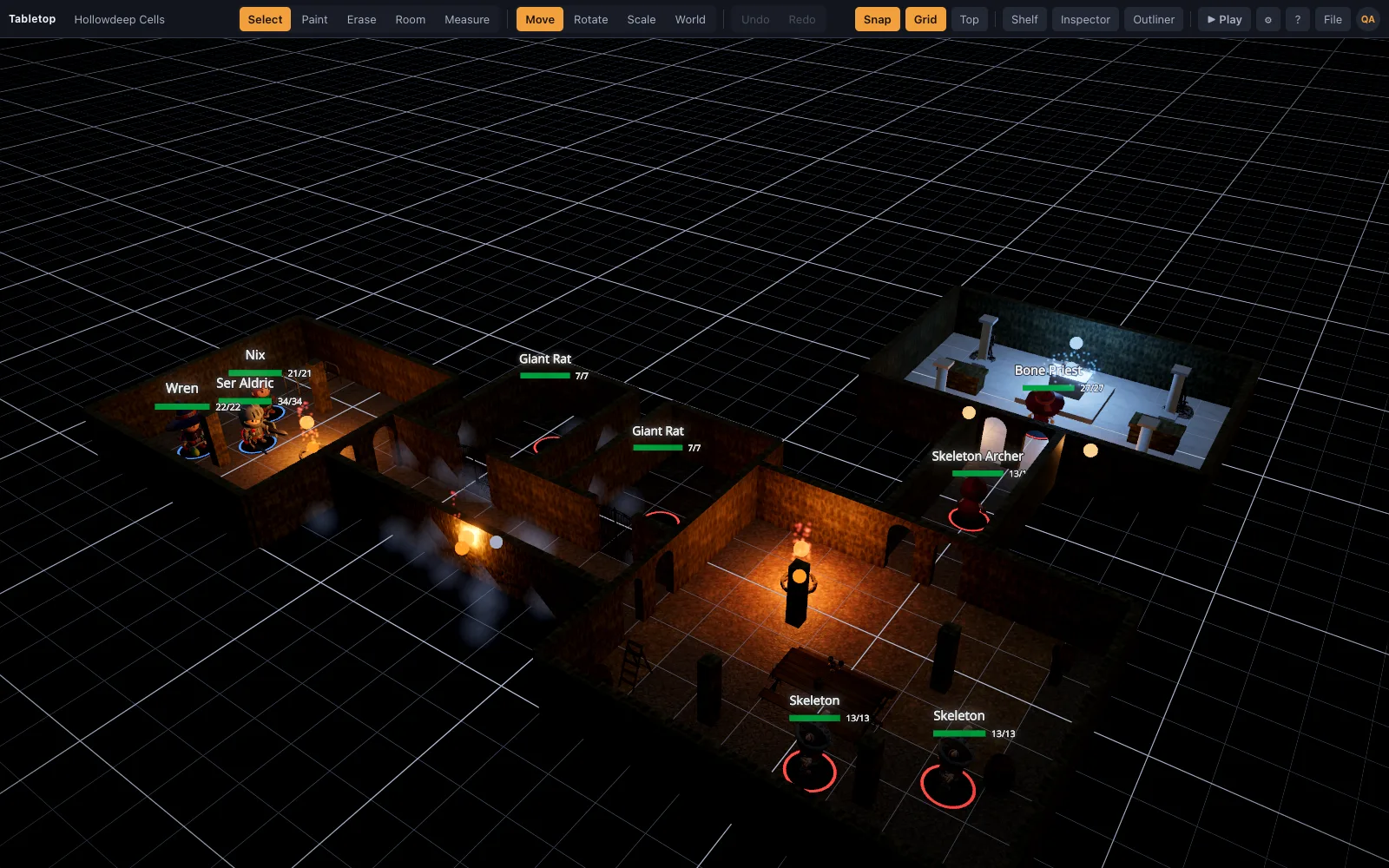
Baked shading versus a real light source
A hand-drawn or generated battle map can shade a torch's glow onto the floor around it, but that shading is fixed the moment the image is made — it doesn't know a pillar is standing between the torch and the far wall, and it doesn't change if the torch moves. TerrainTale's torch lights are real point lights attached to whatever prop holds them, so the shadow a column casts, the dark pool behind a crate, and the bright ring right at the flame are all computed from where things actually are on the table, not painted in advance.
Attach a torch to any lamp, candle or brazier
A torch light attaches to any lamp, candle or brazier on the shelf, so lighting a corridor is placing the prop that should be lit, not fighting a separate lighting tool. Flames get bloom on top, so a torch actually reads as a bright source in the frame rather than a textured prop that happens to be near some shading.
- Attach a torch light to any lamp, candle or brazier prop
- Real point lights, not baked shading — walls and props cast genuine shadows from them
- Bloom on flames makes a torchlit room read as lit, not just textured
Why this matters more than it sounds like it should
Once light is real, where a creature stands relative to it is a fact about the table, not a narrated detail the DM has to remember to mention. A rogue who steps behind a pillar to break a torch's line is doing something the map actually shows, and a player deciding whether to close a door on a lit room versus a dark one is reading real shadow, not guessing at what the DM intends by "it's pretty dark in here."
It also changes how an ambush plays: reinforcements standing just outside a torch's radius are genuinely harder to spot on the rendered scene, the same way they would be at a real table lit by candlelight, rather than being equally visible regardless of distance from the light source the way a flat, evenly-lit map tends to be.
Placing lights on purpose
A room doesn't need a torch in every corner to feel lit — one or two well-placed sources usually read better than uniform coverage, because the contrast between lit and unlit areas is what makes the lighting legible as a real space rather than a lightbox. A single torch by the door and a brazier at the far end of a long hall, for instance, leaves a believable dark stretch between them worth actually walking through carefully.
Works alongside the time-of-day preset
Torch lights sit on top of whichever time-of-day preset the scene is set to, so a torch in a night-lit crypt is doing real work — it may be close to the only light in the room — while the same torch in a day-lit courtyard reads as a small accent against a much brighter ambient scene. Both are the same prop and the same light; the preset just decides how much it has to compete with.