From idea to stat block: designing a custom boss monster
A boss fight lives or dies on the monster behind it: a memorable concept, legendary actions that keep it dangerous when the party surrounds it, and a CR that actually holds up. Here's how that goes from a one-line idea to a finished 2024-format stat block.
· 5 min read · TerrainTale
Start with the concept, not the numbers
The strongest boss monsters start from a sentence that's really about story, not stats — what it wants, what makes it dangerous, what the party will remember about the fight afterward. "An ancient bog dragon with legendary actions" or "an undead knight bound to a fiendish contract" both say enough for the generator to build a full creature from; the CR can come along for the ride or be pinned down explicitly if you already know how tough this fight needs to be.
Naming a CR versus letting it pick one
For a boss fight specifically, it's usually worth naming the CR rather than leaving it open — a boss's difficulty is a deliberate choice tied to your party's level, not something to leave to a default. Add it straight into the prompt: "a hag who trades in stolen names, CR 7" pins the generator to that rating and it builds the ability scores, hit dice and attack bonuses to match.
What legendary actions actually add
A creature written with legendary actions gets extra actions between other creatures' turns, which is exactly what keeps a single boss monster from getting locked down and finished off the instant the whole party reaches it — the classic problem with a lone monster against a full party. The generator writes these in the current 2024 wording, each costing a set number of the creature's legendary action uses, following the same format rules as its normal actions.
Reading the finished block before you run it
The result comes in the 2025 Monster Manual layout: header and alignment, AC and Initiative, HP with hit dice, the six abilities with their modifiers and saves, then Traits, Actions, Bonus Actions, Reactions and Legendary Actions in order. Attacks read as "Melee Attack Roll: +7, reach 5 ft. Hit: 11 (2d6 + 4) Slashing damage"; area saves read as "Wisdom Saving Throw: DC 14, each creature in a 15-foot Cone. Failure: … Success: …." Read through it once before the session — the wording is meant to be run straight from the page.
Iterating without starting over
If the first draft is close but not quite the boss you had in mind, describe the change and generate again rather than editing numbers by hand — "the same undead knight, but CR 9 and mounted" produces a fresh, internally-consistent block rather than a patched one where only some of the numbers moved. Once you're happy with it, copy it as Markdown to keep and edit further, or drop it straight onto a 3D battle map with a free account, HP and initiative already wired up for the fight.
The room, not just the monster
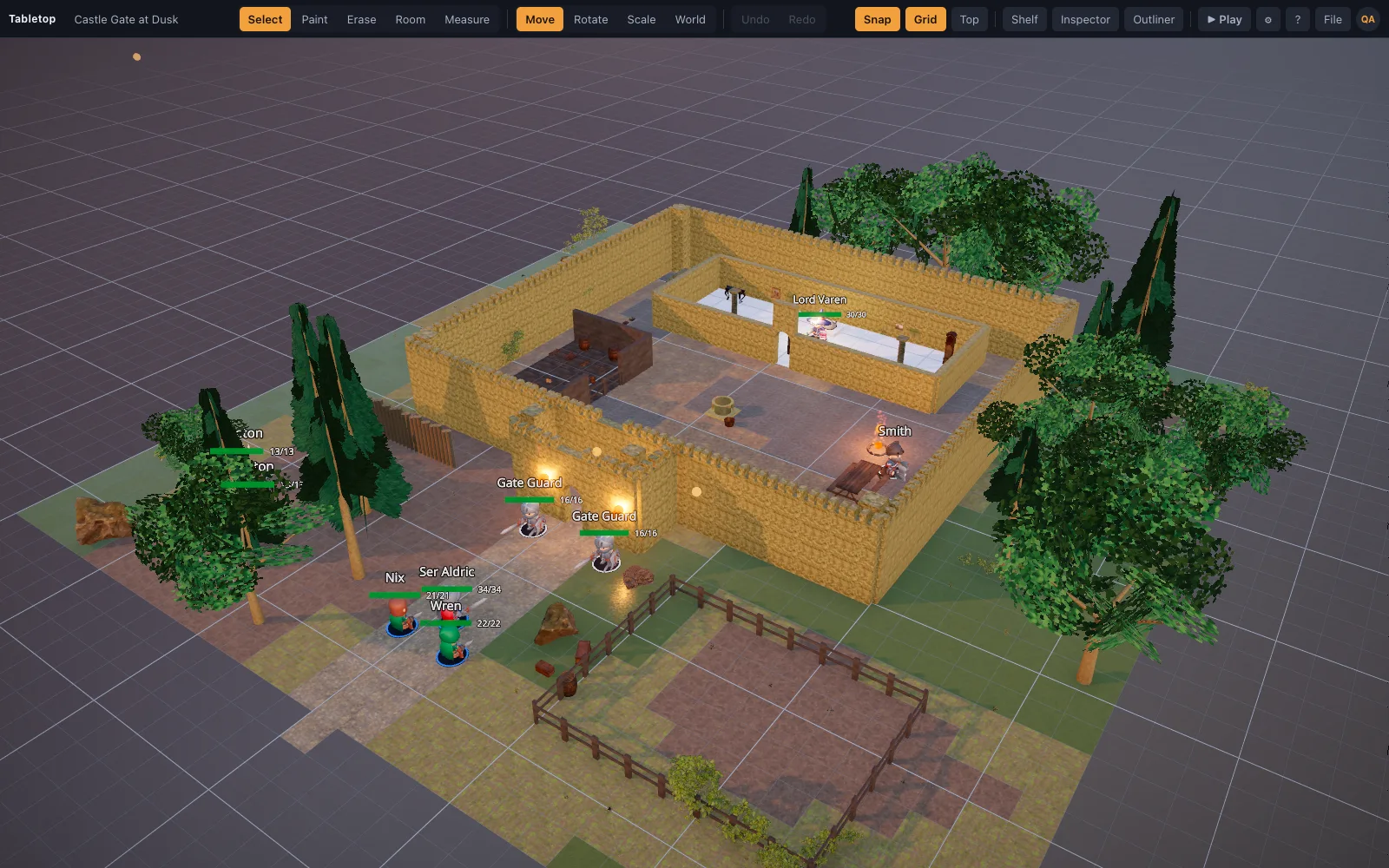
A boss stat block is only half a boss fight — the other half is where it happens. TerrainTale's 3D scenes let you build the throne room, ritual chamber or rooftop the fight plays out on from realistic scanned materials, with lighting set to the moment, so the encounter that reads well on the page lands the same way at the table. Miniatures carry HP bars, the ruler counts feet on the grid, and the initiative tracker keeps the boss's extra legendary turns straight alongside everyone else's.