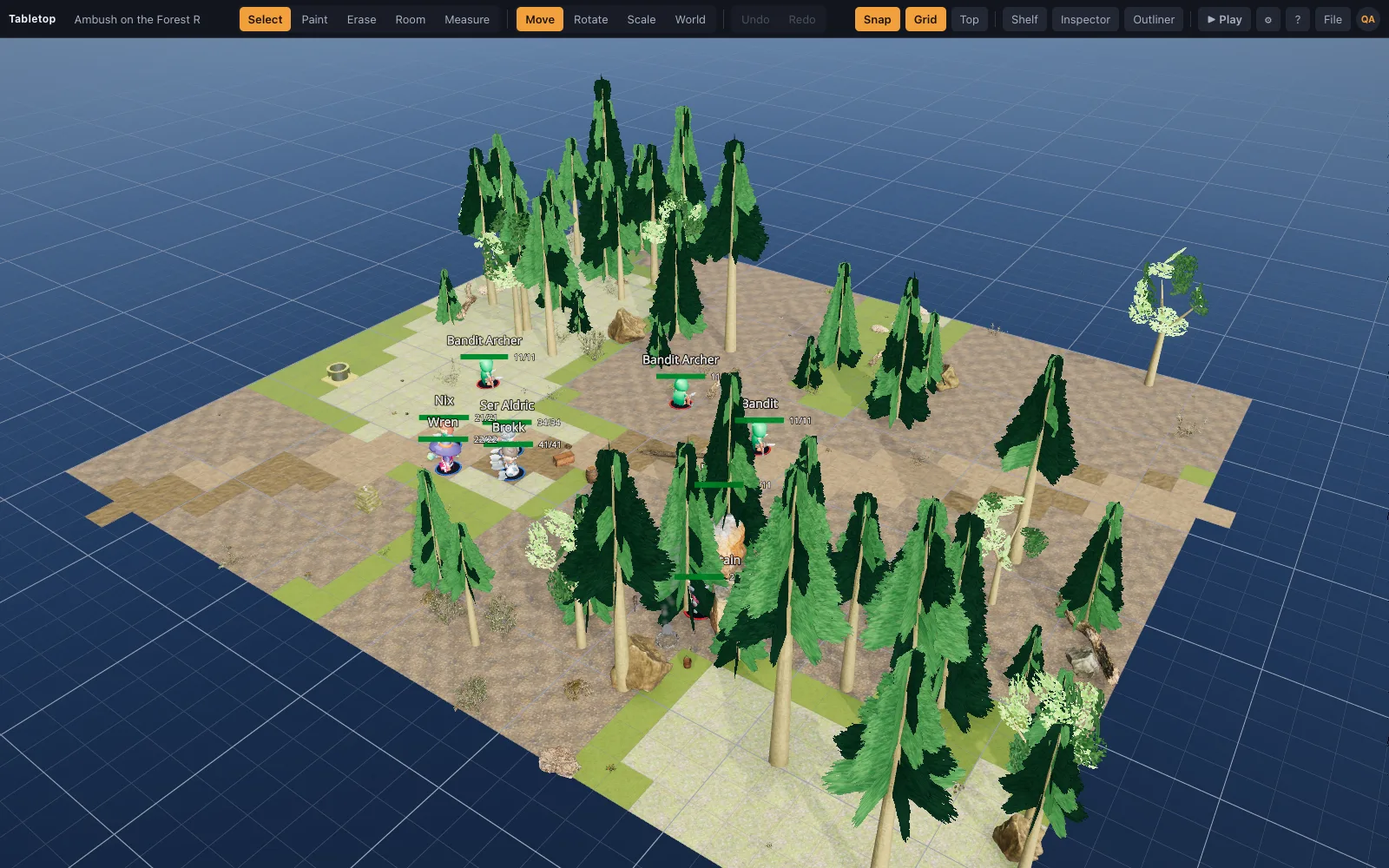
Swamp battle maps for D&D: mud, water in three depths, fog, and the one dry path
A swamp map has one rule: everything is difficult terrain except the path. Mud, reeds, roots and shallow water all cost 2 feet of movement per foot, so a character with 30 feet of Speed crosses 3 squares a turn instead of 6. The path is where the fight wants to happen, and the swamp is what happens to anyone who leaves it. Add water in three depths, fog that hides the far bank, and enemies with a swim speed, and you have a map that punishes the party for the thing they always do, which is spread out.
· 5 min read · TerrainTale
The path and everything else
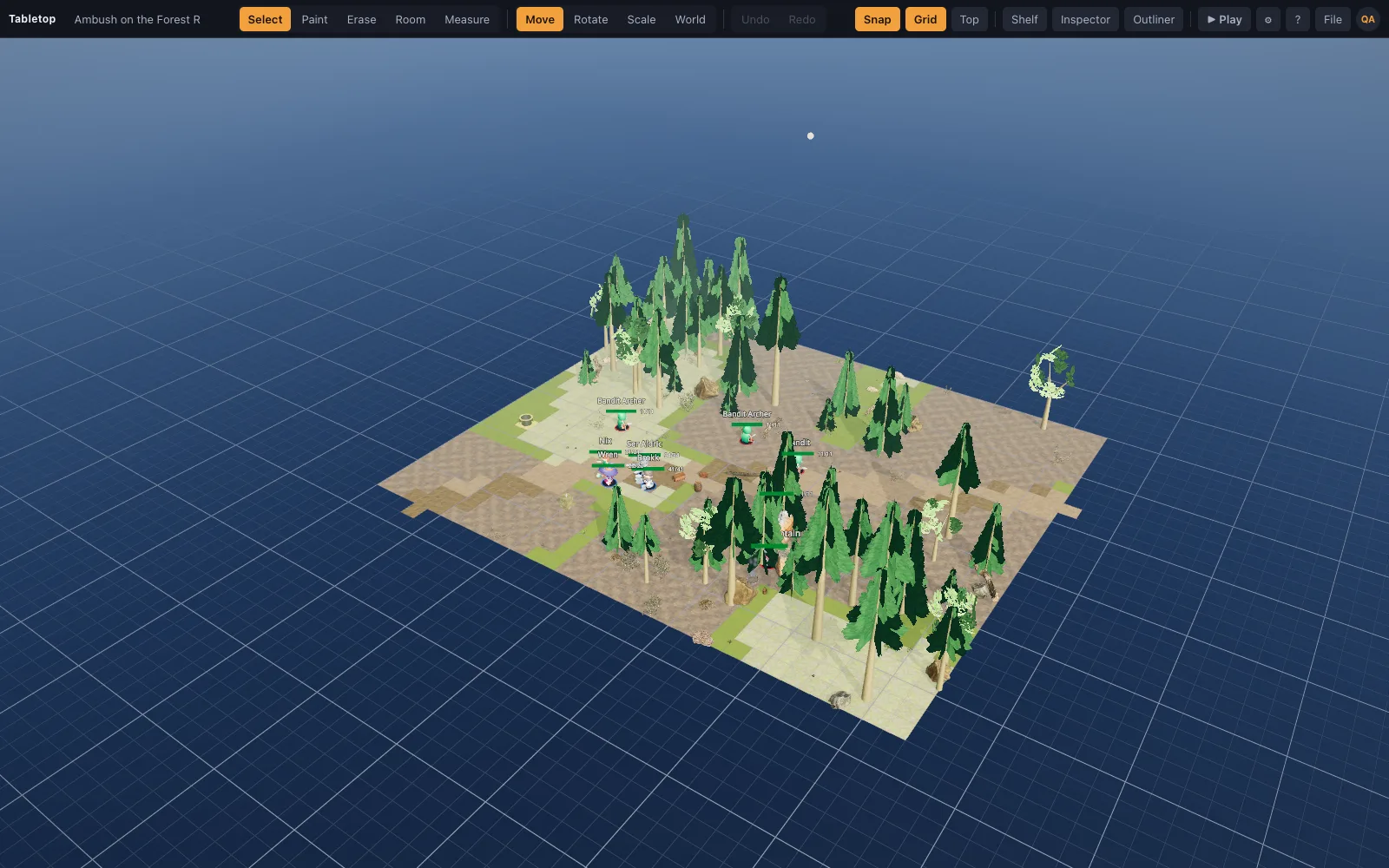
Draw the path first: a strip 1 or 2 squares wide that winds across the map, with a plank bridge or a fallen log where it crosses open water. Everything that is not path is difficult terrain, and you paint it as three or four materials so the players can read it: mud, reeds, root tangle, shallow water. They all cost the same, but the variety tells the players the swamp is a place, and it tells them where the deep water starts.
A 20-by-20 map is right for a swamp because distance is the point. The party on the path is a line, and a line is what an ambush wants. Put the enemies off the path, in the water and the reeds, where they move at full speed and the party does not.
- Path: normal movement, 1 or 2 squares wide, never straight.
- Mud, reeds, roots, shallows: difficult terrain, 2 feet per foot.
- Prone in mud: standing costs half your Speed, so 15 feet, then 15 feet of difficult terrain is 1 square.
Water in three depths
Give water three bands and paint them differently. Ankle to knee deep is shallow water: difficult terrain and nothing more. Waist to chest deep is where a Medium creature still walks but a Small one swims, and where a fall is a dunking rather than damage; treat it as difficult terrain and rule that a prone creature there is holding its breath. Over the head is swimming: each foot of swimming costs 1 extra foot unless you have a Swim Speed, so it is the same cost as difficult terrain, and a character in armour who stops swimming starts sinking.
Underwater the rules change again. Melee attack rolls have Disadvantage unless the weapon is a dagger, javelin, shortsword, spear or trident; ranged attacks beyond normal range miss automatically and have Disadvantage within it unless the weapon is a crossbow, a net or a thrown weapon such as a javelin. Creatures fully underwater have Resistance to Fire damage. A swamp fight that ends up in the deep channel is a fight the lizardfolk win.
Fog and what it hides
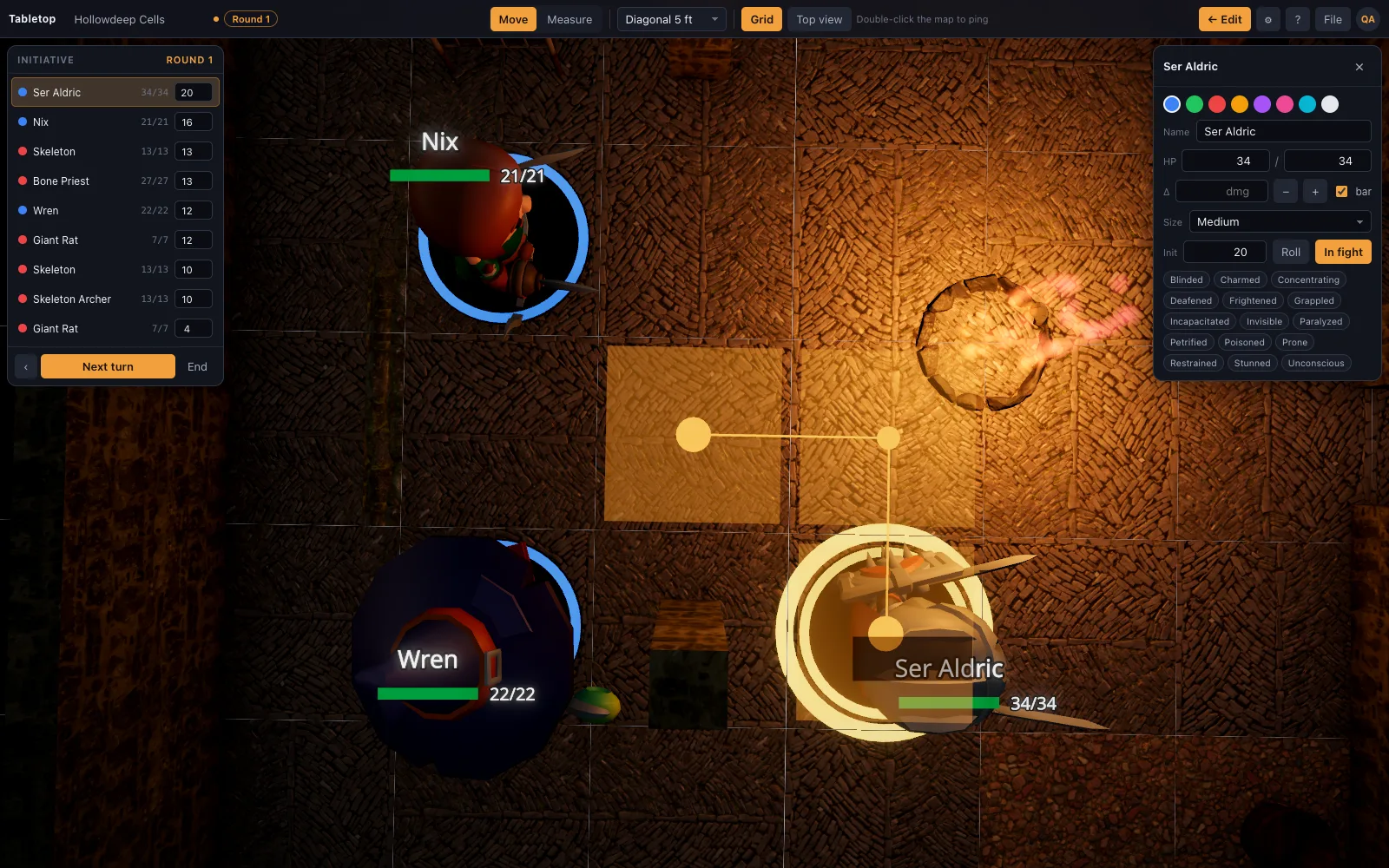
Marsh fog is Heavily Obscured: a creature trying to see something in it has the Blinded condition for that purpose, so attacks into the fog are at Disadvantage and attacks out of it at Advantage. Do not fog the whole map. Fog the far bank and the deep channel, so the party can see the path and the reeds but not the place the arrows come from. A 15-foot band of fog across the middle of the map cuts it in two and gives the enemy a place to fall back to.
Light behaves the same way. A swamp at dusk is dim light, and dim light gives Disadvantage on Wisdom (Perception) checks that rely on sight, which is the check the party makes to spot the crocodile.
Lizardfolk, crocodiles and the things that swim
The swamp's monsters share one feature: a Swim Speed. Lizardfolk swim at 30 feet and hold their breath for 15 minutes; a crocodile has a Swim Speed and Hold Breath for an hour, and its bite grapples; giant frogs swallow Small creatures; will-o'-wisps hover over the deep water where nobody can follow. Every one of them moves at full speed through the terrain that halves the party, and that asymmetry is the encounter.
Run them as hit-and-fade. The lizardfolk throw javelins from the reeds, step back into the channel and submerge; a crocodile takes one character off the path and into the water. The party's answer is to hold the path and the bridge, which is exactly what the map has been telling them to do since they saw it.
Hazards worth one square
Three hazards make a swamp without adding rules. A sinkhole of quicksand, run as the 2014 Dungeon Master's Guide wrote it: a creature entering the square sinks 1d4 plus 1 feet and is Restrained, sinks another 1d4 feet at the start of each of its turns, and escapes with an action and a Strength check against DC 10 plus the feet it has sunk. A rotten log bridge: DC 10 Dexterity (Acrobatics) or fall into the channel. A patch of foul gas: a Constitution saving throw or the Poisoned condition for a minute. One of each, marked with a distinct material and placed off the path, is enough. Tell the players what the material means when they first ask; the swamp is about visible risk, not hidden damage.
Building it in a 3D tabletop
A swamp is mostly paint. Lay a mud floor, brush the path as packed earth, brush reed and root materials over the wide areas, and paint water for the channels; in TerrainTale the tile brush does all four on the grid and the three water depths are three tints of the same material with a note on the map key. Trees and dead stumps go on the banks as half cover. Then drop the camera to eye level on the path at dusk and look towards the channel; if the players cannot see the far bank, the map is right.