Running a chase scene in D&D: when to use a map and when not to
A chase is the scene where the battle map fights you. Everyone is moving at full speed in one direction, the interesting bits are twenty squares apart, and the fight-map habit of counting every 5 feet kills the pace. The Dungeon Master's Guide gives a set of chase rules for exactly this reason, and once you know them, the map question answers itself.
· 6 min read · TerrainTale
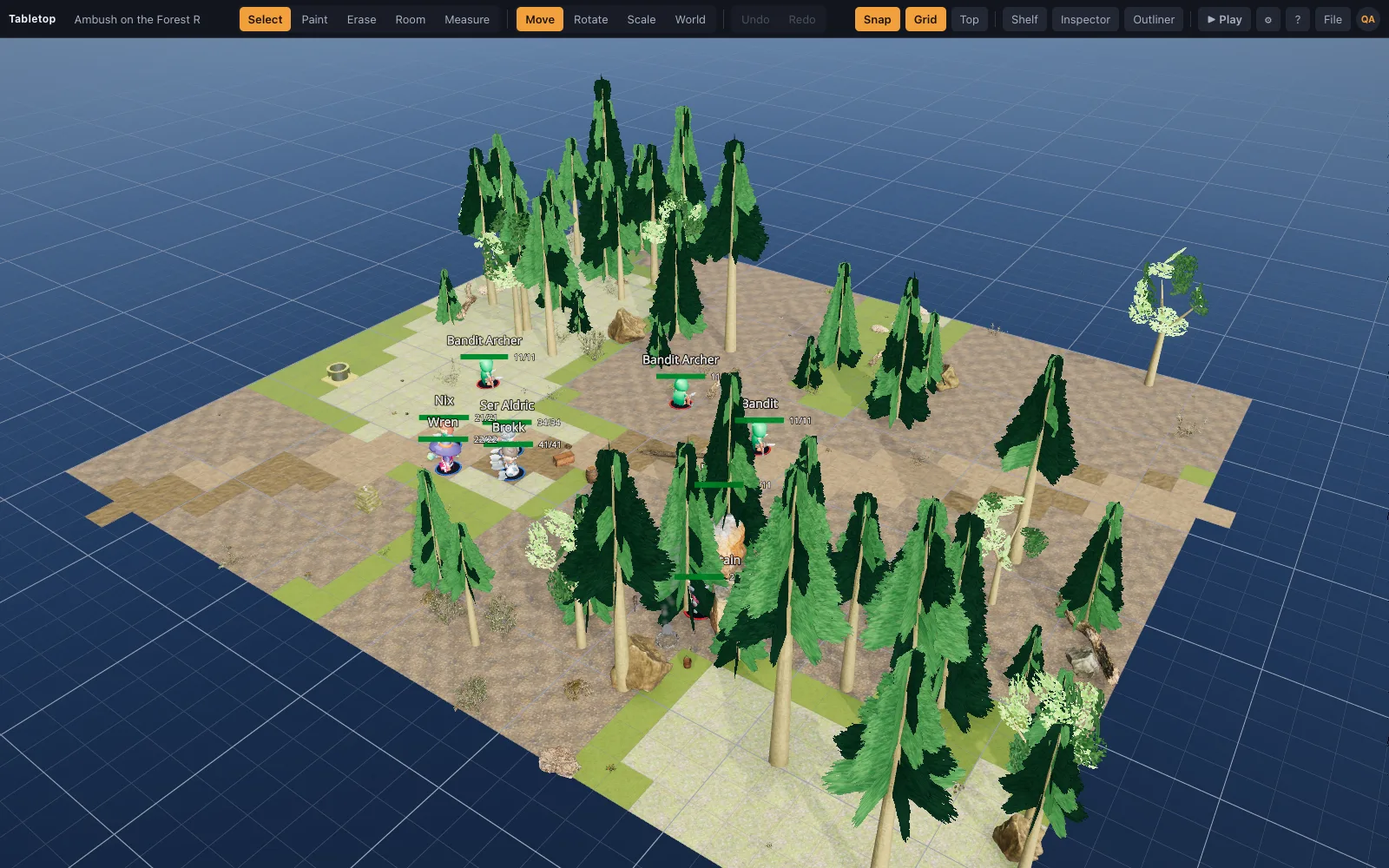
The DMG chase rules in a minute
A chase runs in initiative like a fight. Each participant can Dash a number of times equal to 3 plus their Constitution modifier; after that, each Dash requires a DC 10 Constitution save or a level of exhaustion. Each round, every participant rolls on a complications table for the terrain (the DMG has one for urban and one for wilderness): a cart in the way, a low wall, a stall of fruit, a swarm of rats. The quarry escapes if it ends a round out of sight of every pursuer and wins a Stealth check against their passive Perception; the DM decides what out of sight means, which is where the terrain matters.
Attacks of opportunity are the one rule that most often needs a house ruling: the DMG suggests that in a chase, a creature only provokes from a pursuer who started adjacent, otherwise every chase is a gauntlet.
Why a full battle map usually fails
The chase problem on a normal map is scale. In two rounds a character has moved 120 feet, or 24 squares, and a map big enough to hold five rounds is 100 squares long and mostly empty. The complications, which are the whole point, happen on one square each, and everything between them is counting. So players count, the DM waits, and the chase feels slower than the fight it replaced.
The exception is a chase in a small space with lots of turns: a manor house, a maze, a rooftop run. There, a normal map at normal scale works, because the whole chase fits in 30 squares and the corners are the complications.
The strip map
For a long chase, abstract the distance. Build a strip: a line of ten or twelve zones, each one a place (the fishmarket, the bridge, the alley behind the temple), and treat each zone as one round of movement. Tokens sit in zones, not squares. The gap between quarry and pursuers is a number of zones, and the complication for each zone is decided in advance from the terrain rather than rolled. A pursuer who spends a Dash gains a zone; one who deals with a complication loses it.
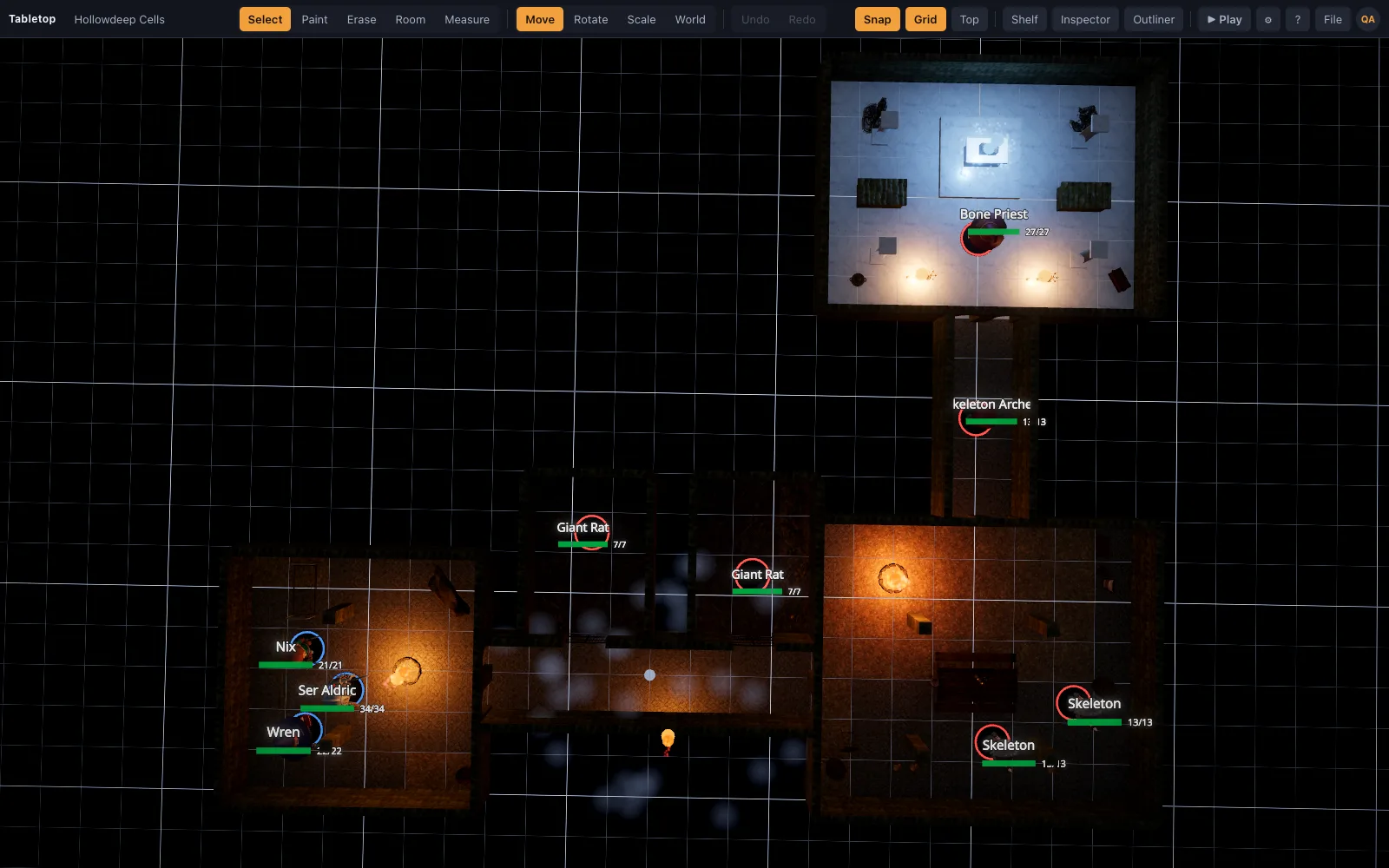
On a VTT the strip can be a row of real rooms. In TerrainTale you can build the twelve zones as small scenes in a row with the room tool, 6 by 6 each, dress each with its complication, and move the minis one room per round. It looks like a chase and plays like one, and the ruler is never used.
Making complications matter
A complication is a skill check with a cost for failing, and the cost should be zones. A fruit stall is Dexterity (Acrobatics) DC 10 or lose a zone. A crowd is Charisma (Intimidation) or Strength (Athletics) DC 12 or lose a zone. A locked gate is a choice: Athletics to vault it, or Sleight of Hand to open it, or go round and lose two zones. Give the players a choice on the tough ones and the chase becomes a series of decisions instead of a series of rolls.
Let the quarry face complications too, rolled by you in the open. A chase where only the party can trip is a chase they cannot win.
Ending it
Decide the end conditions before you start. The quarry escapes at a gap of four zones; is caught at a gap of zero; and the chase runs at most eight rounds before the map runs out and something else happens. An open-ended chase never feels like it ends; one with a known finish line has tension every round. When the gap hits zero, drop straight into the normal fight rules on a normal map, because now the scale is right again.