Campsite ambush battle maps: running the night camp under attack
A campsite ambush is the one fight where the map is mostly dark and half the party starts lying down. Build it around three facts: the fire lights 20 feet and no more, one character is awake and the rest are prone in bedrolls, and the attackers pick the direction the watch is not facing. Those three decide everything else, from where the bedrolls go to how many rounds the wolves get before the wizard finds her spellbook. It is a small map, 12 squares by 12 is plenty, and it plays best when the players drew it themselves before they went to sleep.
· 5 min read · TerrainTale
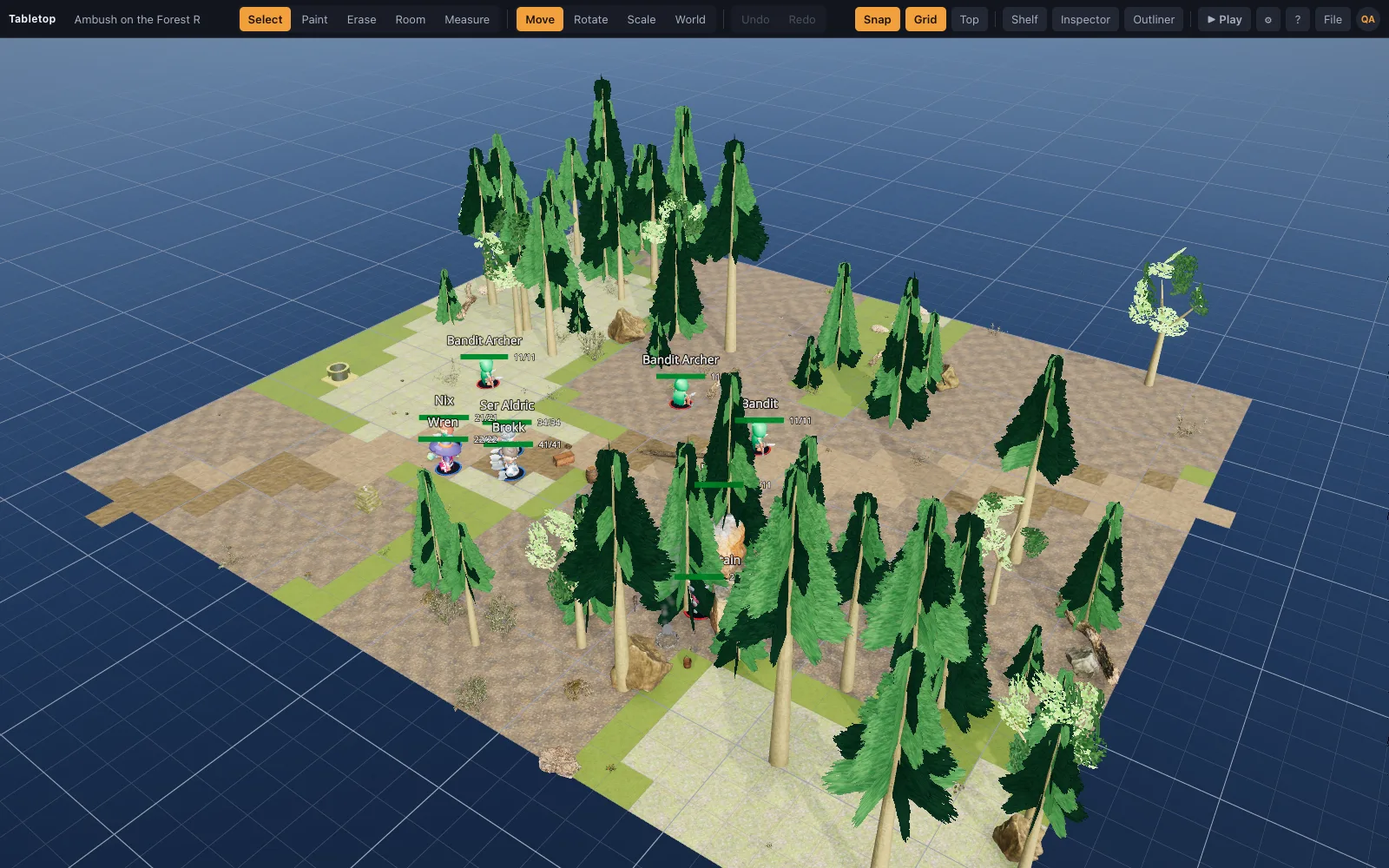
Where the fire is, and what it lights
The rules give no light radius for a campfire, so rule it like a torch or a lamp: bright light for 20 feet and dim light for another 20. On a 5-foot grid that is a 4-square bright radius around the fire square and dim light out to 8 squares. Everything beyond is darkness, which for the human fighter means the Blinded condition when she tries to see into it. The elf and the dwarf see 60 feet in darkness as if it were dim light, so they are the ones who spot the shapes at the treeline.
Put the fire near the middle of the map rather than at the centre. A camp is pitched against something: a rock face, a fallen tree, the bank of a stream. That backdrop blocks one approach and gives the attackers three, and the players who chose the backdrop will feel it was their choice when the third approach is the one that gets used.
- Fire: bright 20 feet, dim 20 feet, as a table ruling.
- Dim light: Wisdom (Perception) checks relying on sight have Disadvantage.
- Darkvision 60 feet sees darkness as dim light, so still at Disadvantage to spot.
Bedrolls, watches and who is awake
A Long Rest is 8 hours with at least 6 spent asleep; the other 2 can be light activity, and standing watch counts. So a party of four covers an 8-hour night with four 2-hour watches, and only one character is awake at any moment. Ask who has which watch before the dice come out; the answer decides who rolls Perception. An elf's Trance is 4 hours, so the elf usually takes the longest watch.
Place a bedroll token for each sleeper 2 or 3 squares from the fire. A sleeping character is best ruled as having the Unconscious condition: prone, unaware, attack rolls against them have Advantage, and a hit from within 5 feet is a Critical Hit. That is why the ambush is frightening and why the watch matters. Waking takes noise or a shake; the reasonable ruling is that the first scream wakes everyone, and each sleeper spends half their Speed standing up on their first turn, with 15 feet left to reach a weapon.
Where the wolves come from
Attackers approach from darkness, which means from outside the dim ring, more than 8 squares from the fire. Wolves and goblins both know to circle to the side the watch is not facing. Give the watcher a facing when the encounter starts, by asking what they were looking at, and bring the first attacker in from behind them. A Wisdom (Perception) check against the attackers' Stealth decides whether the watcher gets to shout before the first bite.
The 2024 rules have no surprise round. A creature that is surprised instead has Disadvantage on its Initiative roll, so a sleeping party that is caught out simply acts later. In the 2014 rules surprised creatures lost their whole first turn, which made camp ambushes far deadlier; if your table still uses that, expect a downed character. Wolves' Pack Tactics gives them Advantage on attack rolls when an ally is within 5 feet of the target, so they come in pairs and knock people prone, and prone sleepers are already down.
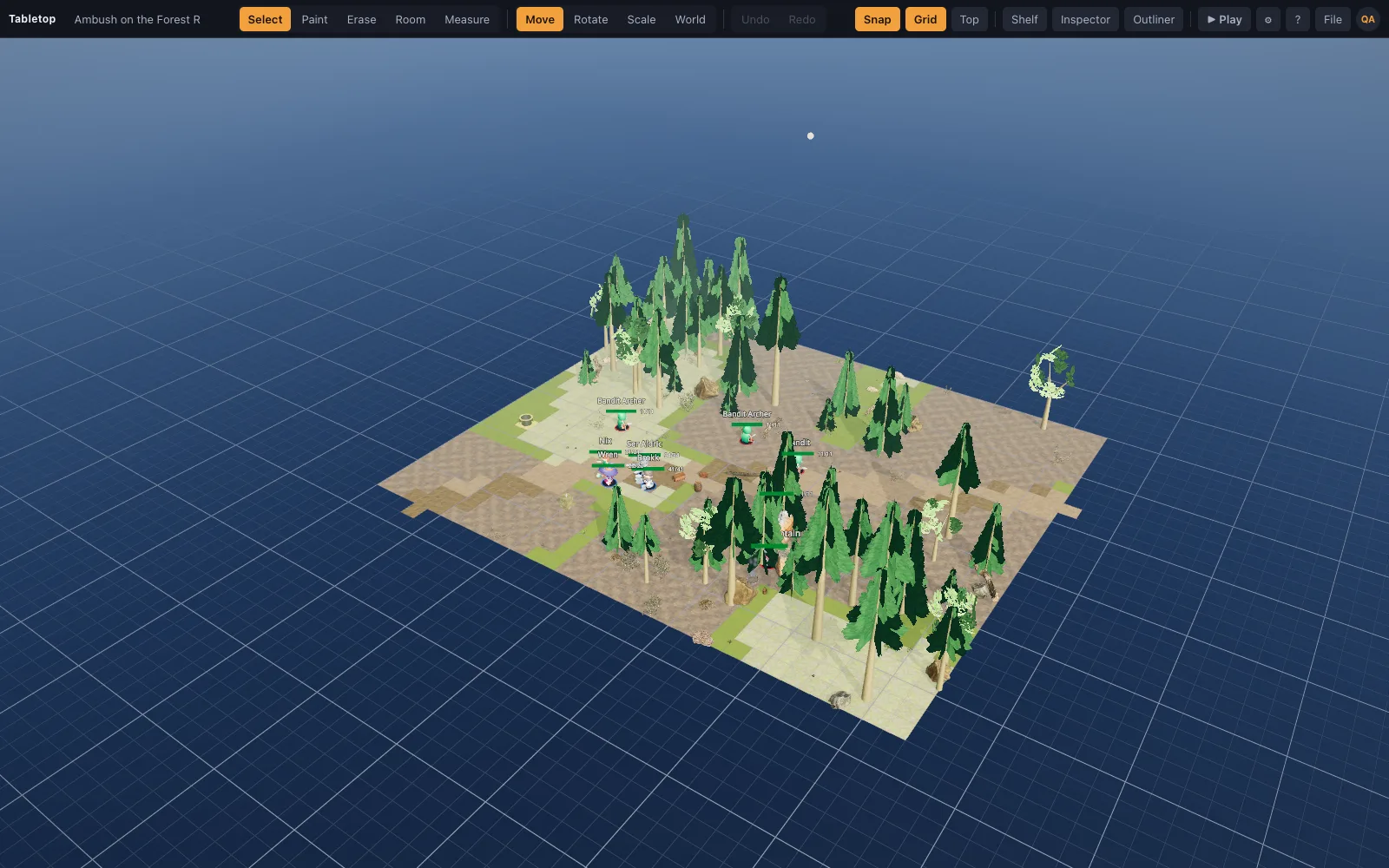
Building the map in ten minutes
This is a 12-by-12 map, sometimes 16-by-16 if there are horses. Paint a grass or dirt floor, put the backdrop along one edge, and scatter 6 to 10 trees around the outer ring as half cover and as the darkness the attackers arrive from. The fire, the bedrolls, a pile of packs and the horse line are the only objects. Packs matter: the wizard's spellbook and the cleric's holy symbol are in them, and a goblin who grabs the packs and runs is a better encounter than a goblin who fights.
In TerrainTale a campfire is a light source that actually casts the 20-foot pool, and the trees beyond it are dark, so the players see the camp the way their characters do and nothing the DM has not lit. The forest starter scene, Ambush on the Forest Road, has the trees and the road already placed; drop a fire and bedrolls beside the road and it is a camp.
Running the first two rounds
Round one belongs to the watcher and the attackers. Roll Initiative for everyone, with the sleepers at Disadvantage if they were surprised. The watcher shouts, which wakes the camp, and either fights or throws a log on the fire. Round two is the scramble: sleepers stand (half Speed), grab weapons from beside the bedroll or run for the packs, and the attackers press whoever is still down.
Do not let the fight last. Wolves flee at half their hit points, goblins take what they came for, and the camp is left short of sleep. A Long Rest interrupted by an hour of fighting or walking fails, but a fight that lasts 1 minute does not, so a quick ambush costs the party nothing but nerves; make it cost them a horse or the packs instead.