Dungeon doors and traps on the map: locks, stuck doors and fair traps
Doors are the pacing of a dungeon. An open door is a corridor with a frame; a closed one is a question; a locked one is a check; a stuck one is a noise; a barred one is a message from the other side. Traps are the same idea with teeth: a fair trap is one the party could have found, and an unfair one is a hit-point tax. The two belong together on the map because both decide how fast the party moves and how much they learn before they commit, and both are easy to place badly.
· 5 min read · TerrainTale
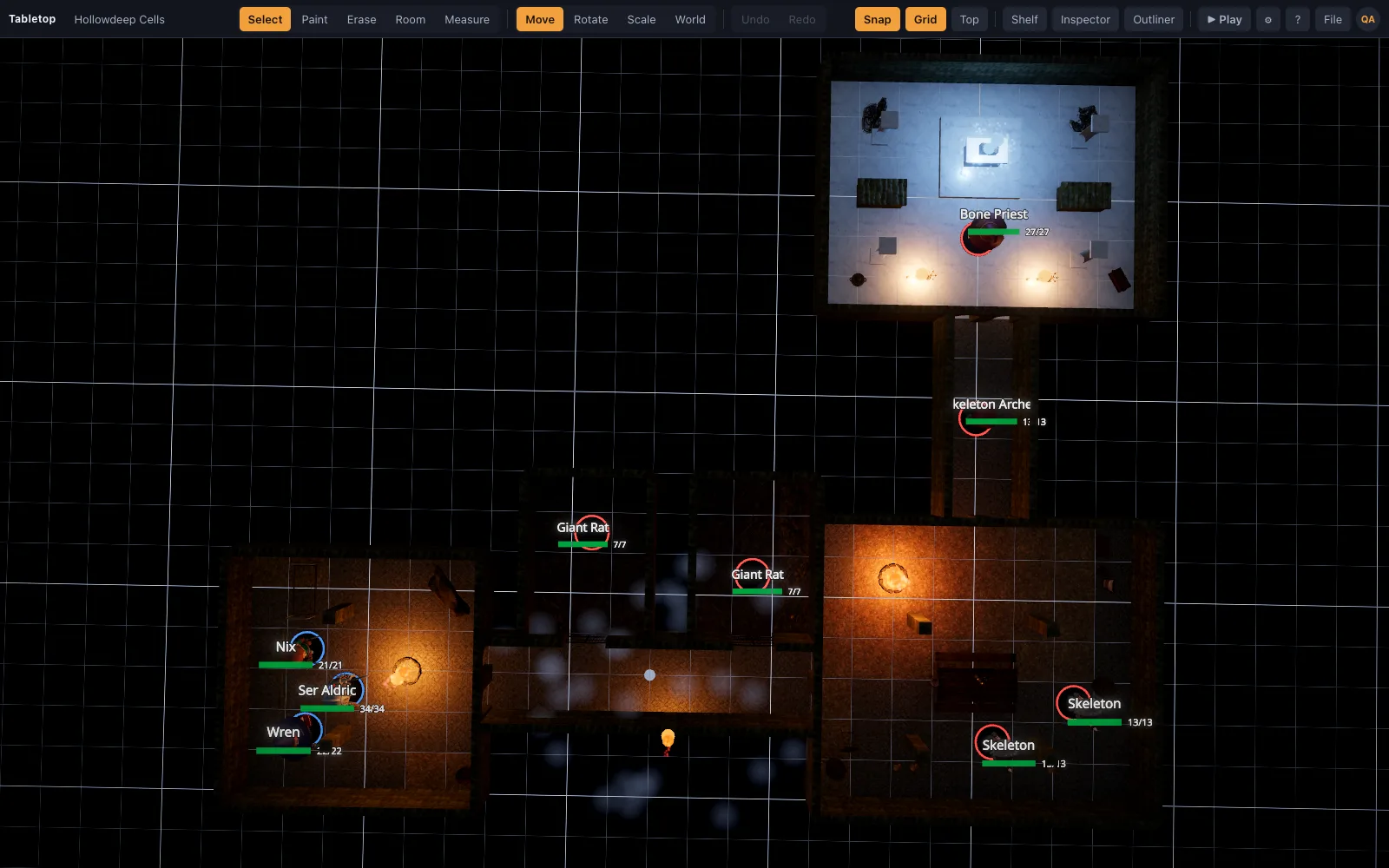
Five kinds of door and what each costs
An open door costs nothing and tells the party something used it recently. A closed door costs a look, a listen and a decision, and it blocks line of sight, which matters for surprise. A locked door asks for a key, a DC 15 Dexterity check with Thieves' Tools in the 2024 rules, or a Strength (Athletics) check to force it, with a DC the DM sets from about 10 for a rotten door to 20 for an iron one. A stuck door is the Strength check without the option of picking. A barred door cannot be opened from the party's side at all, and it says that whoever is beyond it is afraid of this side.
Breaking a door down is also loud. A closed door hides the party; a splintered one announces them to every room within earshot, which is the real cost of the Strength check and the reason the rogue's tools are worth carrying. In 2014 the pick-a-lock DC was whatever the DM set, usually 15; the 2024 tools table fixes it at 15 for a typical lock and leaves harder locks to the DM.
- Open: free, and a clue.
- Closed: blocks sight, costs a decision.
- Locked: DC 15 with Thieves' Tools, or Strength to force it.
- Stuck: Strength only, and loud.
- Barred: the other side chose this.
Doors in combat
Opening a door in a fight is normally part of moving through it, the Utilize action at most, and a door that is open is nothing on the grid. A closed door is total cover: a creature behind it cannot be targeted by an attack or a spell that needs a clear path. A doorway itself is a choke point one square wide, which means only one creature at a time stands in it and everything behind has cover from the room.
Doors are objects. A wooden door has AC 15 and a couple of dozen hit points at the DM's call; an iron door has AC 19 and more. A party that wants to close a door on a pursuing ogre and hold it is making an opposed Strength check, which is a ruling rather than a rule, and a good one. Decide before the session what your doors are made of and write the number on the map key.
Where a trap is fair and where it is a tax
A trap is fair when the map gives the party a reason to look. The corridor with scorch marks, the room with a single visible pressure plate among the flagstones, the chest that every dwarf knows is too clean. It is unfair when it sits in a featureless corridor and its only function is to roll dice at the party. The 2024 Dungeon Master's Guide grades traps by tier and by two severities, nuisance and deadly; a nuisance trap for characters of level 1 to 4 deals around 1d10 and a deadly one around 2d10, and both scale steeply by tier. Use the deadly numbers only where the party had every chance to find the thing.
Finding a trap in 2024 is the Search action: a Wisdom (Perception) check to notice it, then an Intelligence (Investigation) check to work out how it functions. Disarming is a DC 15 Dexterity check with Thieves' Tools for a typical trap. Set the notice DC so that a character actively searching finds it most of the time, and let passive Perception catch only the crude ones. A trap nobody could find is not a trap; it is a paragraph of damage.
Placing traps on the grid
Put a trap where the party must pass, not where they might. The square in front of a locked door, the third step of the only stair, the narrow point of a bridge. That makes the trap a puzzle with a fixed location instead of a random chance, and it means the rogue who searches the obvious place is rewarded for thinking. Never put a trap on a square the party has already crossed safely; the map has told them it is safe.
Mark the trap's trigger and its effect separately. A pressure plate is one square; the dart trap it fires covers a line of six; the pit it opens is a 2 by 2 hole. When the trap goes off, the map already shows who is in the effect and who is not, and there is no argument about where the wizard was standing. Traps that are areas, gas, falling ceilings, flooding rooms, want the same squares drawn as any spell's area would be.
- Trigger on a square the party must cross.
- Draw the effect area before the session, not during it.
- One trap per corridor at most; three in a row is a tax.
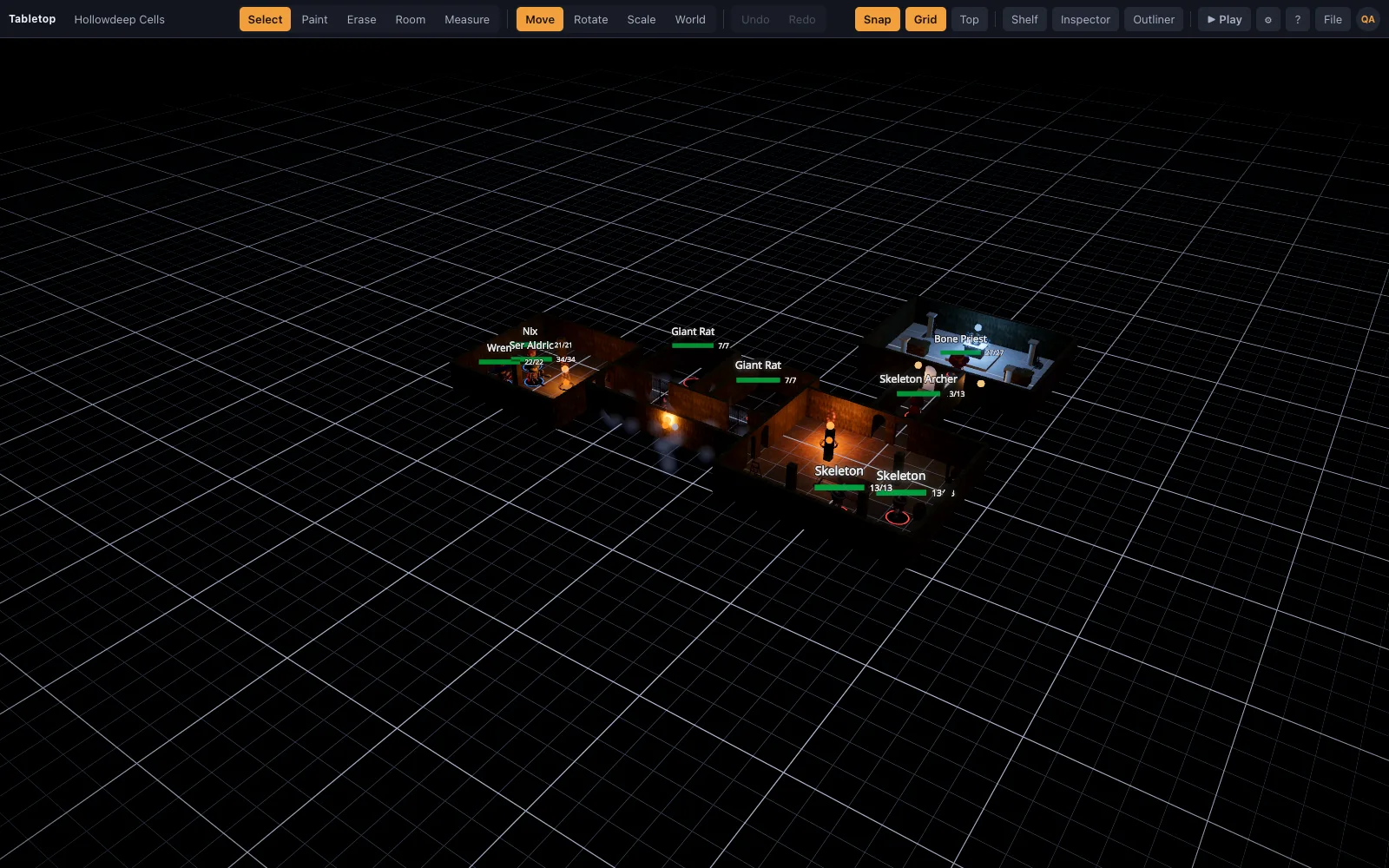
Marking doors and traps for the DM only
The DM needs to see the trap; the players need to see the flagstones. On paper that is a key sheet. On a VTT, put the doors and the trap triggers on the map as ordinary objects and keep the notes elsewhere: a numbered list where door 3 is locked DC 15, door 4 is barred from the east, and the plate at C7 fires darts down the corridor. TerrainTale has no fog of war or hidden layer, so the map shows what is physically there, a door and a floor, and the DM's notes carry the state. A door that is locked and a door that is open look the same until someone tries it, which is true in the dungeon too.
Change the map when the party changes it. A door they broke down becomes an open doorway; a pit they triggered becomes a hole with a rope in it. Players trust a map that remembers what they did to it.
A door and trap key for a small dungeon
For a six-room dungeon at levels 1 to 4, a working key is: two open doors on the route in, one closed door with a listen check that reveals voices, one locked door at DC 15 guarding the treasure, one stuck door that costs a Strength check and a noise, and one barred door the party cannot open from their side and must go around. One nuisance trap at a spot they must cross, marked by a clue two squares before it. One deadly trap on the treasure, with the mechanism visible to a character who searches the lock. That is enough to make the dungeon feel built rather than drawn, and it costs about fifteen minutes of prep.