Wizard tower battle maps: fighting up a spiral staircase, floor by floor
A wizard's tower is a fight stacked on itself. The ground floor is the door and the guards, the stair is a queue where only one character can swing, the study is where the wizard actually is, and the roof is where he goes when the study is lost. Build it as three or four floors of 8 by 8 squares joined by a stair, and run it as one encounter with phases rather than four rooms. The trick is that height is the whole map: 10 feet of stair, 30 feet of balcony, 60 feet from the roof to the ground.
· 5 min read · TerrainTale
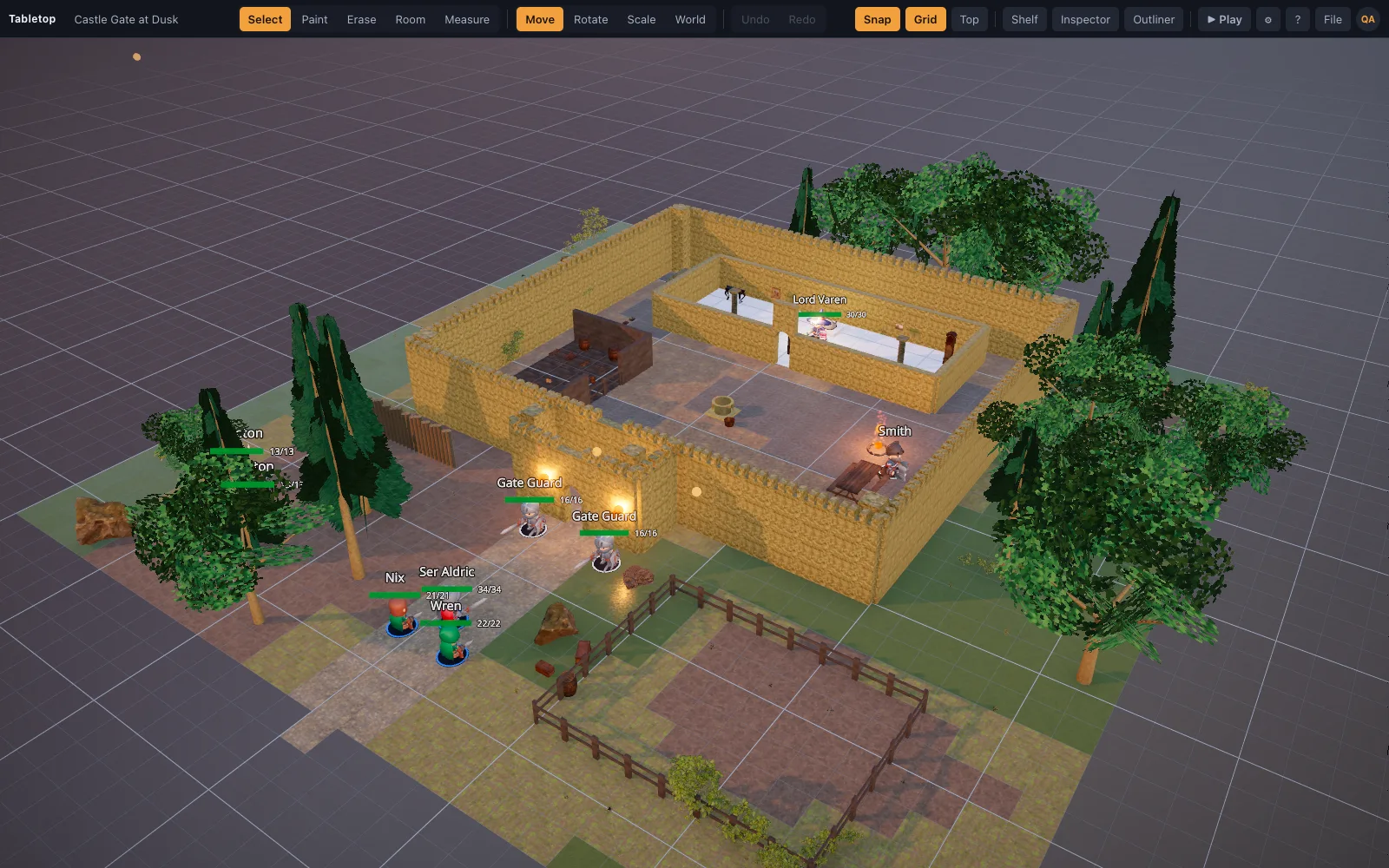
Floors as phases of one fight
A tower has a footprint of 6 to 10 squares across, so each floor is a small room, and small rooms are why towers are good. On the ground floor put the door, a guard or two and nothing worth stopping for. The first floor is the library or the workshop, full of half cover. The top floor is the study, where the wizard stands with a view of the stair. The roof is the escape, and the last phase if the party is fast.
Give each floor a different reason to fight there and the map runs itself. The guards want to hold the door; the workshop's apprentice wants to reach the alarm; the wizard wants three rounds of spells before anyone reaches him. The party's problem is never the enemies, it is that every floor costs a full turn of stair to reach.
The spiral stair is the map
A spiral stair climbs about 10 feet per turn of the spiral, and on a grid it is a 2-by-2 or 3-by-3 column with the steps running round a central post. Two things follow. First, only one or two characters can stand on the stair at a height where they can attack, so a single guard at the top holds the whole party. Second, the post is Three-Quarters Cover for anyone above shooting down, and half cover for anyone below shooting up, because the stair itself is in the way.
Stairs are not difficult terrain by the rules, so a character with 30 feet of Speed climbs 30 feet of stair, which is three floors in one move if nobody stops them. Rule the stair as difficult terrain only when it is broken or wet; otherwise the queue is the obstacle. Climbing a rope or a wall, by contrast, costs 1 extra foot for every foot climbed, so a rogue going up the outside of the tower moves at half Speed.
- Stair column: 2-by-2 or 3-by-3 squares, 10 feet per floor.
- Central post: cover in both directions, better for the defender above.
- One attacker at the top step; the rest queue below at Disadvantage to shoot past.
The balcony and the drop
Every tower has a balcony or a window large enough to fall from, and the fall is the tower's damage. A fall deals 1d6 Bludgeoning damage per 10 feet, to a maximum of 20d6, and the creature lands Prone unless it avoids the damage. From a first-floor balcony 20 feet up that is 2d6; from the roof of a 60-foot tower it is 6d6. In the 2024 rules a shove is an Unarmed Strike: the target makes a Strength or Dexterity saving throw against DC 8 plus your Strength modifier and Proficiency Bonus, and on a failure moves 5 feet, which off a balcony is the cheapest 6d6 in the game, for either side. The 2014 rules ran it as a contest of Athletics against Athletics or Acrobatics instead.
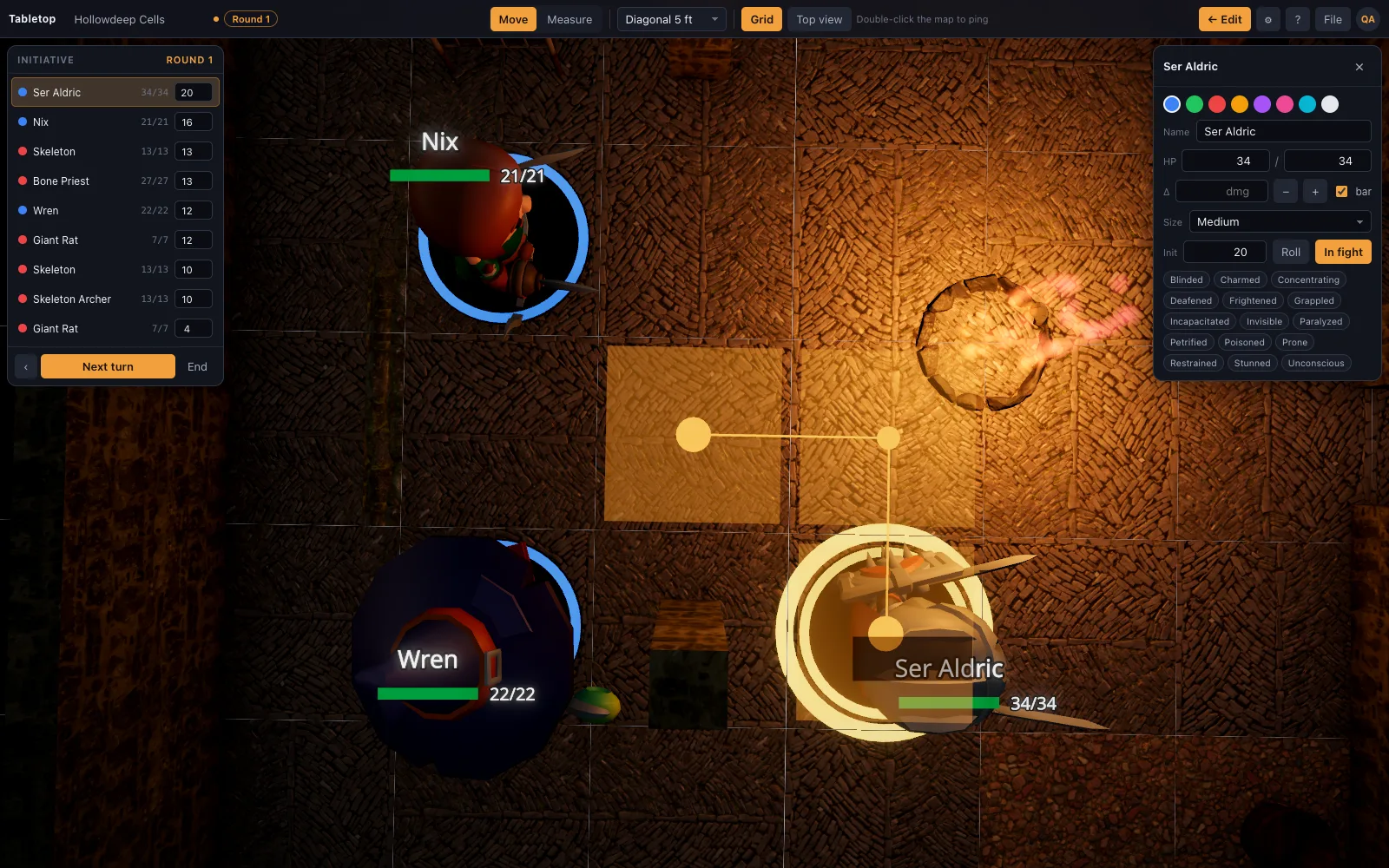
Mark heights on the map, not just floors. In TerrainTale the ruler counts height in feet, so a player asking whether the balcony is in range of a Fire Bolt from the courtyard gets the diagonal distance rather than a guess, and the camera can drop to eye level at the balcony rail to show what the archer up there can actually see.
Line of sight between floors
Floors block sight completely. The only lines that cross between floors run up the stairwell, through a hatch, or over the balcony rail to the ground. That is what makes a tower fight tense: the wizard on the top floor cannot see the party until they are on the last turn of the stair, and the party cannot see him at all. A Wall of Force across the stairwell, a Grease spell on the top steps, or a single Fireball dropped down the column when the party is bunched on it are the tower wizard's whole plan.
Ceilings matter for the party as well. An 8-foot ceiling on a floor stops flight and makes a Large summoned creature squeeze. A 20-foot ceiling in the great hall at the bottom is where the druid can be an eagle.
Why a tower needs a 3D map
On a flat map a tower is four separate drawings and the DM says which one the party is on. That works until the rogue is on the stair, the fighter is on the balcony and the wizard is on the roof, at which point three sheets and a lot of pointing stand in for one fight. Stacked floors on a 3D table remove the pointing: the players see the stair column, the balcony over the courtyard and the roof at the top, and the ruler measures between them.
Build it with the Castle kit in the room tool, one room per floor, each 10 feet above the last, and leave a 2-by-2 hole for the stair. Then light the study and leave the stair dark; the light through the hatch is the thing the party is climbing towards.
Running the escape from the roof
A wizard who reaches the roof has three ways down: a spell, a familiar with a rope, or a 60-foot fall. Give him one and make it visible: a griffon tethered on the roof, a Fly scroll on the desk the party could have taken. The players who noticed the scroll on the study desk and grabbed it will remember that tower for years; the ones who did not get a fight on the roof with 6d6 on every edge.