Underdark battle maps: fungus forests, chasms and no light at all
The Underdark is not a big cave. A cave map has a floor, walls and a ceiling; an Underdark map has a fungus forest that hides everything past 2 squares, a chasm with no bottom the party can see, a glow from the walls that is the only light for a mile, and a way up or down as often as a way across. Build one of those four things into every Underdark fight and the map will feel like somewhere rather than like a corridor with the lights off.
· 5 min read · TerrainTale
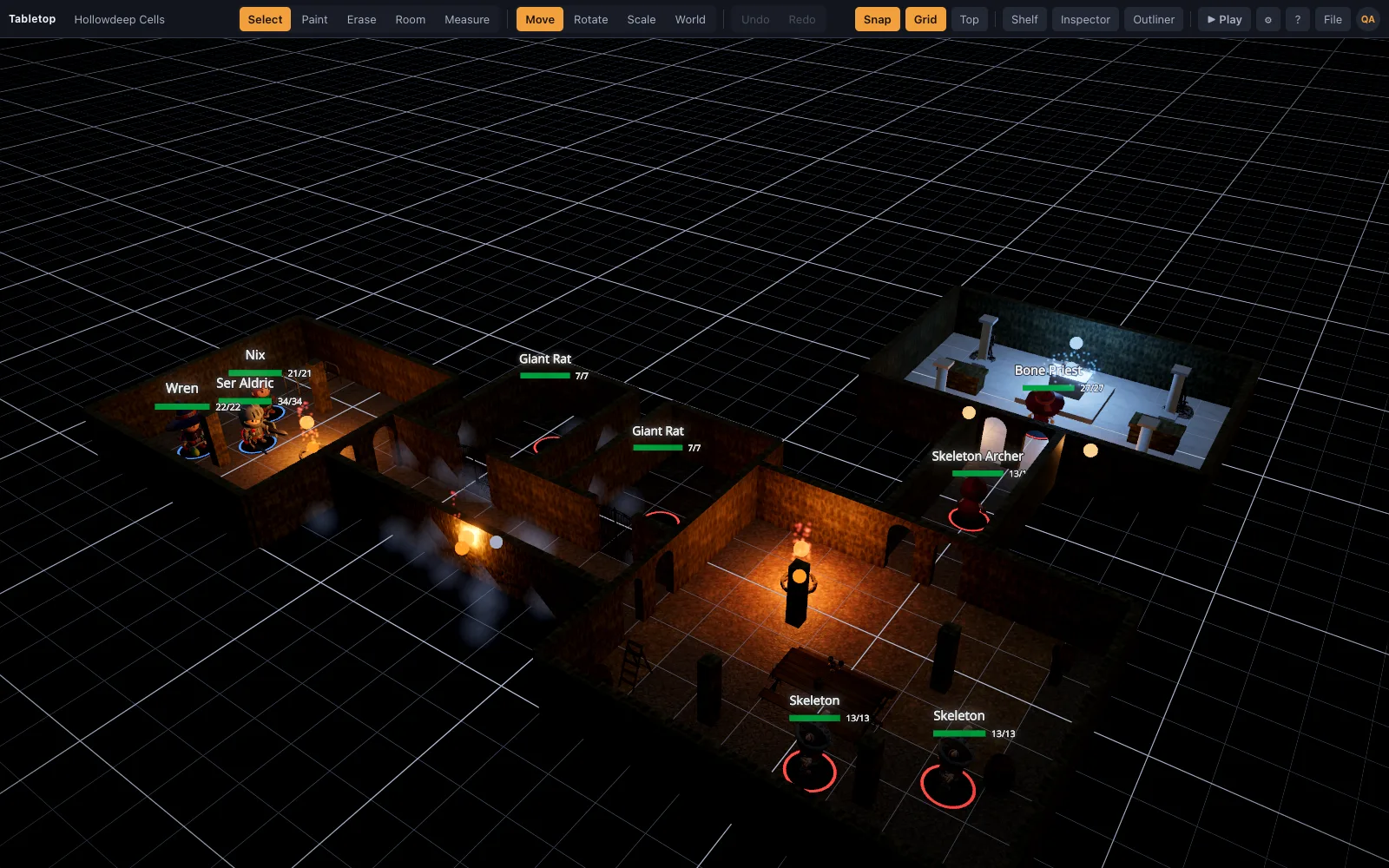
Start with the light, because there mostly is none
Darkness is the Underdark's defining rule and the first thing to decide. In the 2024 rules a Heavily Obscured area such as darkness gives a creature trying to see something in it the Blinded condition for that purpose: attack rolls against a creature it cannot see have disadvantage, and its own attacks have advantage against it. Darkvision turns darkness within its range into dim light, and dim light is Lightly Obscured, which gives disadvantage on Wisdom (Perception) checks that rely on sight but no penalty to attacks.
So a drow with 120 feet of darkvision, a dwarf with 60 and a human with none are playing three different fights on the same map. Mark the light on the map rather than describing it every turn: a ring of bright light around the torch, a ring of dim light beyond it, and darkness past that. On a 3D table with real light the torch does this for you, since the shadow it throws is the boundary. If the party's only light source is the wizard's cantrip, every fight is also a fight about where the wizard stands.
Bioluminescence as the only light
The Underdark answer to darkness is glow: fungus, lichen, crystal, the eyes of things. Treat it as dim light in a 10-foot radius around each glowing patch, and scatter the patches so the map is a constellation of dim pools with darkness between them. A creature standing in a pool can be seen from anywhere; a creature between pools cannot be seen by anyone without darkvision. That is a stealth map without any special rules, because the 2024 Hide action needs Heavy Obscurement or cover and darkness supplies it.
Make some of the light move. Glowing beetles that scatter when trodden on, a fungus that dims when touched, a crystal that brightens as something approaches. A light source the players cannot control is what separates an Underdark fight from a dungeon fight with the torches out.
The fungus forest
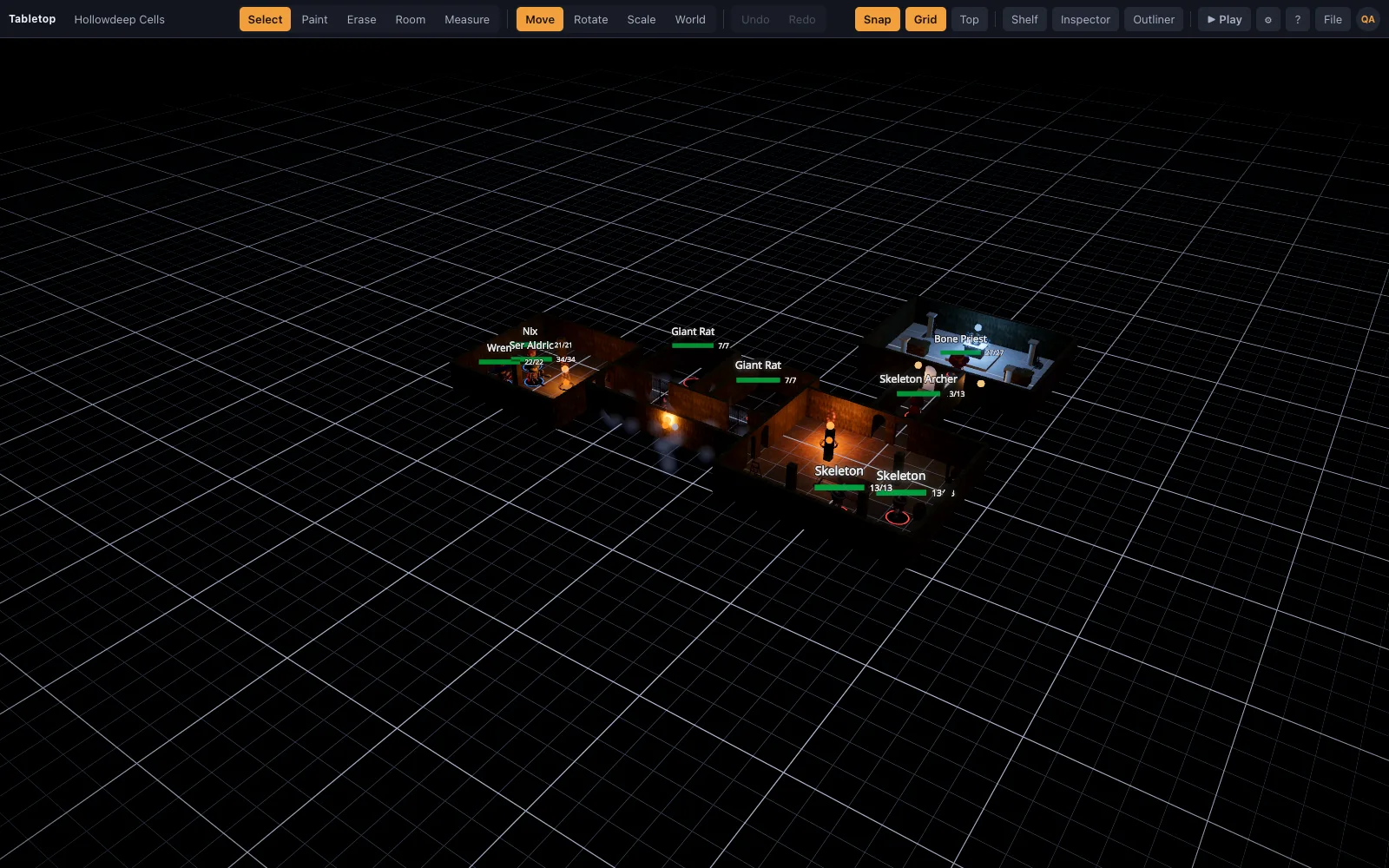
A fungus forest is the Underdark's woodland: stalks 10 to 20 feet tall, caps that overlap into a ceiling, and a floor of soft, wet matter. On the map it is difficult terrain in every square it covers, so movement costs double, and each stalk of Medium size or bigger is an obstacle that gives half cover to a creature behind it. Beyond 2 squares into the forest nothing can be seen, which is a Heavily Obscured area by any reasonable ruling.
Put the forest between the party and the objective rather than around them. The choice is then to go through it, slowly and blind, or around it, in the open and lit. Myconids live here and speak through spores; a 2024 Myconid stat block's rapport spores are an excuse to give the party a warning, a bargain or a trap in the middle of the forest without a single word being spoken.
- Every forest square is difficult terrain: 10 feet of movement per square.
- Stalks give half cover, +2 to AC and Dexterity saves, to a creature behind one.
- Sight ends at 2 squares inside; treat deeper squares as Heavily Obscured.
Chasms: the fight is about height
A chasm turns a flat fight into a vertical one. Draw a gap 3 to 5 squares wide with a stone bridge, a rope bridge or a web across it, and put the enemy on the far side with something worth crossing for. Every rule the party knows now has a second dimension: a shove is 5 feet towards an edge, a fall is 1d6 per 10 feet, and a creature that flies or climbs the walls of the chasm ignores the bridge entirely.
The 2024 long jump is a number of feet equal to the character's Strength score after a 10-foot run-up, so a Strength 14 fighter clears 14 feet, which is two squares and a bit. Use that. A 3-square gap at 15 feet is a jump most characters just fail, which makes the bridge the only route and the bridge a fight. On a 3D map the drop is visible and the ruler counts height, which is the moment a chasm stops being a line on a page and starts frightening people.
Vertical travel: up and down as often as across
Underdark passages go down as much as along, and a map that includes a level change is more interesting than a wider one. A shaft with a spiral ledge, a waterfall with a climbable wet wall, a chimney the party must squeeze up, a slope of scree that is difficult terrain in one direction and a slide in the other. Climbing costs 1 extra foot of movement per foot climbed in the 2024 rules, so a 20-foot wall is 40 feet of movement and a full turn for most characters, during which they are an easy target.
Put an encounter in the middle of a climb. Something on the ledge above, something in the water below, or the rope frays. The party strung out over 40 feet of height cannot support each other, and that is the Underdark doing its job.
Building one in an evening
Start with the route, not the room: where the party enters, where they need to reach, and which of the four elements sits between. One chasm or one fungus forest per map is enough; two is a slog. Then place the light, because it decides what the players can see when the map opens and therefore what they will do first.
In TerrainTale the Cave kit gives the room tool rock walls and floors, the tile brush paints the fungus and the scree onto the grid, and a placed candle or torch throws a real shadow, so the glow pools and the darkness between them are on the table rather than in your notes. The camera drops to eye level, which is how a player should first see a chasm.