A market square battle map: stalls, crowds, rooftops and the guards arriving
A market square is the best urban fight in the game because everything on it is in the way. Stalls are half cover and cost double to climb over. The crowd is difficult terrain that moves on its own. The well is a hole, the rooftops are 15 feet up, and the town guard arrives in four rounds whether the fight is over or not. A square of 16 by 16 squares with eight stalls, a well and a clock is a complete encounter before you have picked a monster.
· 5 min read · TerrainTale
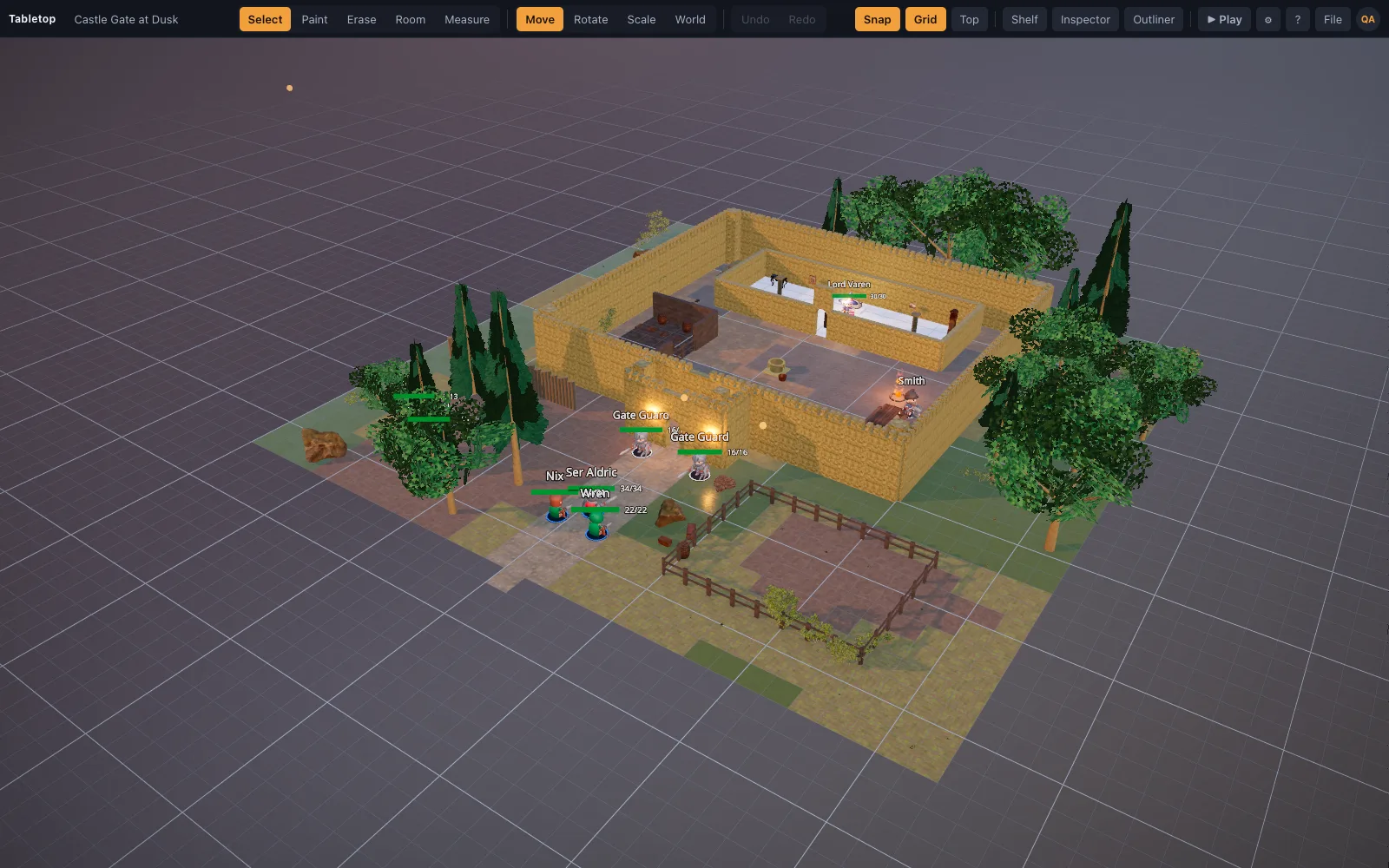
The square: 16 by 16 and full of stalls
Draw the square 16 squares on a side, 80 feet, with buildings on all four edges and a street leaving from each corner. Fill it with eight stalls of 2 by 1 squares each, laid out in two rows so there are lanes between them 2 squares wide. A well of 1 square sits in the middle, a fountain or a statue if you prefer, and a cart of 2 by 2 squares is parked wherever it will most annoy the players.
Every stall is a piece of terrain with three rules. It gives half cover, +2 to AC and Dexterity saving throws, to a creature behind it. Climbing onto it costs double movement, as difficult terrain does, and standing on it puts you 3 feet up. And it is an object with hit points, so a stall with a canvas roof can be cut down onto whoever is under it. You do not need the object rules for that; a Strength check to bring the pole down and a Dexterity save to get out from under is a table ruling that lands well.
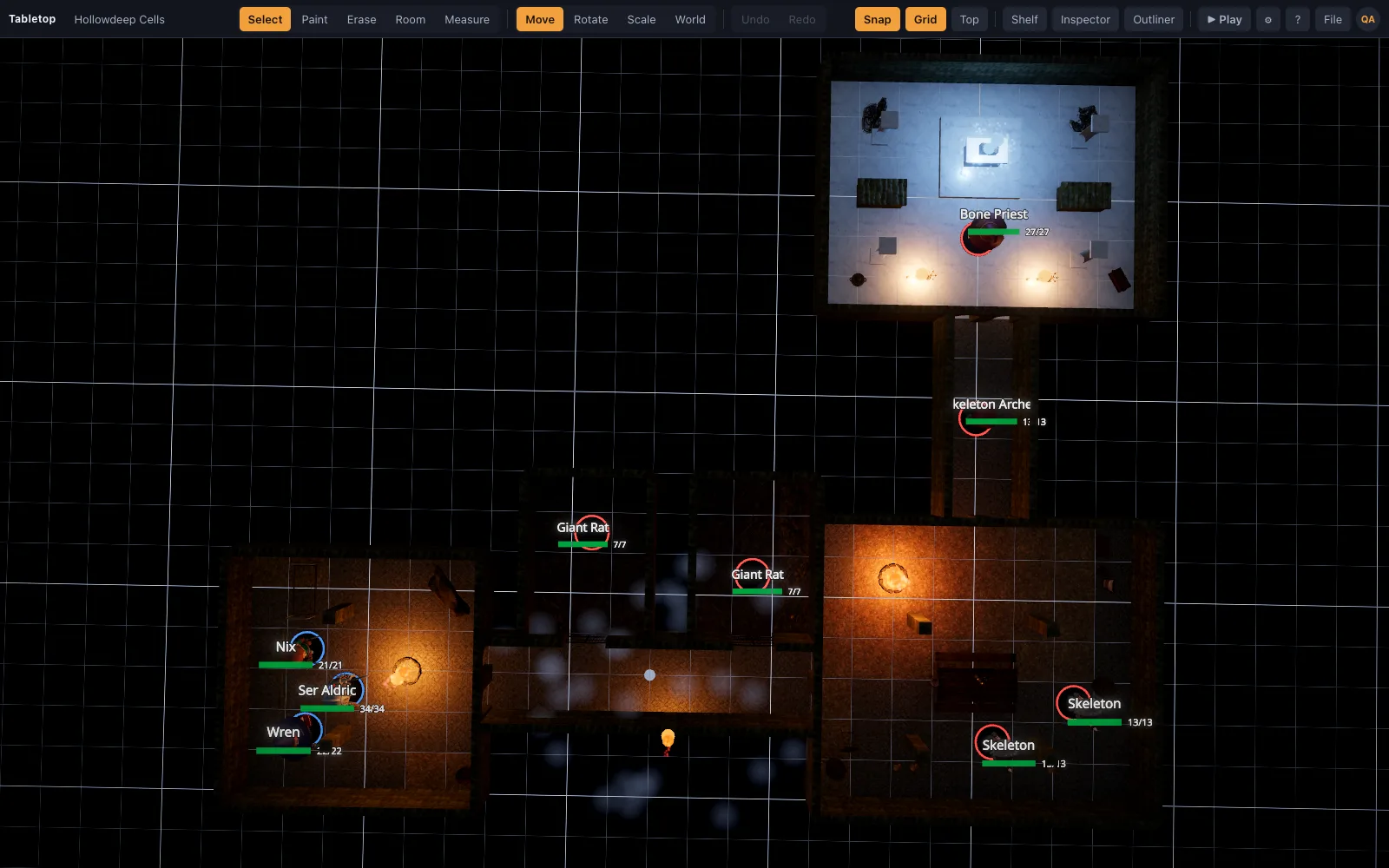
The crowd: difficult terrain that moves
A market crowd is the map's second enemy. Treat crowded squares as difficult terrain, so movement through them costs double, and as Lightly Obscured, so Wisdom (Perception) checks to spot someone in them have disadvantage. Mark the crowded area at the start of the fight as a rough blob covering a third of the square, then move it. On each round after the first, the crowd flees 4 squares away from the nearest thing that made a noise, which means the party's own Thunderwave clears the lane they wanted to run down and fills the one the villain wanted.
The crowd also answers the question of collateral damage without you having to lecture. A Fireball in a market kills people. Say so once, before the fight, and let the players decide whether the sorcerer is that kind of sorcerer. Most tables find the fight more interesting when the answer is no.
- Crowded squares: difficult terrain and Lightly Obscured.
- The crowd moves 4 squares away from the loudest thing each round.
- Area spells in the crowd have consequences; say so before the fight, not after.
The well, the cart and the fountain
The well is a hole 1 square wide in the middle of the map. A shove is 5 feet, so anyone standing next to it can be pushed in, and a 30-foot fall is 3d6 bludgeoning damage plus however long it takes to climb out. Villains know this, which is why the cutpurse leads the chase past it. The cart is a 2 by 2 obstacle that gives half cover and can be pushed, which takes an action and a Strength check and moves it 1 square, straight into a lane the party wanted open.
A fountain instead of a well is a 3 by 3 square of shallow water, difficult terrain, with a statue in the middle giving three-quarters cover. It changes the fight from vertical to horizontal, since nobody falls into it but nobody crosses it quickly either.
The rooftops
The buildings around the square have flat or shallow roofs 15 feet up, reached by a stall, a cart and a drainpipe, or by the stairs inside a shop. A creature on a roof has half cover from the parapet against anything in the square and a clear line to almost every square of it. An archer up there is the encounter's problem to solve, and the solutions are the map: climb after them, which costs 30 feet of movement for the 15-foot wall, throw something, or send the wizard's Misty Step.
Rooftops also make the chase. A cutpurse who goes up and over the roof at the north side is out of the square in two turns and the party either follows across the tiles or loses them. Use the chase rules from the 2024 Dungeon Master's Guide when that happens, and the market map becomes the first leg of a longer sequence rather than a dead end.
The guard: a four-round clock
The town guard arriving is what makes a market fight different from a dungeon fight, and it should be on a clock the players can see. Four rounds after the first blow, four guards enter from one street; two rounds later, four more from another. They are not on anyone's side. They arrest whoever is still fighting, which means the party's goal changes from win to be somewhere else by round six.
This is the mechanism that keeps market fights short. Nobody has to grind through the last thug's hit points, because the last thug also hears the whistles and runs. If the players want to stay and talk their way out, that is a social scene with a Deception or Persuasion check and a DC set by how much of the market is on fire.
The 2024 Guard stat block is CR 1/8 with 11 hit points and a spear, which is not a threat to a level 5 party one at a time and a real one eight at a time with the crowd in the way. Treat them as a tide rather than an encounter.
Building the square quickly
A market square is buildings, stalls and a well, and most of it is repetition. In TerrainTale the tile brush paints the cobbles across the 16 by 16 grid, the room tool drags out the shops around the edge with the Cottage or Manor kit, and a stall is a table with a couple of crates from the library placed on the grid. The ruler counts the 15 feet up to the roof, so the archer's line and the climber's cost are measured rather than argued.
Keep a version with the crowd painted in and one without, or just move the crowd tiles each round. Either way the square should look different in round four from how it looked in round one, which is the whole reason to play this fight on a map.