Temple battle maps: the nave as the arena, the altar as the stage
A temple is a boss arena that comes with its own stage directions. The nave is long and open, which is the arena. The altar is raised at the far end, which is where the villain stands and where the ritual is. The side chapels are alcoves the party cannot see into, which is where the reinforcements come from. And the stairs down to the crypt are the exit for whoever is losing. Build those four parts at the right sizes and the fight writes itself.
· 5 min read · TerrainTale
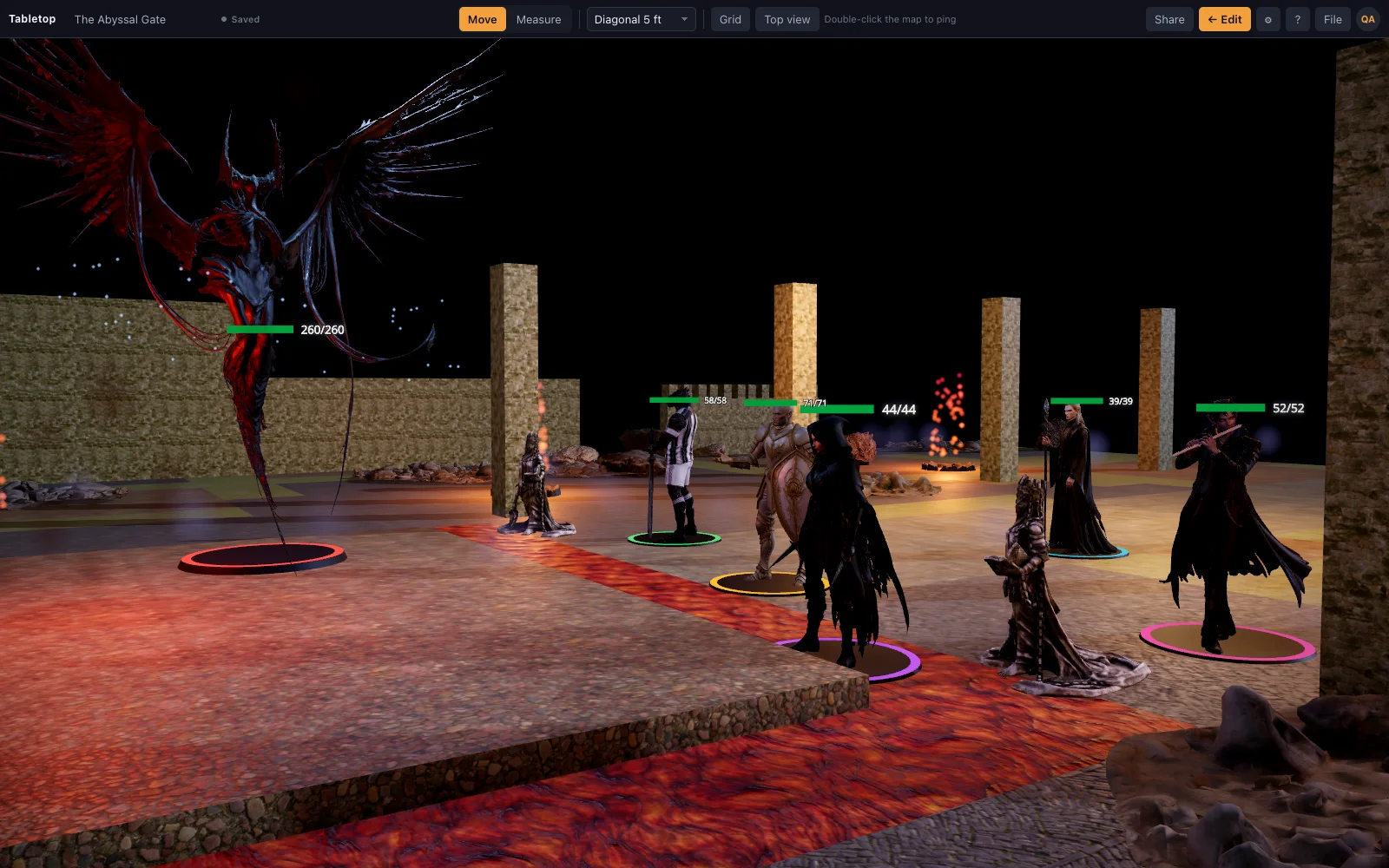
The nave: long, open and lined with pillars
Draw the nave 8 squares wide and 16 to 20 long. That is 40 by 100 feet, big enough that a party entering at the doors is out of most spell ranges from the altar and has to close, and narrow enough that a Fireball centred in the middle catches most of what stands there. Two rows of pillars 2 squares in from each wall divide it into a central aisle 4 squares wide and two side aisles of 1 square each.
The pillars are the point. Each one is a Medium obstacle that gives half cover, +2 to AC and Dexterity saving throws, to a creature behind it, and total cover to a creature directly behind it from an attacker on the exact opposite side. A party advancing up the side aisles moves in cover the whole way; a party charging up the central aisle is in the open. Give them that choice and watch the fighter and the rogue disagree about it.
The altar: a stage 5 feet up
Raise the altar end by one step of 5 feet, on a dais 8 squares wide and 4 deep, with the altar itself a 2 by 1 block in the middle. Height gives the villain three things: a clear line to every square of the nave for spells, a step that costs 5 extra feet of movement to climb, and the visual authority of being above everyone else, which a 3D map shows and a 2D map only describes.
Put the ritual on the altar. A thing that will finish in four rounds unless someone reaches it is the best clock a boss fight can have, because it makes the party choose between killing the cultists and stopping the spell. Put candles on the altar too, since in the 2024 rules a creature that is Heavily Obscured cannot be targeted by a spell that needs sight, and a villain who snuffs the lights and stands behind the altar in darkness is a villain the wizard cannot Hold.
Side chapels: where the reinforcements wait
Off each side aisle, three alcoves of 3 by 3 squares with an arch 2 squares wide. From the nave the party can see the arch but not the whole chapel, so anything standing to one side of it is out of sight. That is the map's ambush mechanism without any special rules: the acolytes are in the chapels, they come out on round two, and the party that advanced up the side aisles in cover finds itself flanked.
The chapels are also rooms with their own character. One has a font, which is a 1-square obstacle and a reason for a cleric to spend an action. One has a statue that gives three-quarters cover. One is a confessional with a door, which is total cover and a hiding place. Three small rooms with three different things in them are worth more than six identical ones.
- Six alcoves, three a side, 3 by 3 squares, with an arch 2 squares wide.
- Nothing standing beside the arch can be seen from the nave.
- One feature per chapel: font, statue, confessional.
The crypt stairs: the exit
Behind the altar, a stair down. It is 1 square wide and turns once, so nothing on the stair can be seen from the nave, and it is where the villain goes when the ritual fails or where the party goes when the fight turns against them. Either way it is the transition to the next map, which is a crypt, and the stair should be drawn so that going down it is a decision rather than an accident.
A 1-square stair is a chokepoint. One fighter holding the top of it can be attacked by only one creature at a time from below, and a creature knocked Prone on a stair falls down it. If the party retreats this way, the fight becomes a rearguard action with the tank on the top step, which is a fine second act. If the villain retreats this way, a pursuit down a spiral into the dark is a fine third act.
Shrines: the small version
Not every holy place is a cathedral. A roadside shrine is a single 4 by 4 square structure with a statue and an offering bowl, and a fight there is about the shrine rather than in it: who reaches the statue first, what happens when the bowl is knocked over, whether the pilgrim in the corner is a witness or a target. A forest shrine adds trees for cover and a stream for difficult terrain.
Use the small shrine as the hook for the big temple. The party fights bandits at the shrine, finds the symbol of the cult on one of them, and the temple is where the campaign goes next. The two maps share a vocabulary, altar and idol and offering, which is what makes the reveal land.
Building it
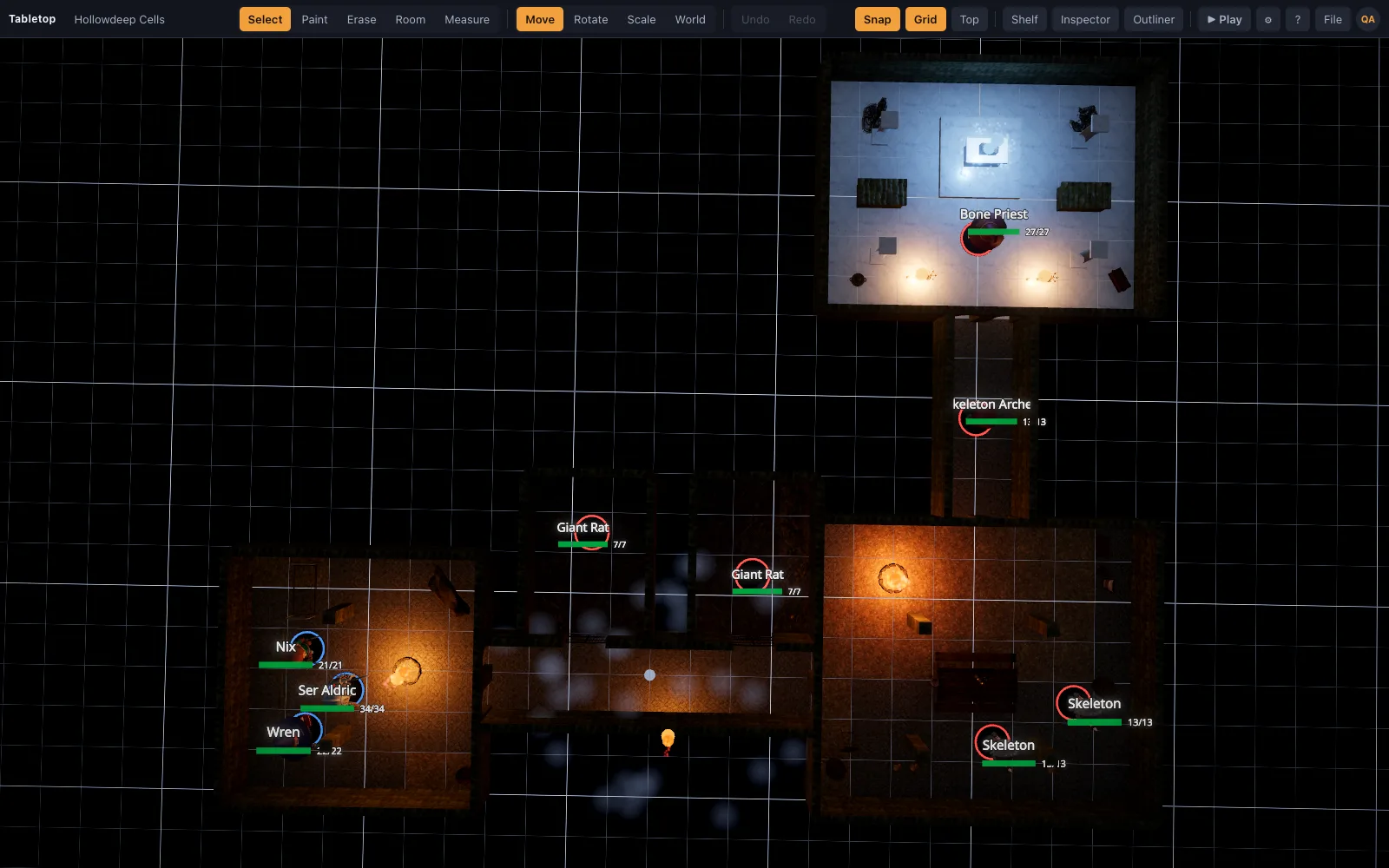
The nave, dais and chapels are all rectangles, which makes a temple one of the fastest maps to build. In TerrainTale the room tool drags out the nave with the Castle or Crypt kit for stone floors and walls, the chapels are six smaller rooms opened onto the side aisles, and the ruler counts the 5 feet of height from the nave floor to the dais. Candles on the altar cast real shadows down the nave, so when the villain puts them out the darkness is on the table.
If you want a finished one to look at first, the Crypt of the Pale Knight starter scene is the moonlit graveyard and the crypt beneath it, which is the map this temple's stair leads down to.