Sewer battle maps: channels, walkways and grates, sized in squares
A sewer is a dungeon with one extra rule and one extra sense. The rule is that half the floor costs double to cross. The sense is smell, which is the only reason anyone remembers a sewer fight years later. Structurally it is easy: a channel of filthy water down the middle, a narrow ledge on one or both sides, junctions where the tunnels meet, and vertical shafts to the street. The design work is entirely in the widths.
· 5 min read · TerrainTale
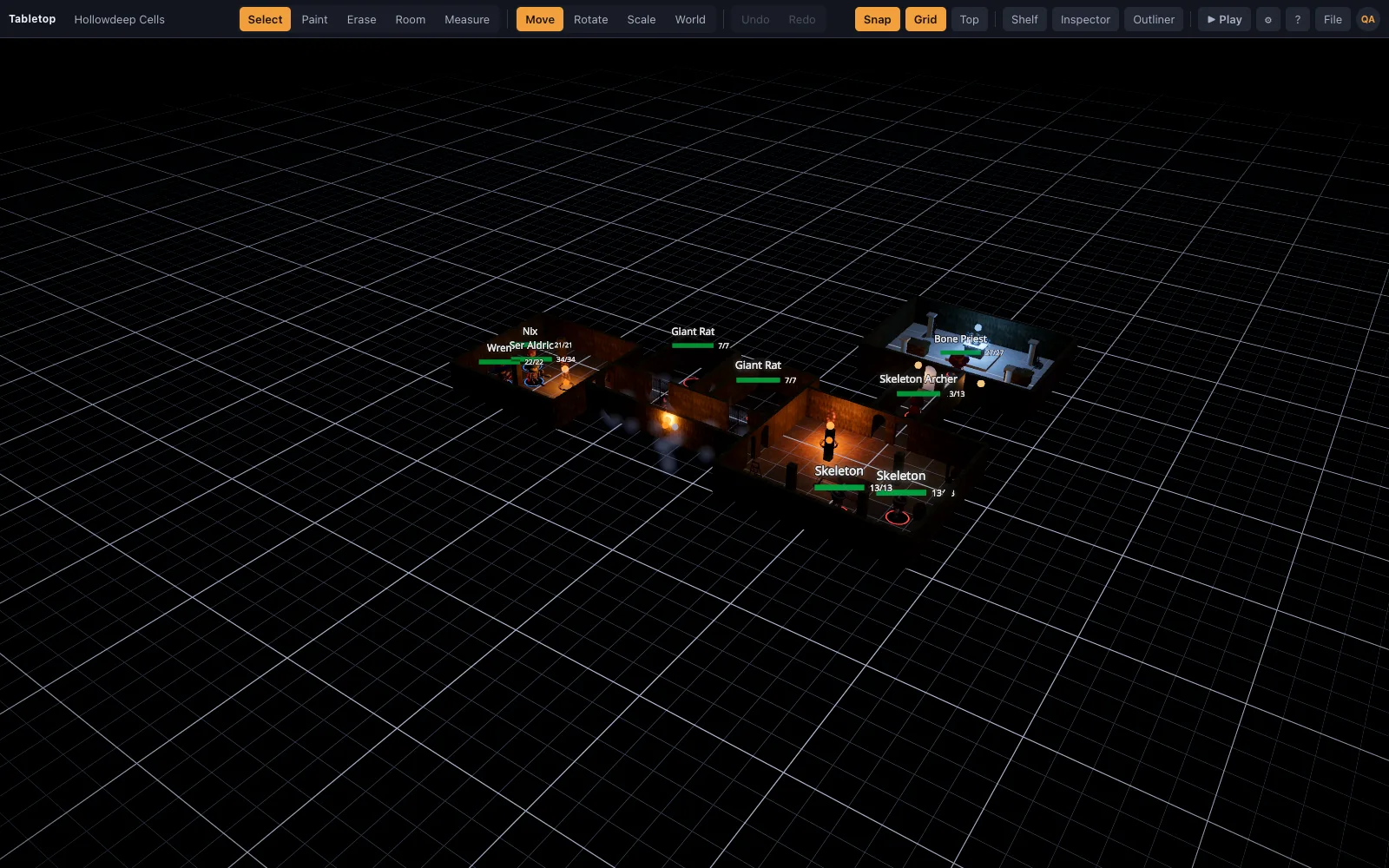
The standard cross section
Draw a main tunnel five squares wide: a channel three squares across in the middle, with a walkway of one square on each side. That gives two creatures room to fight along a ledge without falling in, and it makes crossing the channel a real decision rather than a formality. Side tunnels are three squares wide, one of channel and one of ledge each side, and crawlways are a single square where Medium creatures have to squeeze.
Vary the section every so often. A stretch where the ledge disappears on one side, a stretch where the channel is dry, a chamber where four tunnels meet over a wide basin. Twenty squares of identical tunnel is a corridor, and corridors are where fights go to die, because there is nothing to decide in them. One change of section every ten squares is enough to keep the party reading the map instead of walking down it.
- Main tunnel: 5 squares, as 1 ledge, 3 channel, 1 ledge.
- Side tunnel: 3 squares, as 1 ledge, 1 channel, 1 ledge.
- Junction chamber: 8 by 8 squares or larger, with a basin and several outfalls.
- Crawlway: 1 square, squeezing, and no room to swing a greatsword.
What the water does to movement
Shallow sewage, up to a foot or so, is difficult terrain: every foot of movement costs an extra foot, so a 30-foot speed crosses 15 feet, or three squares. That single ruling is what makes the ledges worth fighting for. Deeper water needs swimming, which costs the same extra foot per foot, plus a Strength (Athletics) check in armour if the current is running.
Add one more consequence and the channel becomes genuinely frightening rather than merely inconvenient. A Constitution saving throw against disease after a dunking is the classic, though a level of exhaustion for going under is faster and hurts more. Say which you are using before the first shove, because the players will absolutely try to shove someone in.
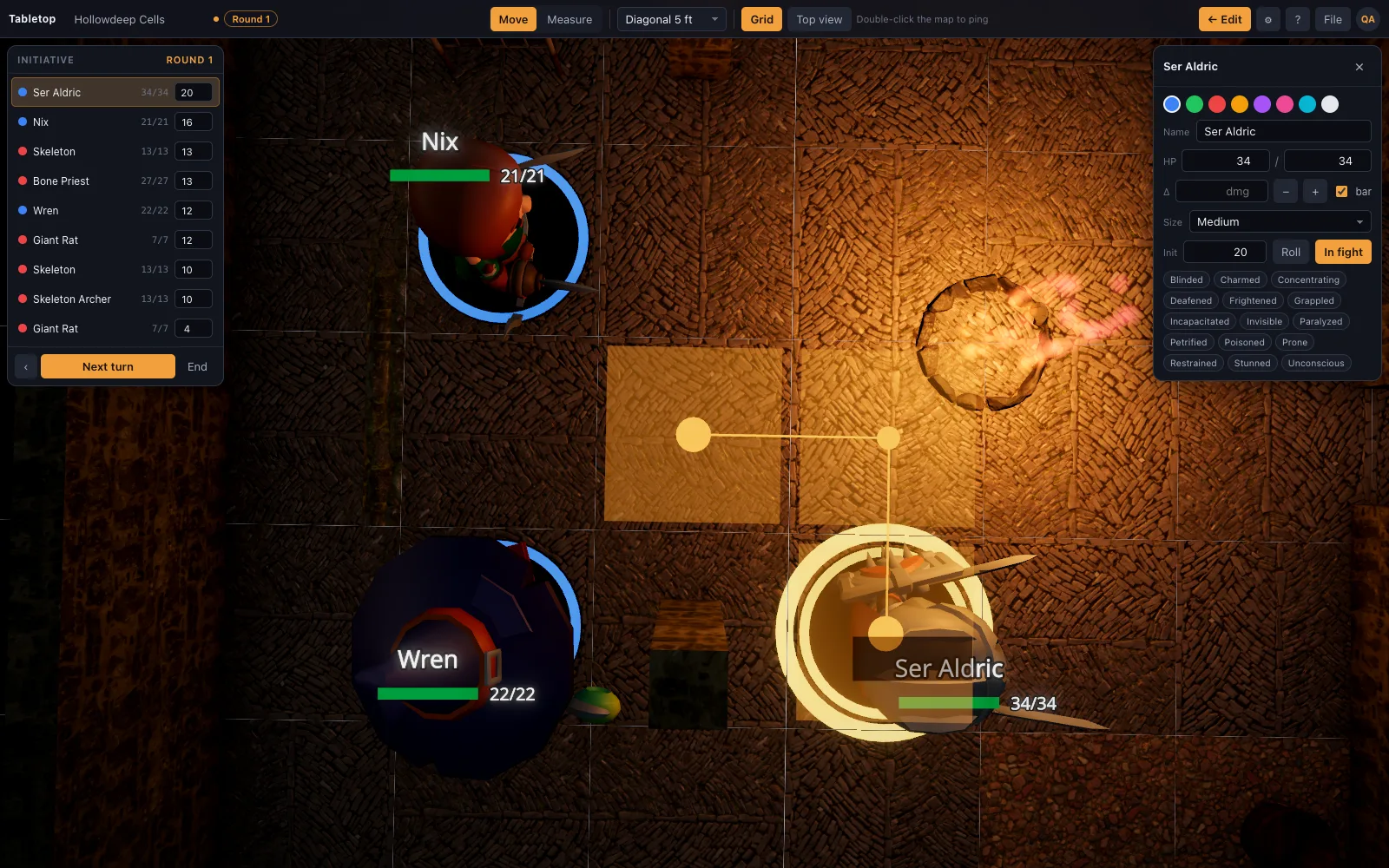
Grates, sluices and total cover
A grate is the most useful piece of furniture in a sewer. A portcullis-style grate across a tunnel gives three-quarters cover to anything behind it, which is plus 5 to AC and Dexterity saves, and a solid sluice gate gives total cover, meaning the creature behind it cannot be targeted at all. Both are things the party can open, which turns a wall into a timer.
Grates overhead are just as useful. A street grating puts a shaft of light in one square, lets a creature above drop things through, and gives the party an exit that needs a climb check rather than a map. Put two or three in a long tunnel and the sewer stops being a sealed box.
Light, and why you should not make it pitch dark
A sewer with no light at all is a fight where half the party rolls at disadvantage and nobody enjoys it. Give it sources: grates from the street, a lantern on a hook at a junction, phosphorescent fungus in the wet corners, the cultists' own torches. Lit patches with dark between them is far better than uniform gloom, because it makes movement a choice about visibility.
Standing light sources also do the mapping work for you. A torch sheds bright light in a 20-foot radius and dim light for another 20, which is 4 squares and 4 more. Place three of those along a 30-square tunnel and you have defined the fight without drawing anything else.
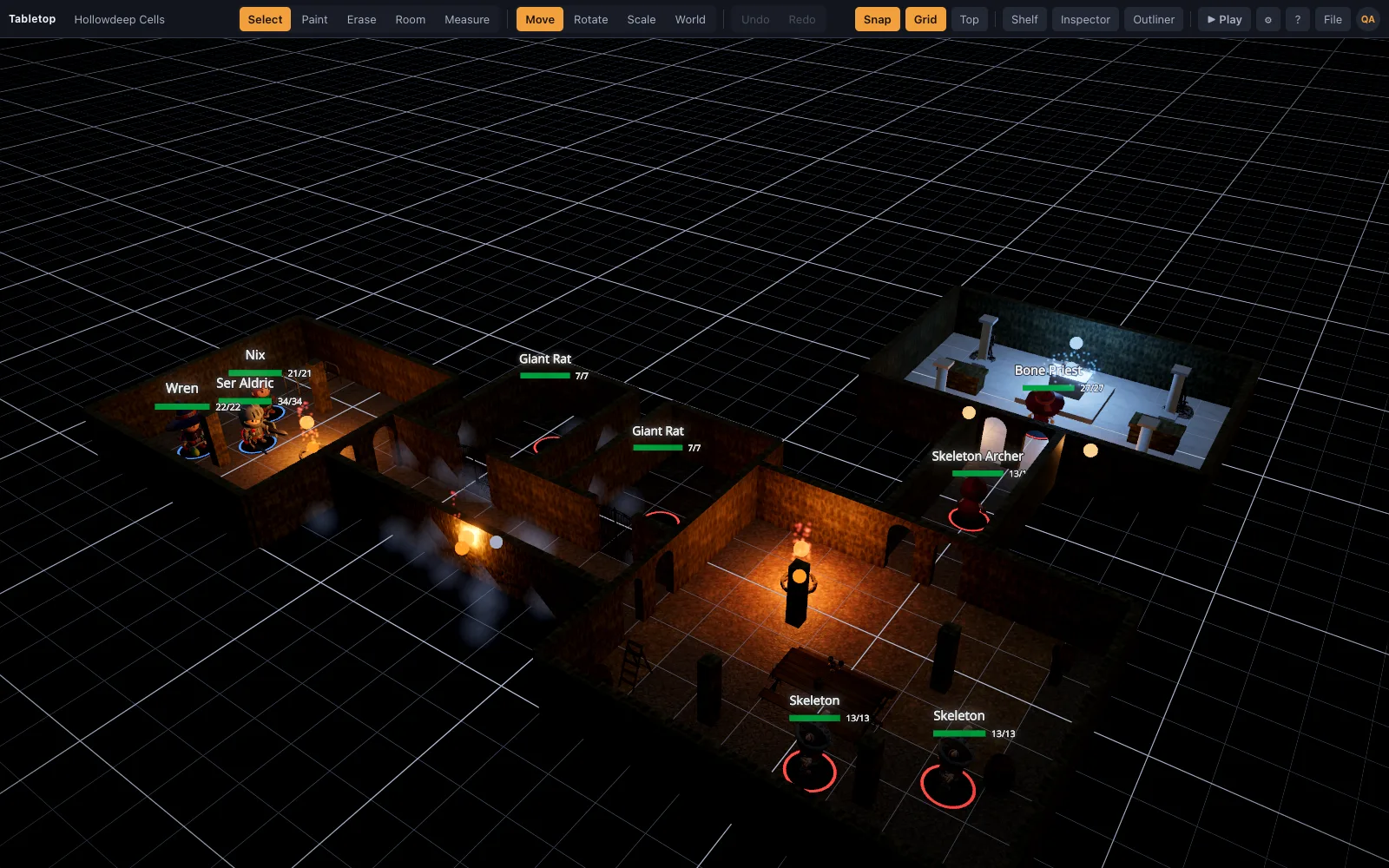
What lives down there
Sewers reward monsters that use the channel. An otyugh in the basin, a swarm of rats that pours along the ledges, a gelatinous cube that fits the tunnel exactly, crocodiles in the deep stretch, a hag with a shrine at an outfall. The thing they have in common is that they are more mobile than the party in the water, which is the point of the terrain.
Humanoid enemies work too, and differently. Smugglers know the sluices, and a gang that can open a gate to flood a tunnel behind the party is a far better encounter than the same gang in a room. Give the enemy one piece of local knowledge and the map becomes theirs.
- Something that swims, so the channel is not just a wall.
- Something that swarms, so the one-square ledge matters.
- Someone who knows which lever floods which tunnel.
Building one quickly
Paint the tunnel floor first as a long run, then lay the channel down the middle in a second material, then the walls. In TerrainTale the tile brush paints floor and wall materials on the grid and the walls orient themselves, so a branching tunnel network is a few minutes of dragging rather than an evening of nudging.
Then add the three things a sewer needs to read at a glance: a grate, a rusted sluice wheel, and one shaft of light from above. Everything else is scatter, and scatter is optional on a weeknight. If you have ten more minutes, spend them on the junction chamber rather than on the tunnels, because that is where the fight will actually happen and the tunnels are only the way in.