Ship deck battle maps: sizes in squares, rigging and boarding
A ship fight is a fight in a box that is moving, tilted and full of ropes. The box is smaller than DMs expect: a sailing ship's main deck is rarely more than six squares wide, which means the party and the boarders are in each other's faces from round one. Build the deck to scale, put the rigging in as real height rather than scenery, and decide before play what happens to anyone who ends up in the water.
· 5 min read · TerrainTale
How big a ship actually is in squares
Scale surprises people, so start from real hulls. A small single-masted sloop is about 50 feet long and 20 wide, which is 10 by 4 squares. A keelboat or river barge is similar. A two-masted brig or the standard adventuring ship is around 100 by 25 feet, or 20 by 5 squares. A galleon is 130 feet or more, about 26 by 8 squares, with a raised quarterdeck at the stern and a forecastle at the bow.
Those are the outside dimensions. Subtract the masts, hatches, capstan and boats, and the fightable deck of a brig is maybe 60 usable squares. That is a small room, and it is why ship fights turn into scrums. Lean into it rather than inflating the hull, because a ship drawn at twice its real size loses the one quality that makes a deck fight different from a field fight: there is nowhere to retreat to that is not also the sea.
- Sloop: 10 by 4 squares, one mast, one deck plus a cramped hold.
- Brig: 20 by 5 squares, two masts, main deck, quarterdeck, hold.
- Galleon: 26 by 8 squares, three masts, forecastle and quarterdeck raised 5 to 10 feet.
- Ship's boat: 4 by 2 squares, and a fine place for a fight of its own.
Levels, not one flat deck
The thing that makes a ship better than a room is that it has three or four levels within 20 feet of each other. The quarterdeck sits 5 feet above the main deck with a short ladder or steps. The forecastle does the same at the bow. Below is the hold, reached by a hatch. Above is the rigging, which goes up 30 feet or more.
Draw each level on its own layer and mark the ladders and hatches in matching squares. Then remember that being above is not a to-hit bonus in 5e, but it is cover, range and a shove that ends with a 5-foot fall. The quarterdeck rail gives half cover to anyone behind it, which is where the enemy captain should be standing.
The rigging as a third dimension
Climbing counts as difficult terrain unless you have a climb speed, so each foot costs an extra foot and a 30-foot speed gets 15 feet up the shrouds in a turn. That is three squares of height, which is enough to shoot over the crowd on deck. A character in the rigging has a clear line to almost everything and is very exposed, which is exactly the trade a swashbuckler wants.
Give the rigging two or three fixed positions rather than treating it as a continuous climbing surface: the shrouds, the crosstrees at 20 feet, the yard arm. Named places are easier to run than free climbing, and cutting a rope to swing across is a Dexterity check with a real result, not a stunt you have to adjudicate from scratch.
Rails, hatches and cover on deck
A ship's deck is mostly open, so the few pieces of cover carry the whole fight. The bulwarks and rails are half cover for anyone crouched behind them and a hard edge for anyone shoved. The mast is a pillar giving half or three-quarters cover depending on angle. Barrels, the capstan and the ship's boat are low cover in the middle of the deck.
Open hatches are the other feature worth placing deliberately. A hatch is a hole two squares across with a 10-foot drop to the hold, which is 1d6 bludgeoning damage and prone. Players will use it on enemies, enemies will use it on players, and it gives the hold a reason to exist during the fight rather than after it.
- Rail or bulwark: half cover, and the boundary between the fight and the sea.
- Mast and capstan: the only cover in the middle of the deck.
- Open hatch: a 10-foot drop, 1d6 damage, and the fastest way into the hold.
Running a boarding action
Boarding works best as a three-beat structure. Approach, where ranged attacks and one round of spells happen while the ships close. Grapple, where hooks land and the two decks become one map joined by a few squares of contact. Sweep, where the fight moves along the deck toward the helm.
The contact squares are the key design decision. Two grappling points, each two squares wide, makes the crossing a chokepoint and gives the defenders somewhere to hold. Four points spread along the hull turns it into a general melee. Pick the shape you want and place the hooks accordingly, then let the party cut a line to close one off.
Overboard, and building the thing
Decide the water rule before you need it. A creature that goes over the side falls 10 to 15 feet, takes no damage into water at most tables, and then has to swim at an extra foot per foot while the ship keeps moving. If the ship is under way, being in the water means being left behind in two or three rounds, which is a far sharper threat than damage and worth saying plainly the first time it happens.
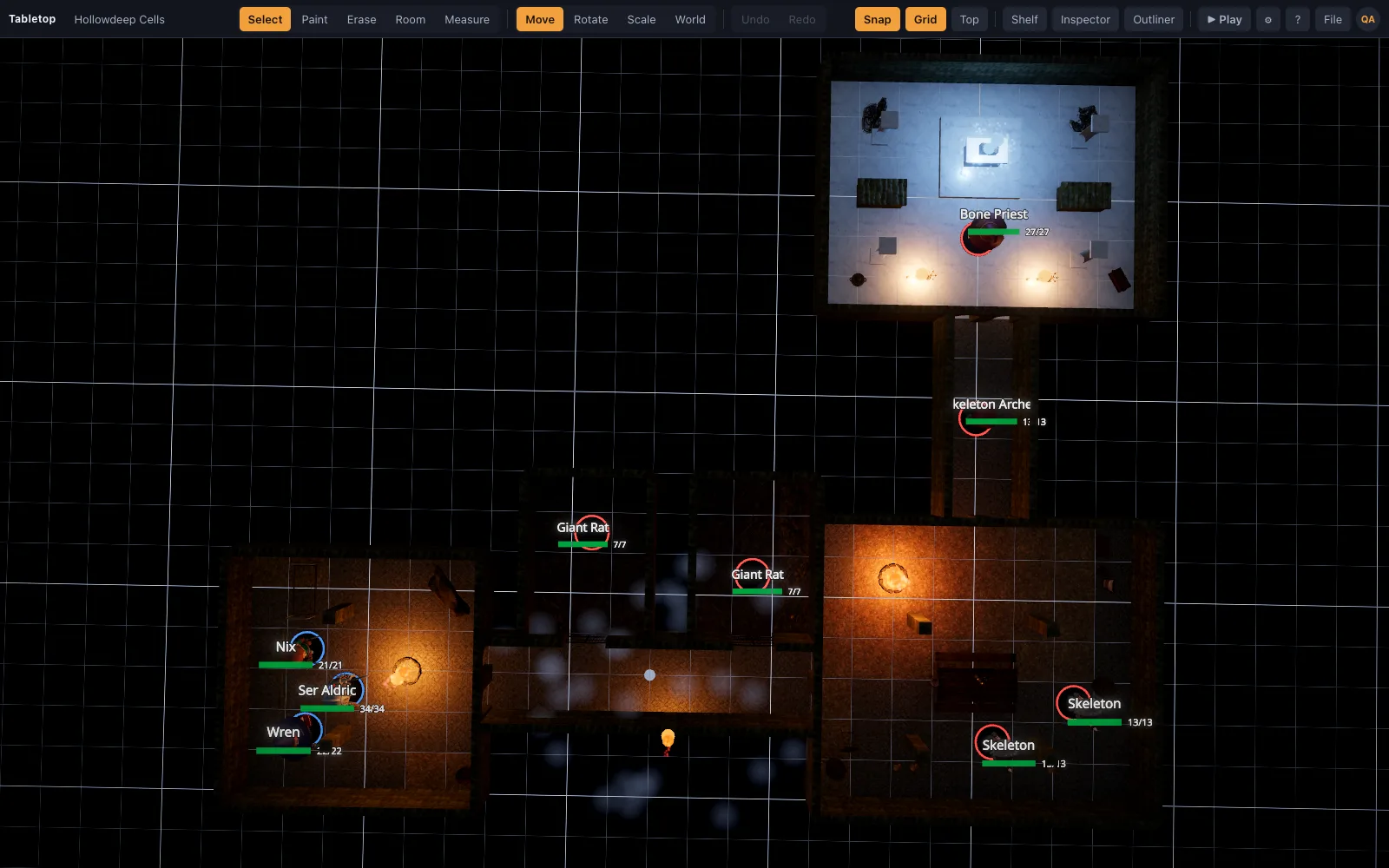
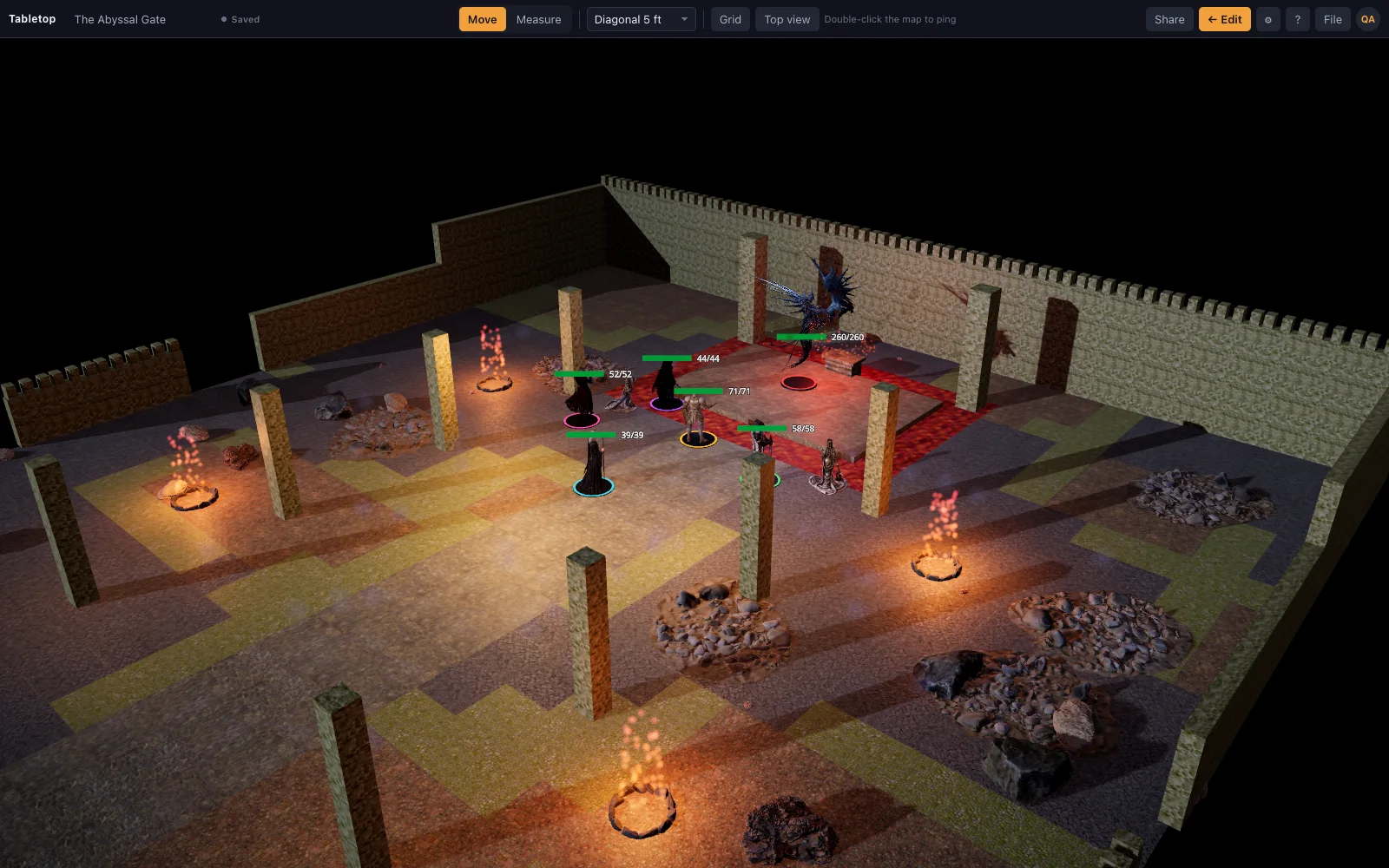
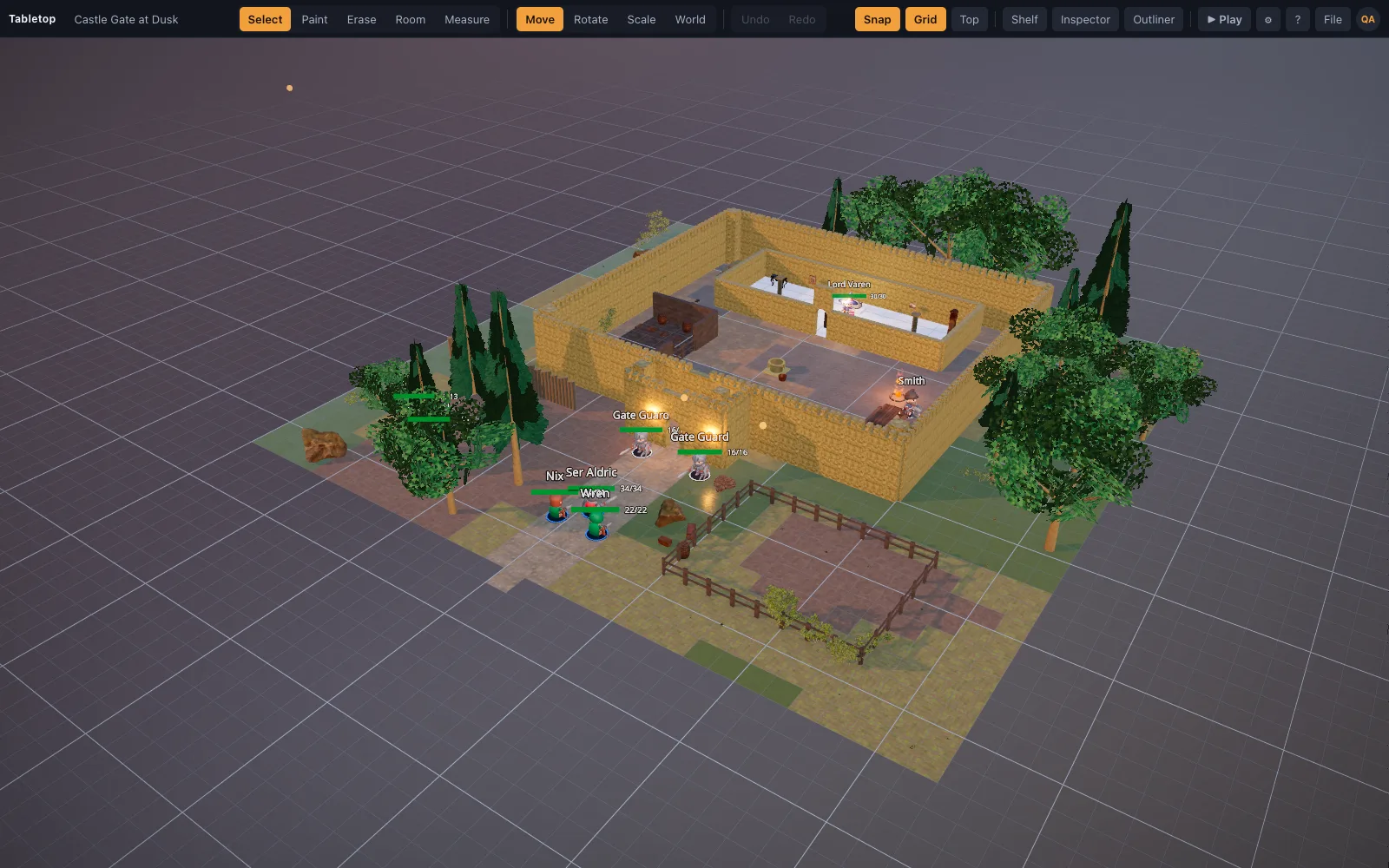
For the map itself, a deck is a long rectangle, which is the easiest shape there is. Paint a plank floor, run the bulwarks as walls, raise the two ends, and the hull is done. In TerrainTale the camera goes to any angle including eye level, so you can check what someone at the helm can see over the crowd amidships before the session rather than during it.