How to read a battle map: a five-minute guide for new players
You have joined a game, the DM has put a map on the table or the screen, and everyone else seems to know what the squares mean. This is the five-minute version of what they know: how to count movement, what adjacent means, why your character stands where they do, and the three questions worth asking before you take your turn.
· 6 min read · TerrainTale
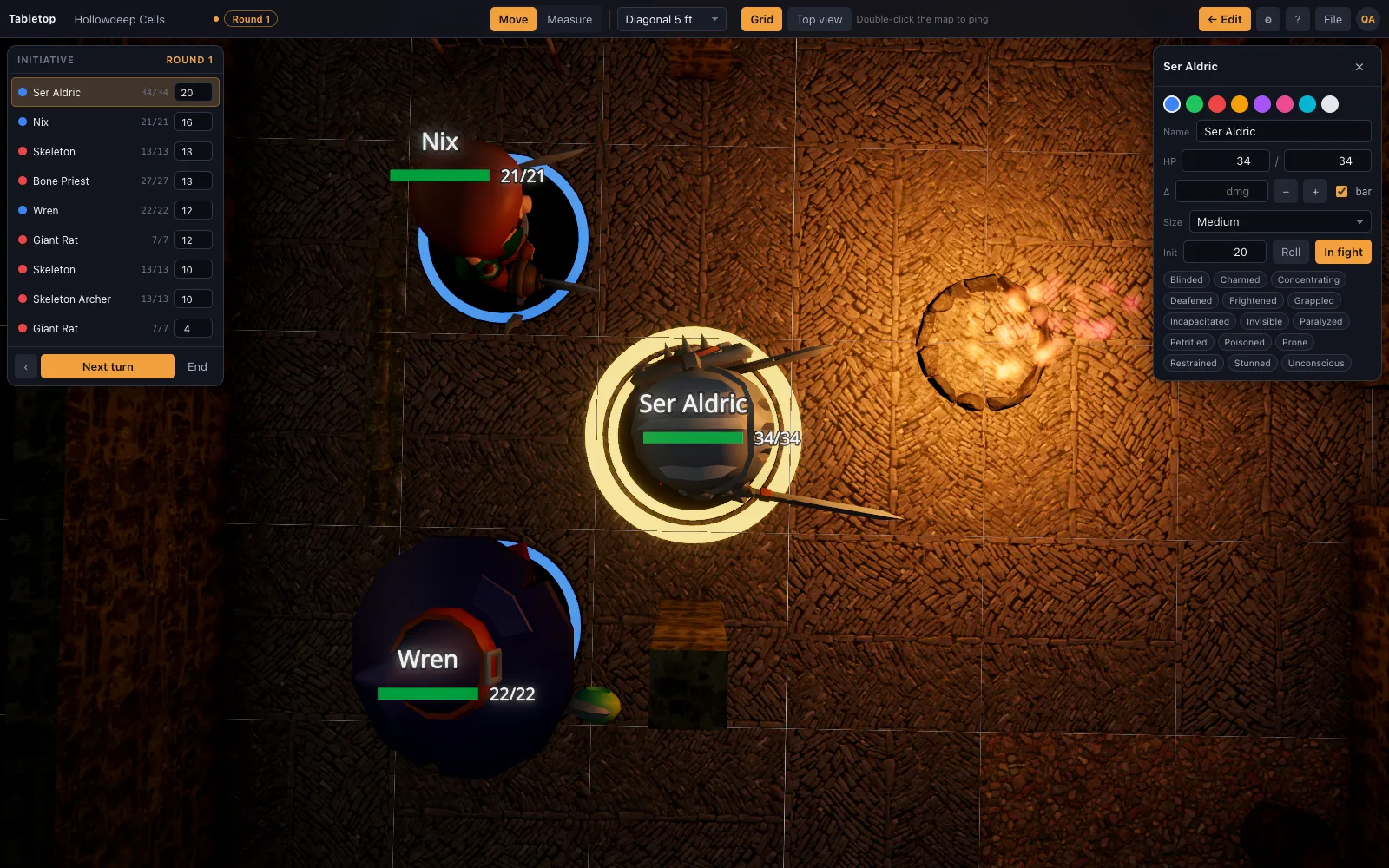
Every square is five feet
The grid is a ruler. Each square is 5 feet on a side, and everything in the rules that says a distance in feet is counted in squares on the map: a 30-foot move is 6 squares, a 60-foot spell range is 12 squares, and a longbow's 150 feet is 30. Your character is Medium sized and takes one square; big monsters take four or nine. When someone says a creature is 10 feet away, they mean there is one empty square between you.
Most tables count a diagonal step as 5 feet like any other step. Some use the rule where every second diagonal costs 10. Ask which one your table uses, once, and then never worry about it again.
Movement, and why you stop where you stop
On your turn you can move up to your speed, in any order around your action: move 3 squares, attack, move 3 more. You cannot move through an enemy's square, and moving away from an enemy that is next to you lets it take a free swing at you (an opportunity attack) unless you spend your action to Disengage. Squares full of rubble, water or furniture cost double. That is nearly all the movement there is.
The reason experienced players stand where they stand is those two rules: they stop next to the monster they want to hit, and they avoid walking past monsters they do not.
- Speed 30 = 6 squares per turn. Dash as your action to double it.
- Leaving a square next to an enemy provokes an opportunity attack.
- Difficult terrain costs two squares of movement per square.
- You can move through a friend's square but not stop in it.
Adjacent, reach and range
Adjacent means your square touches theirs, including at a corner. Most melee weapons reach only adjacent squares. A weapon with reach, such as a glaive or a whip, hits two squares away. Ranged weapons and spells have a range in feet, and some have a long range at which you attack with disadvantage. Shooting while an enemy is adjacent to you also gives disadvantage, which is why archers step back before they shoot.
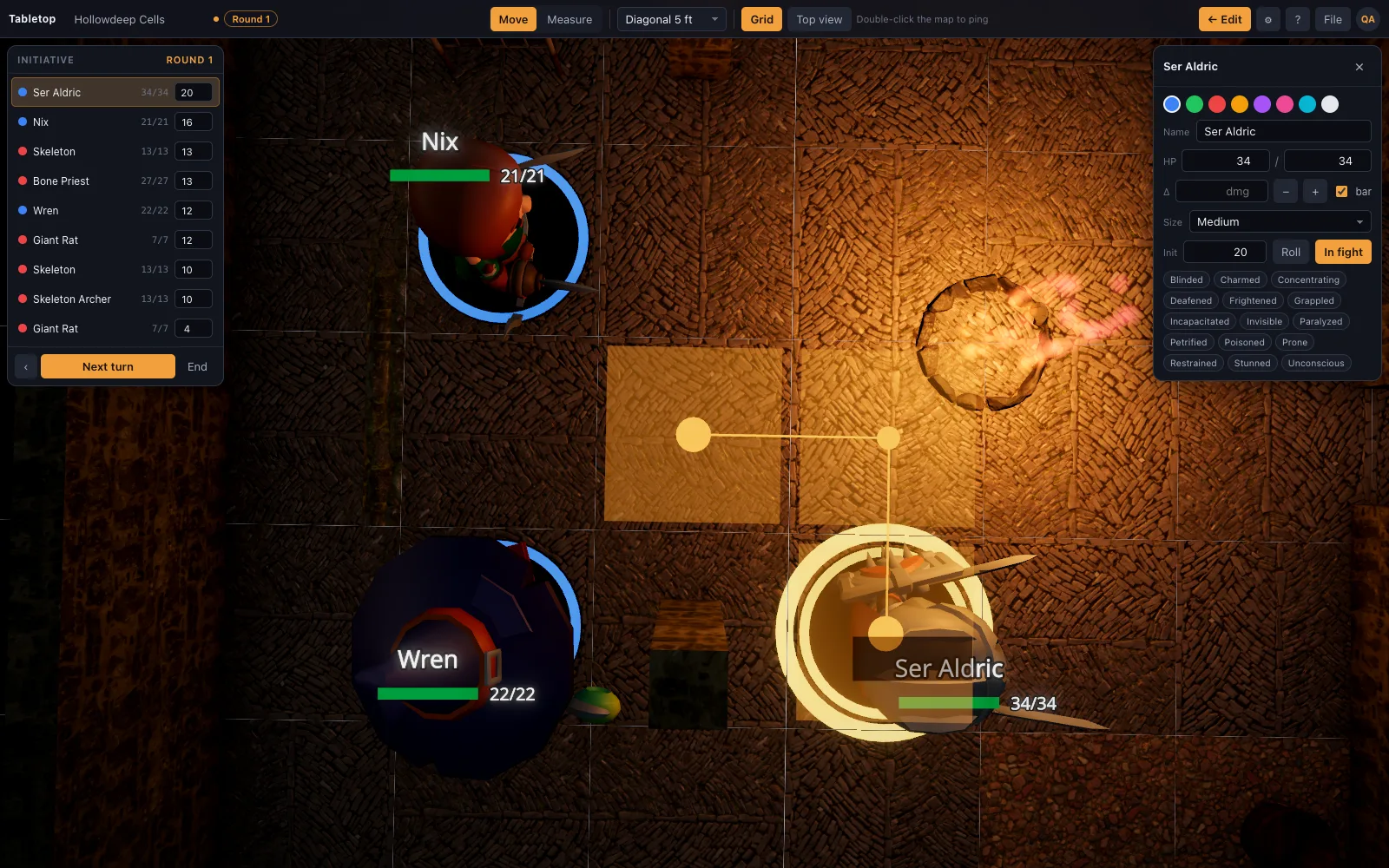
On a VTT you do not have to count any of this. Drag your character and the ruler shows the feet; in TerrainTale it also shows the height if you are jumping down or climbing, and the grid snaps you into a square so nobody has to ask which one you meant.
Cover and height
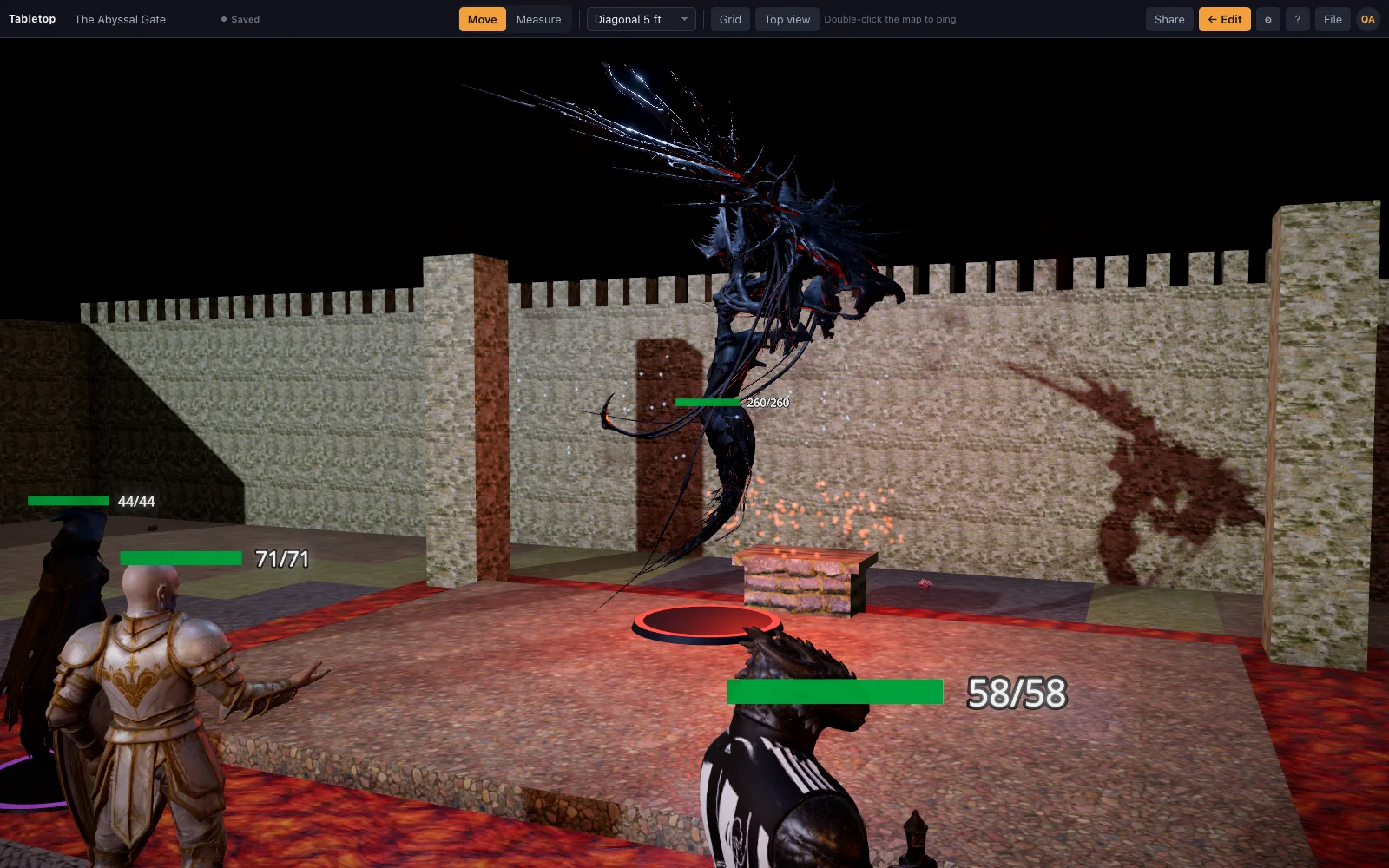
If something solid stands between you and the enemy, you have cover, which adds to your Armour Class: +2 for a low wall or a person in the way, +5 for an arrow slit or a doorframe, and if you are fully hidden you cannot be targeted at all. Standing behind the fighter is not cowardice; it is +2 AC. Height is the other thing to look for: a ledge or a staircase gives a clear line of sight over the crowd and often cover from the crowd, which is why the archers in every group head for the stairs on turn one.
On a flat map you have to imagine the height. On a 3D map you can see it, which is one reason groups switch.
Three questions to ask before your turn
You can ask the DM anything about the map before you commit, and good DMs want you to. Three questions cover most turns. Can I reach that square this turn? What is between me and that creature? Does moving there provoke an attack? The answers tell you whether your plan works, and asking them out loud is faster than a wrong move and a takeback.
And if you are still not sure: move next to the biggest thing, hit it, and stand behind someone in heavier armour. That is a good turn at any level.