How many enemies fit on a battle map: encounter size versus room size
A useful floor is about four open squares per combatant, counting both sides. A party of four against six goblins is ten creatures and wants at least 40 squares of floor they can actually stand on, which is a 7 by 6 room with nothing in it or a 10 by 8 room with furniture. Below that, the fight becomes a queue: the creatures at the back cannot reach anything, so they wait, and every round takes as long as a full fight while only half the table does anything. The encounter budget tells you how dangerous a fight is. The map tells you whether it is playable.
· 5 min read · TerrainTale
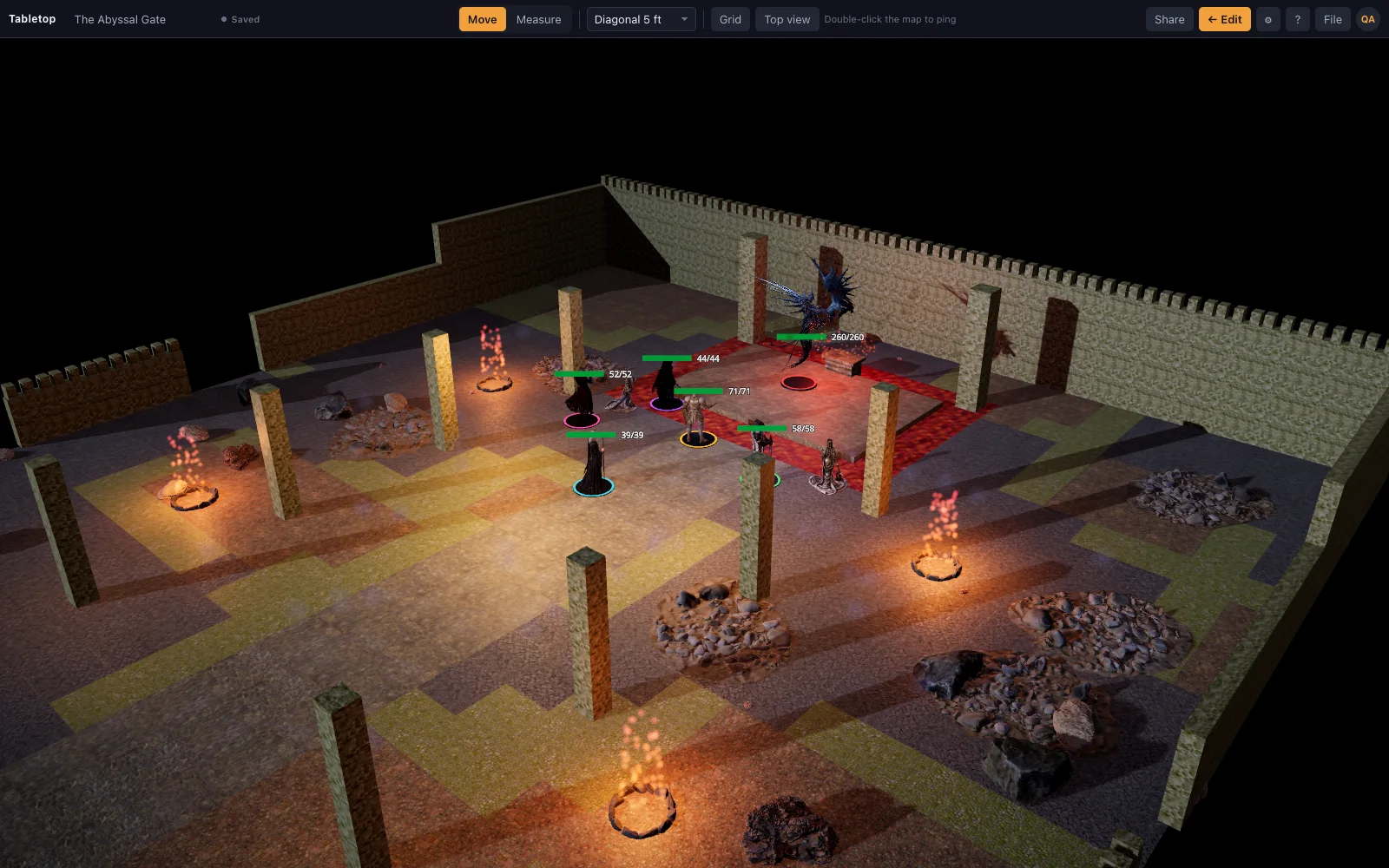
Why twelve goblins in a 6 by 6 room is a queue
A 6 by 6 room has 36 squares. Put four adventurers and twelve goblins in it and 16 of those squares are occupied before anyone moves. Each Medium creature threatens the eight squares around it, so the party of four, standing in a line across a 6-wide room, threatens the entire width. The goblins that reach the line fight; the rest stand behind them with nothing to do but wait for a gap or throw a javelin past a friend, which gives the target half cover from the friend's body and rarely hits.
The fix is not fewer goblins. It is more room, or more ways in. Twelve goblins across a 12 by 10 hall with two doors and a pillar row can surround, flank and reach the back line, and that is the fight the DM was imagining. Space is what turns numbers into pressure.
The 2024 XP budget, and what it does not tell you
The 2024 Dungeon Master's Guide builds an encounter from an XP budget per character. At level 1 a low-difficulty fight is 50 XP a character, moderate 75 and high 100; at level 3 it is 150, 225 and 400; at level 5 it is 500, 750 and 1,100. Multiply by the number of characters, then spend the total on monsters by their XP value. A goblin warrior is 50 XP, so four level 1 characters at moderate difficulty, 300 XP, buy six goblins.
The 2014 rules multiplied the monsters' XP by a factor for their number, times 1.5 for two, times 2 for three to six and so on, which made large groups count as harder. The 2024 budget drops that multiplier and instead sets the budgets lower, so a 2014 DM converting old notes will find that the same monsters now read as a harder fight. Neither version says anything about the map. Six goblins in a corridor and six goblins in a courtyard cost the same XP and play as different encounters.
- Level 1, four characters: 200 XP low, 300 moderate, 400 high.
- Level 3, four characters: 600 low, 900 moderate, 1,600 high.
- Level 5, four characters: 2,000 low, 3,000 moderate, 4,400 high.
Squares per combatant: a working number
Count the squares the creatures can stand on, not the squares in the room. A 10 by 10 tavern with four tables, a bar and a hearth has perhaps 60 open squares of its 100. Then divide by the number of creatures on both sides. Under three squares each and you have a scrum where nobody can move without provoking; three to five and you have a tight fight where positioning matters; over eight and the map is mostly walking.
Large creatures count for four squares each, because they occupy 2 by 2, and they need more than that to turn around. An ogre in a 5-wide corridor fills it. Two ogres in a 5-wide corridor are one ogre and a queue. Anything Huge wants a room of at least 8 by 8 to be anything but a wall.
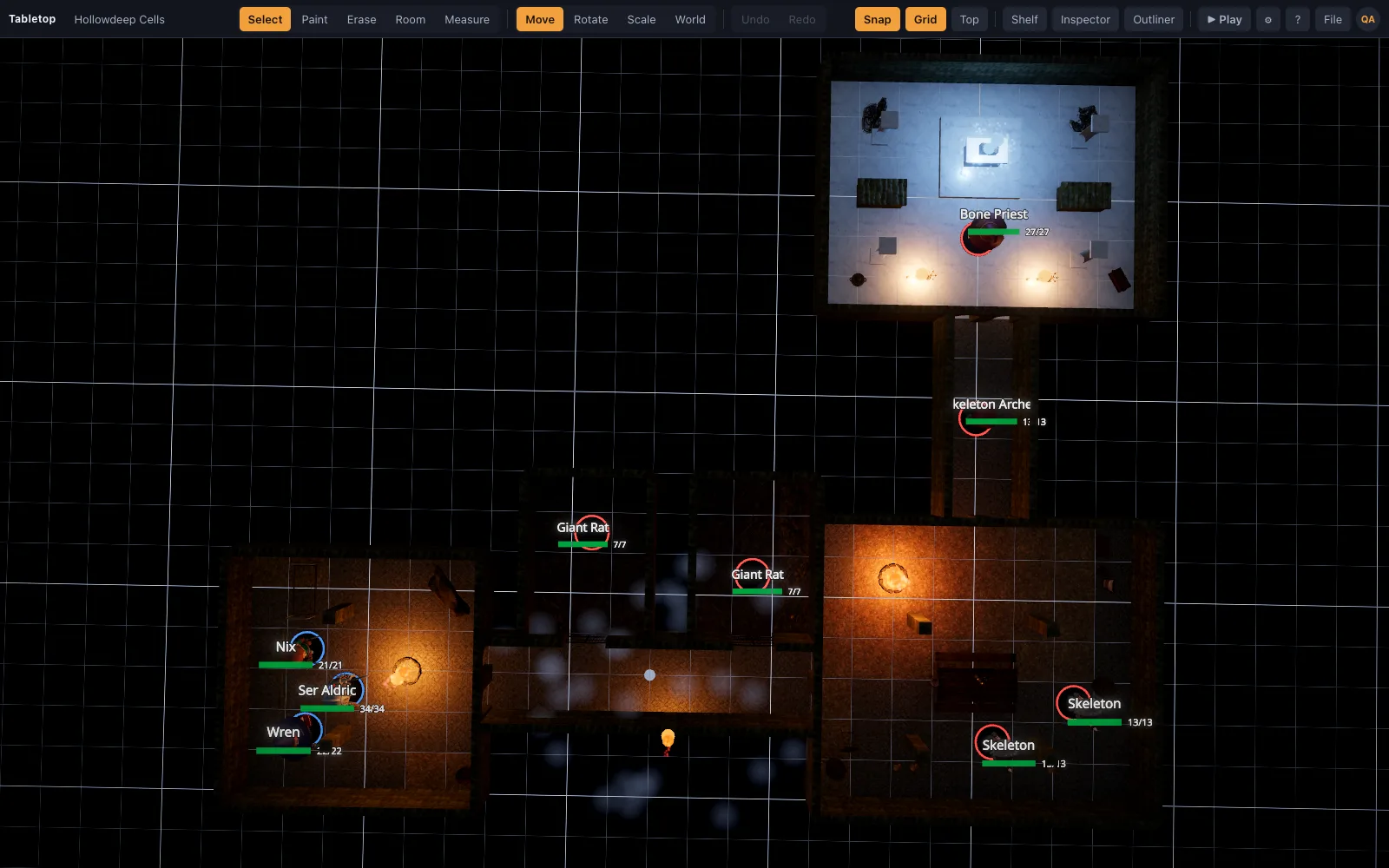
Action economy: why numbers matter more than hit points
Each creature gets one turn a round, with an action, a bonus action and movement. Six goblins take six turns; one ogre takes one. That is the action economy, and it is why a party of four outnumbered three to one is in more trouble than the total hit points suggest: the goblins make twelve attacks a round and choose their targets, while the party makes perhaps five. A fight of many weak enemies is dangerous because of the number of dice rolled against the squishiest character, and a map that lets them reach that character is what makes the danger real.
The map is the lever the DM controls. A choke point cuts twelve attacks to three and turns a deadly fight into a slow one. An open room with the wizard exposed turns a moderate fight into a rescue. The same six goblins, the same XP, and the map decides which one you get.
Sizing the map to the fight you want
Decide what the fight is about, then draw the room. A last stand wants a narrow space with a single approach so the front line holds. A running fight wants a long space with cover along it. A swarm wants an open space with several entrances so the numbers can reach the party from more than one side. A boss wants a wide room so the Huge creature can move and the party can spread out of its breath weapon.
In practice this means a 6 by 6 room holds a fight of up to eight creatures, a 10 by 10 room up to about fifteen, and a 15 by 12 hall twenty or more if the walls have doors. Furniture and pillars reduce the count and improve the fight, up to a point; a room that is half furniture is a corridor with decoration. On a 3D map the vertical space counts too: a balcony adds squares the goblins can shoot from without joining the queue on the floor.
- 6 by 6: up to eight creatures.
- 10 by 10 with furniture: up to fifteen.
- 15 by 12 with two doors: twenty or more.
Running a crowded fight without losing the table
When the numbers are high, group the monsters. Six goblins share one initiative and act together, which cuts the round from ten turns to five and lets the DM move them as a unit. Give the group one HP tally per creature on the tokens rather than a sheet, so the fighter who drops one sees it drop. TerrainTale keeps HP bars and conditions on the minis and an initiative tracker in play mode, which is enough to run twelve goblins as two groups of six without a spreadsheet.
Cut what is not fighting. A goblin that cannot reach anything and has no ranged attack is not a threat; let it run, or let it arrive next round through the other door. Nobody at the table will miss it, and the room will feel bigger for its absence.