Does D&D really need 20 levels? The September 2026 debate, and what the data says
On 13 September 2026 an EN World member posting as Mistborn asked whether D&D really needs 20 levels, and by 17 September the thread had run to 54 pages and nearly 1,000 replies. The proposal is old and the argument is older: cap the core game at level 10, where most tables actually play, give characters feats, followers and strongholds instead of ninth-level spells, and sell high-level play as a separate Epic game. The data everyone reaches for is D&D Beyond's, from 2019, and it says most games never see level 11. Whether that means the levels are unnecessary or merely unreached is the whole disagreement.
· 5 min read · TerrainTale
The proposal
Mistborn's opening post makes four claims. Most play happens below level 11, and the game works best there. High-level magic, teleportation, resurrection and powerful divination, breaks the assumptions of the fantasy stories the game imitates. Characters could keep growing sideways instead of upwards: more feats, manoeuvres, skills, reputation, followers and strongholds. And levels 11 to 20 could be a separate product, Epic D&D, with its own rules for domains, armies and planar travel. No data was cited; the post is a design argument, not a survey.
The first replies set the pattern for the next 50 pages. Zardnaar pointed out that 20 levels were not standard until the second edition of AD&D. Tigris held up 13th Age, a game with 10 levels that covers the same power range with incremental advances between them. Lanefan worried that compressing 20 levels of power into 10 would produce large jumps, and that slower advancement has less appeal to players who like the ding.
What the data actually says
The figure that keeps being quoted comes from a D&D Beyond development video reported by EN World on 7 February 2019: about 90 percent of games do not make it past level 10, and characters at levels 17 to 20 were 5.4 percent of those on the platform. EN World's own caveats at the time still apply. The sample was D&D Beyond users, and it counted every character sheet, including the ones built to try a subclass and never played, so it measures sheets rather than campaigns.
A July 2025 EN World thread repeated a looser version of the same numbers, that 70 percent of games end around level 7, 10 percent reach level 10 and 1 percent reach the top tier, attributing them to Wizards data released some years earlier; nobody in that thread could point to the original. The honest summary is that the shape is not in doubt, most campaigns end in tier 2, but the exact percentages are folklore built on one 2019 slide. Bob World Builder's 2026 survey of players, covered on this blog on 16 September, gives a newer picture of who plays; it does not settle how far they get.
- February 2019, D&D Beyond: about 90 percent of games stop by level 10; tier 4 is 5.4 percent of characters.
- Caveat: sheets, not campaigns, and self-selected users.
- The 70 percent by level 7 figure circulates without a source.
The case for ten
The strongest version in the thread is not that high levels are bad but that the core book should describe the game people play. Jacob Lewis argued that the sweet spot is low to mid levels and that higher play should be an optional expansion. Blue noted that 13th Age's 10 levels span the same power as D&D's 20 with more frequent advancement, so nobody waits longer for a reward. Johngernaut called the top levels marketing material and pointed at Meteor Swarm, whose 20d6 fire and 20d6 bludgeoning is 40 dice on the table for a single spell.
Games released since 2024 mostly agree with the proposal in practice. Shadowdark, Daggerheart and MCDM's Draw Steel each run 10 levels; 13th Age has since 2013. None of them is short of a power curve. The 2024 D&D books themselves lean the same way at the edges: the Dungeon Master's Guide gives every character a Bastion from level 5, which is exactly the horizontal progression Mistborn asks for, and the Player's Handbook puts the Epic Boon feats at level 19 rather than spreading the top tier out.
The case for twenty
The counter-arguments are three. First, that people do play there: AlViking described running high-level campaigns with custom-built opponents and finding them challenging with proper design, and dave2008 called high-level play a feature some tables embrace even if most do not need it. Second, that cutting levels does not remove the problems, it hides them; Minigiant's version was to address the problems and stop avoiding them. Third, that the game already sells the ten-level experience by default, since nobody is forced past level 10, and removing the option gains nothing for the tables that stop there.
The thread's later pages, by 17 September, had drifted to whether making a level 10 character takes too long, with Maxperson holding that most decisions happen at level 1 and Lanefan that a high-level build takes real time even for experienced players. That drift is itself evidence: the thing people find hard about high levels is the bookkeeping, not the concept.
What high levels do to a battle map
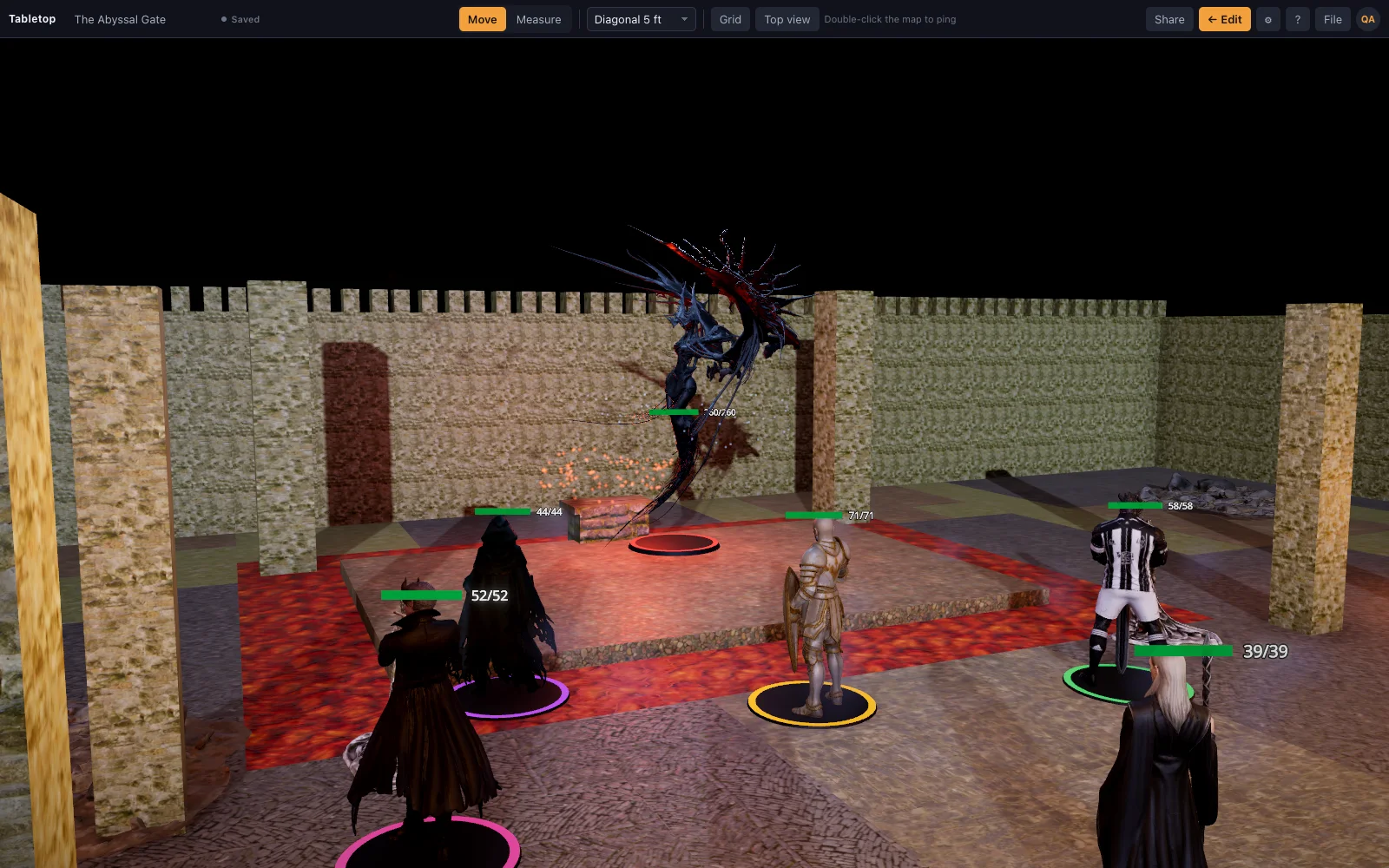
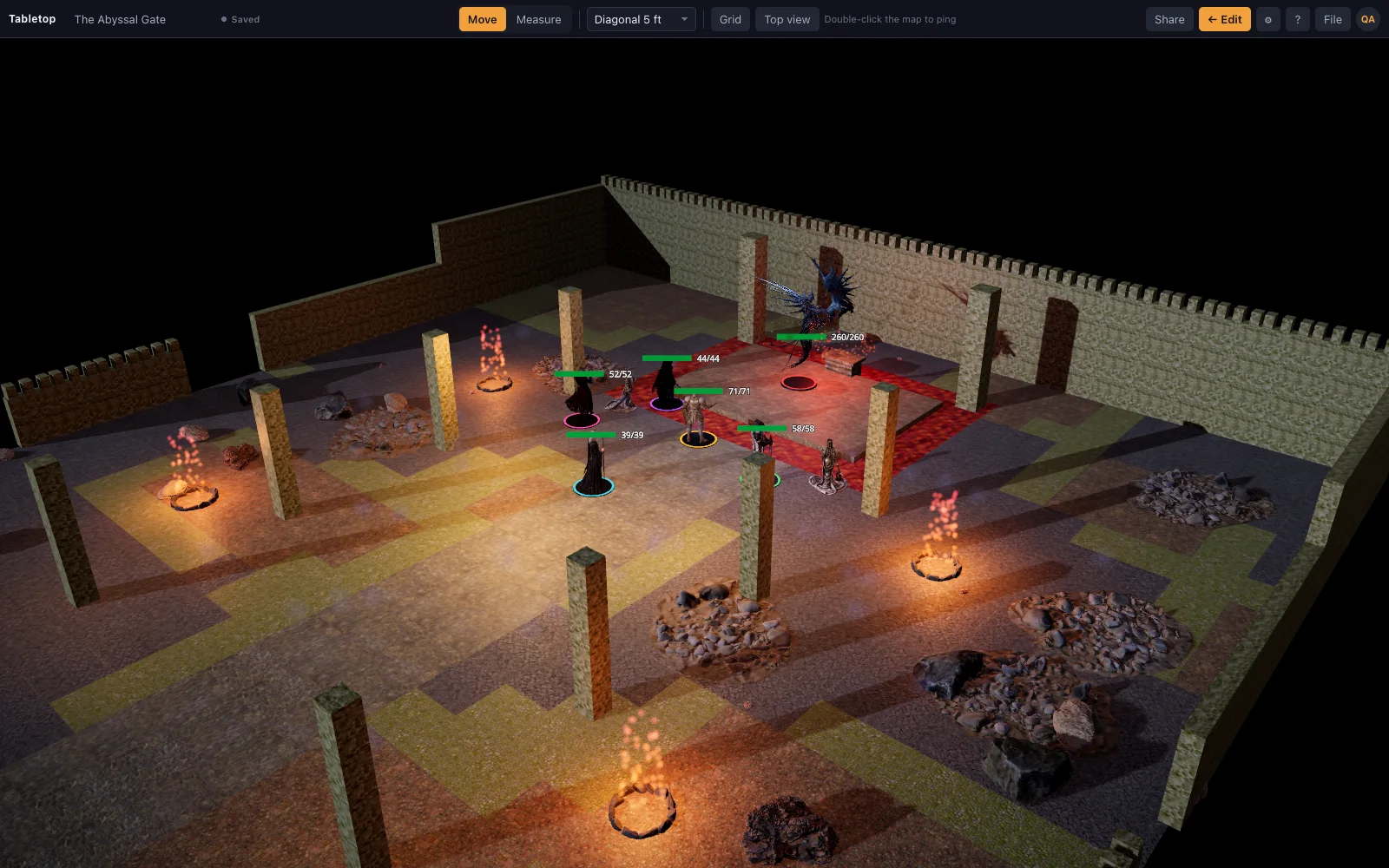
The map argument is rarely made in these threads and it is the practical one. Tier 1 and 2 fights fit on a 20-by-20 grid: 30-foot Speeds, 60-foot spells, a few flying enemies. From level 11 the party has Fly, Dimension Door, Wall of Force and a Fireball radius that covers a quarter of the room, and by level 17 Teleport and Meteor Swarm make the map optional. High-level combat is less a positioning game than a resource game, and DMs who dislike it are often describing the loss of the grid rather than the loss of balance.
A 3D table pushes the useful range up a little, because height gives flying and climbing characters somewhere to be and the ruler measures a 60-foot Fly Speed in three dimensions; TerrainTale's ruler counts height in feet for exactly that. It does not rescue level 17. The honest advice is the thread's own: if your table's fun is on the grid, it is a tier 1 to 3 table, and the books already let you stop there.
Where this goes
Nowhere official, soon. Wizards has not announced any change to the 20-level structure, and the 2024 core books restated it. What the thread shows is that the 10-level design has moved from a house-rule idea to the default of the games D&D's competitors ship, and that D&D's own 2024 additions, Bastions and Epic Boons, are the same idea applied gently. The next data point will be whatever D&D Beyond publishes about play on its new rules engine, which the platform said in August 2026 it is building; until then, the 2019 slide is what everyone has.