Normal range, long range, and the drag that answers both before you declare the shot
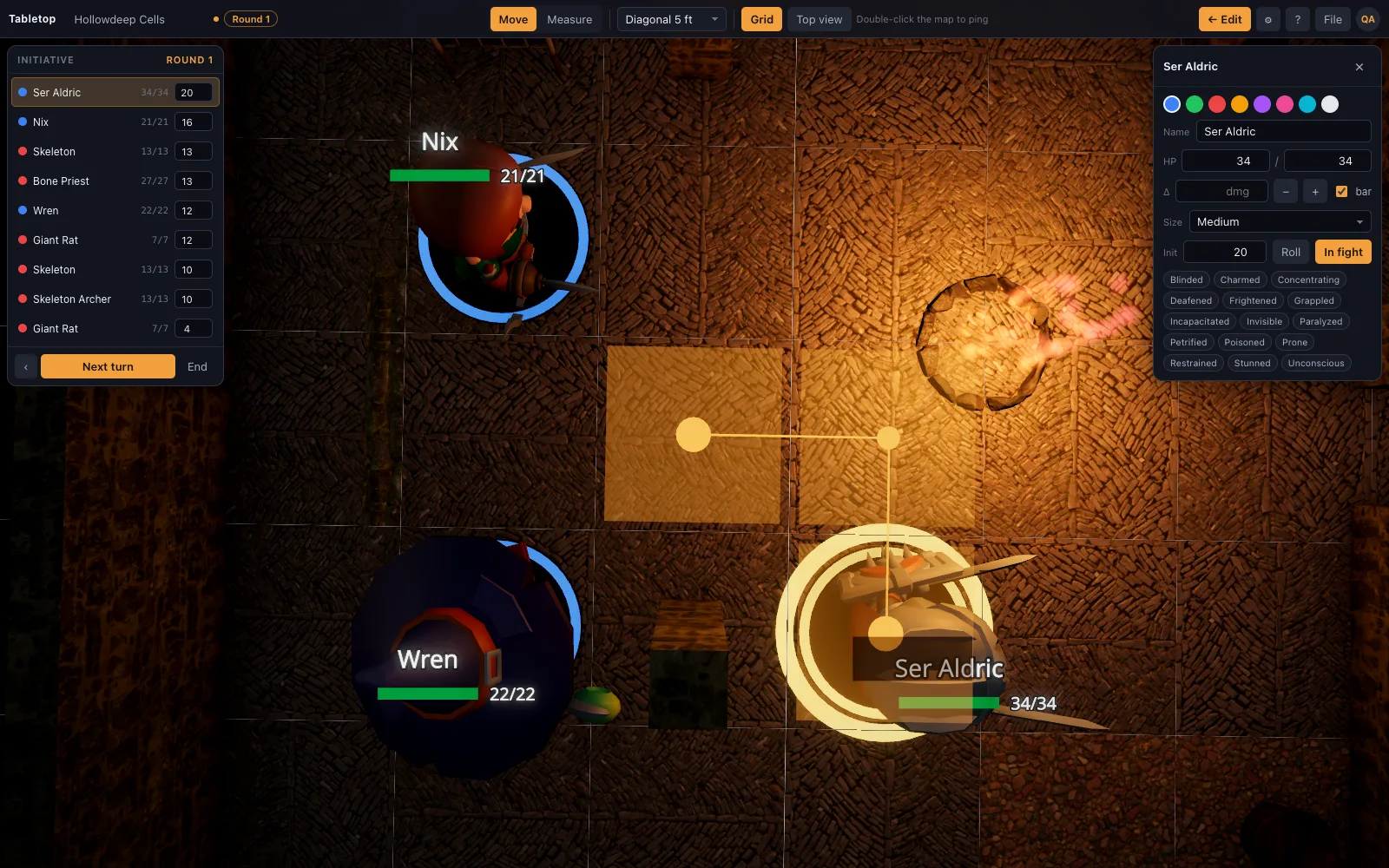
A shortbow's range on its weapon line reads 80/320. Nobody at the table has 80 feet of grid memorized, which is exactly what turns "can I hit that" into a stalled turn while someone counts squares by hand. The ruler already has the number: drag to the target and read it off before the shot is declared, not after.
· updated · 5 min read · TerrainTale
Normal range, long range, one weapon line
A ranged weapon's stat line carries two numbers, written as normal/long: a shortbow's is 80/320, a heavy crossbow's is 100/400. Inside the first number, a ranged attack works exactly like any other attack roll. Past it but within the second, the same attack still works, just at disadvantage on the roll. Past the second number, the target is out of range entirely and there's no shot to make.
The two numbers scale differently by weapon, which is the part that's hard to hold in your head mid-session: a sling's 30/120 and a longbow's 150/600 are both "a ranged weapon," but the distance where disadvantage kicks in is five times further apart.
A second disadvantage, from standing close
Range isn't the only thing that puts a ranged attack at disadvantage. A creature making a ranged attack while within 5 feet of a hostile creature that can see it and isn't incapacitated also rolls at disadvantage: the threat of melee is what's punishing the shot, not distance. That condition doesn't care what the weapon's range numbers say: an archer backed against a raging barbarian is at disadvantage even while well inside normal range.
The two conditions come from different rules and get checked independently: a shot can trigger one, the other, both, or neither, and knowing which requires knowing both the range band and who's standing where.
What the ruler actually gives you
Drag from the attacker's mini to the target and the readout reports the distance in feet along the real grid, following the diagonal rule the table set, not squares to be converted by hand and not a straight line eyeballed across the map. Add a waypoint mid-drag to route around a wall corner or a pillar the arrow would actually have to clear, and the number updates to match. That's the range half of the question answered before anyone reaches for a weapon sheet.
The ruler doesn't decide whether that distance is normal or long range for a given weapon, and it doesn't know who's hostile or adjacent: reading the number off the drag and checking it against the weapon line and the battlefield is still the table's call, same as ever. What it removes is the counting.
The other half: who's within 5 feet
The same drag that answers the range question also answers the adjacency one, since a distance reading of 5 feet or less between the attacker and any hostile mini on the map is exactly the condition the melee-proximity rule cares about. A player weighing whether to step back before shooting can drag from their prospective new position instead of their current one, and see both numbers change before committing to the move.
Declaring the shot with both answered
In practice this collapses to one habit: before an archer's player announces a ranged attack, drag the ruler to the target. If the readout is inside the weapon's first number and nothing hostile is within 5 feet, the shot rolls straight. If it's past the first number but inside the second, or something hostile is adjacent, the roll is at disadvantage: the player still rolls it themselves, the table just isn't guessing which case applies. Either way, the question gets answered in the second it takes to drag, not in the minute it takes to argue about it after the die's already in the air.