Grapple and shove rules: moving creatures around on the grid
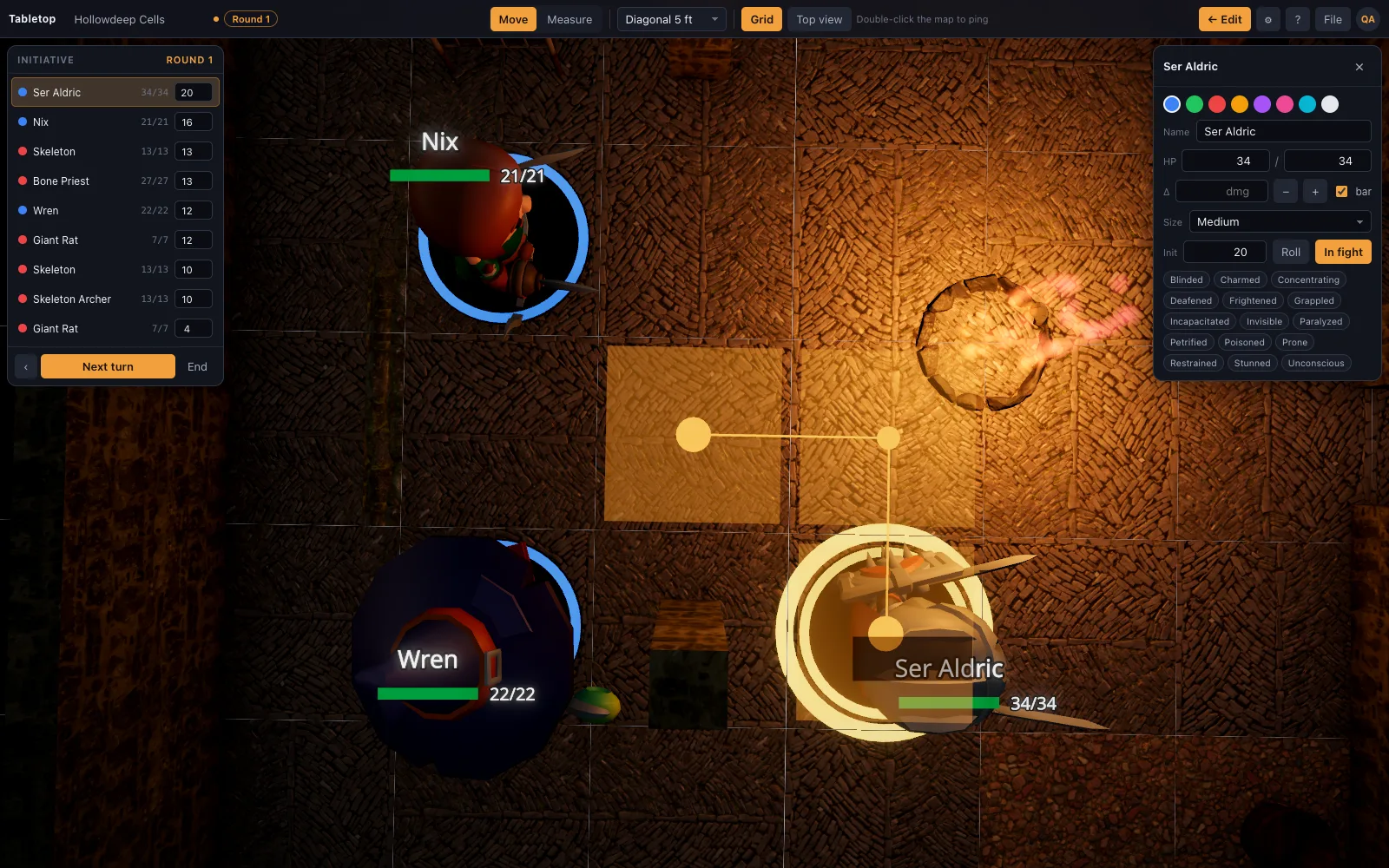
Grappling and shoving are the two ways to move an enemy without a spell, and in the 2024 rules they are both options on an Unarmed Strike. The target makes a Strength or Dexterity saving throw against DC 8 plus your Strength modifier plus your proficiency bonus. Fail a shove and it is pushed 5 feet or knocked Prone. Fail a grapple and its speed is 0, it attacks everyone but you at disadvantage, and you can drag it with you at half speed. On a grid that turns a fighter into a crowd-control class.
· 6 min read · TerrainTale
The 2024 rule, and how it differs from 2014
Both moves replace the damage of an Unarmed Strike. You need a free hand for a grapple, and for both moves the target must be within your reach and no more than one size larger than you. The target chooses whether to make a Strength or a Dexterity saving throw, and the DC is 8 plus your Strength modifier plus your proficiency bonus. A level 5 fighter with Strength 18 has a DC of 15.
The 2014 rules worked differently in three ways that still trip tables up. First, grapple and shove were contests: your Strength (Athletics) against the target's Athletics or Acrobatics. Second, the Grappled condition only set speed to 0; the disadvantage on attacks against anyone but the grappler is new in 2024. Third, a 2014 grapple could be escaped with a contest as an action, while in 2024 the escape is a Strength (Athletics) or Dexterity (Acrobatics) check against the same escape DC, still as an action.
The practical effect is that a grappler is stronger than it was. A monster with a big Strength modifier and proficiency bonus sets a DC that a wizard fails most of the time, and once held the wizard cannot even cast at the fighter next door without disadvantage on the spell attack.
- Both: an Unarmed Strike option, not an action of their own, so Extra Attack lets you grapple and punch in one turn.
- Save DC: 8 + Strength modifier + proficiency bonus; the target picks Strength or Dexterity.
- Grapple needs a free hand and a target no more than one size larger than you.
What Grappled does on the map
The Grappled creature's speed is 0 and cannot be increased. It has disadvantage on attack rolls against any target other than the grappler. The grapple ends if the grappler is Incapacitated or if the target ends up out of the grappler's reach, and the target can spend its action on an escape check.
The grappler keeps its own movement. When it moves, it can bring the grappled creature along, and its speed is halved while doing so unless the creature is Tiny or two or more sizes smaller. On the grid that means a fighter with 30 feet of speed drags an orc 3 squares, pulling it out of the front line and into a corner where three allies can reach it, or out of a doorway it was holding. The dragged creature moves into the square the grappler leaves, or a square adjacent to the grappler, and it stays within reach the whole way.
Shoving off ledges, into fire and out of doors
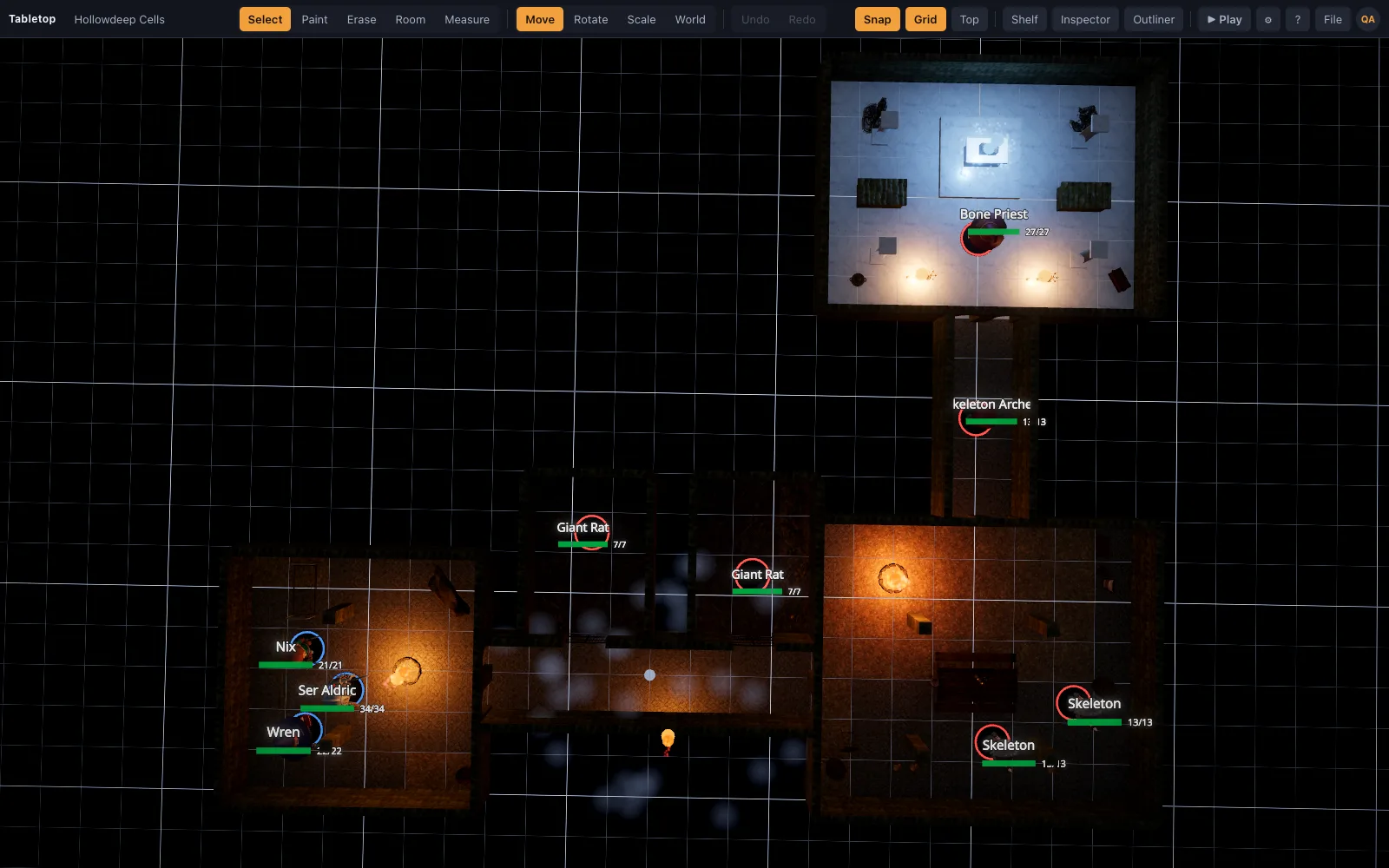
A shove pushes the target 5 feet straight away from you or knocks it Prone. Five feet is one square, which sounds small until the square is a ledge, a pit, a brazier or the far side of a doorway. Falling is 1d6 bludgeoning damage per 10 feet, a Large creature knocked into a 20-foot pit takes 2d6 and lands Prone, and climbing out costs it the whole of a turn on a normal wall.
Because a shove is only 5 feet, you have to set it up. Stand so that the target's far side is the drop; that is what the grid is for. A fighter with Extra Attack can grapple with the first attack, move to put the target's back to the edge, and shove with the second. Two turns of positioning for a 2d6 fall and a Prone target that cannot reach you on its turn is a good trade at any level. Spells that push further, such as Thunderwave at 10 feet, are the ranged version of the same idea.
Size limits and who can hold whom
You can grapple or shove a creature at most one size larger than you. A Medium fighter can hold a Large ogre and cannot touch a Huge giant. A Small halfling can hold a Medium human and nothing bigger. The other direction has no limit: a Huge giant can grapple a Tiny sprite, and it drags Tiny and smaller creatures at full speed rather than half.
Grappled creatures occupy their own squares as usual. A Large creature held by a Medium fighter is still a 2 by 2 block, so when the fighter drags it the block moves with him and needs room to fit. This is where the grid earns its keep: the DM can see at a glance that the ogre will not fit through the 5-foot door the fighter wants to drag it through. It will not, and the grapple ends at the threshold when the ogre ends up out of reach.
A token set to its creature size settles most of these arguments before they start. In TerrainTale a Large token covers 2 by 2 squares and the ruler counts the squares it is dragged across, so the halved speed is a distance you can see rather than a number you argue about.
Escaping, and what ends a grapple
The held creature uses its action to make a Strength (Athletics) or Dexterity (Acrobatics) check against the escape DC, which is the same 8 plus Strength modifier plus proficiency bonus the grappler used. A rogue with expertise in Acrobatics escapes almost every time; a wizard with neither proficiency nor a good stat is stuck for the rest of the fight unless something else intervenes.
Something else often does. Teleporting out ends the grapple because the target is no longer within reach; Misty Step is the classic exit. Any effect that gives the grappler the Incapacitated condition ends it, so a Hold Person on the grappler frees the victim. Forced movement that takes the target out of reach ends it too, which means an ally can Thunderwave the grappler backwards and break the hold. Being knocked Prone does not end a grapple on either side; the pair simply wrestle on the floor.
Running it without slowing down
Write the escape DC on the grappler's stat block or token the first time it grapples, because the same number comes up every turn. Ask the target which save it is using before you roll, since the choice is theirs. And mark the Grappled condition on the token: it is the condition players forget most, because they see the mini standing where it was and assume it can walk away. A condition marker that stays on the token until the escape succeeds is worth more than any amount of reminding.